A review conducted by researchers at the University of Guelph and published in the March 2026 edition of Journal of Equine Veterinary Science argues that modern equestrianism is entering a critical phase. Welfare standards are no longer judged solely within the industry, but increasingly by public perception and scientific scrutiny. The paper contends that riding practices, tack choices, rider biomechanics, and management decisions must all be evaluated through the “precautionary principle” — the idea that a practice should not be assumed harmless simply because definitive evidence of harm is incomplete.
For experienced equestrians, the review is less an indictment of riding than a call for evidence-based horsemanship. Its central premise is that ridden horse welfare is multifaceted, and that many long-accepted traditions deserve renewed examination.
Tack and Equipment
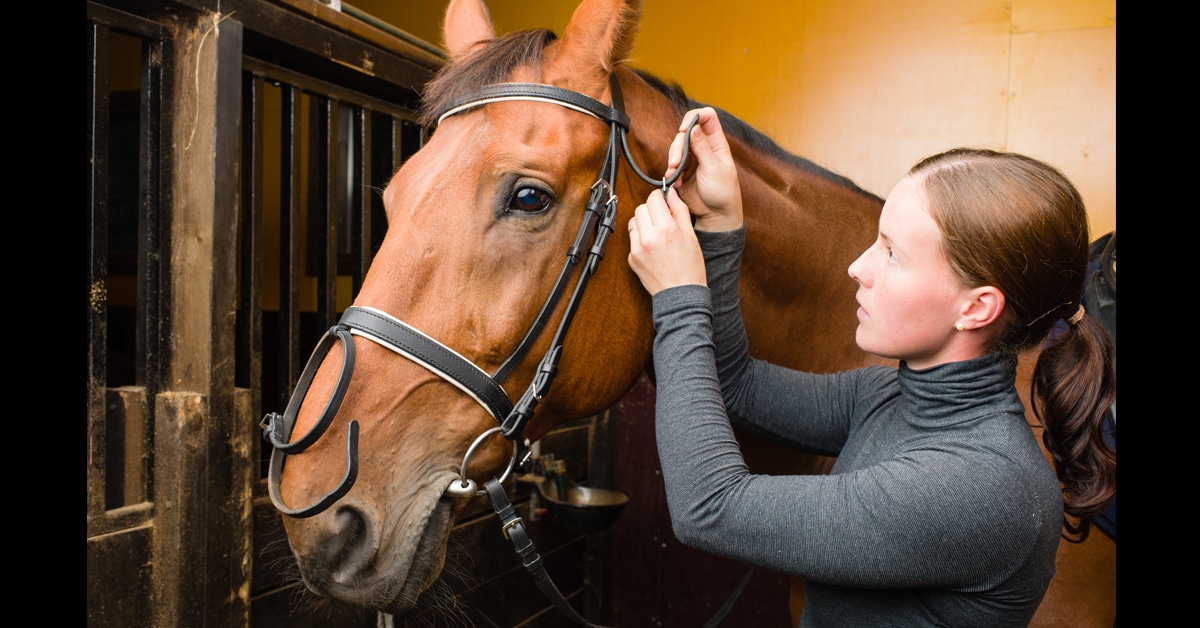
Research summarized in the review suggests overtight nosebands may increase stress markers, suppress natural oral behaviours, and contribute to tissue damage or bony changes in the skull. Modern crank nosebands can exert pressures comparable to medical tourniquets, while tight fastening may effectively prevent the horse from expressing discomfort through mouth opening or tongue movement. The paper notes that the FEI has already responded by implementing standardized noseband measurements in competition.
Because the equine mouth is densely innervated, bit severity is influenced not only by design, but by rider application. Thin mouthpieces, leverage systems, abrasive materials, and contradictory pressure mechanics can all increase the likelihood of pain or conflict behaviours. Oral lesions remain common across multiple disciplines, particularly in racing and eventing populations. Interestingly, the review stops short of universally endorsing bitless riding, but it acknowledges evidence that some bitless systems may reduce aversive behaviours while maintaining functional control.
Head and neck position is another major focus. Hyperflexion and riding behind the vertical are associated with increased stress responses, restricted vision, and behaviours linked to discomfort. The review highlights that horses naturally elevate the head to improve binocular vision, especially when assessing fences. Restrictive positions or equipment that interfere with this visual function may compromise both welfare and safety. Horses in preference studies consistently favoured a neutral head carriage over rollkur-type positioning.
Ill-fitting saddles are associated with back pain, muscular asymmetry, behavioural resistance, and altered locomotion. Importantly, the paper emphasizes that saddle fit must account for both horse and rider. Rider asymmetry, poor balance, inadequate fitness, or an oversized seat can all disrupt force distribution across the thoracic spine. The review also raises concerns regarding riders whose body dimensions exceed the saddle-bearing area of the horse, especially when pressure extends beyond the eighteenth thoracic vertebra into the unsupported lumbar region.
Influence of the Rider
Riders themselves are framed as one of the most influential variables in equine welfare. Skilled riders demonstrate greater coordination, consistency, and timing, which improves clarity of cues and reduces conflicting signals. Conversely, asymmetrical or unstable riders increase physiological demand and uneven loading. Psychological factors matter as well. Rider anxiety, emotional reactivity, and poor understanding of equine behaviour may contribute to conflict behaviours and misinterpretation of stress signals. The review notes that even professionals frequently disagree on behavioural indicators of discomfort, underscoring the need for better education throughout the industry.
The paper also examines hidden physical conditions that compromise the ridden horse. Equine gastric ulcer syndrome remains prevalent across competitive and leisure populations, with exercise and competition environments strongly associated with ulcer formation. Mild lameness presents an even greater concern. Multiple studies cited in the review found that owners often fail to recognize subtle lameness, even in horses actively competing or considered “sound.” This gap between veterinary assessment and owner perception may represent one of the industry’s most significant welfare blind spots.
Adopting the ‘Precautionary Principle’
Although further research is needed to fully understand how certain factors affect the welfare of ridden horses, applying the ‘precautionary principle’ ‒ the idea that if an action or policy has a suspected risk of causing harm, protective measures should be taken even if absolute scientific proof is lacking ‒ can help protect their well-being until more definitive conclusions are available. Traditionally, responsibility for providing evidence has fallen on those advocating for welfare-based changes to rules and established practices. This approach requires proof of harm before action is taken, often overlooking the potential for unrecognized or unintended negative effects associated with existing practices. By applying the second tenet of the precautionary principle, the burden of proof shifts to those who wish to maintain traditional practices and resist change.
The Latest