From coaches and farriers to fence builders and roofers, anyone working on your property should carry liability insurance. Trusting their reputation is simply not enough to protect you in case of an accident.
When you hire a contractor, you may be thinking about the job at hand: repair a fence, trim hooves, teach a lesson or treat a horse. You probably are not thinking about what happens if they somehow damage a building, a gate is left open, a horse escapes or someone is seriously injured. But according to Mike King of Acera Insurance, those are exactly the questions farm owners should be asking.
“When you invite a contractor onto your property to provide a service, you are exposing yourself to any accident that arises from their operation,” King says.
Consider a fencing contractor hired to fix a paddock. During the job, someone forgets to close a gate, backs into a building or accidentally injures a boarder. The contractor may be directly responsible, but that does not mean the farm owner will be left out of the resulting legal action.
“Everybody gets sued,” King says. “If the contractor does not have appropriate insurance, much of that weight can fall back on the property owner or facility manager.”
Your Property, Your Exposure
Each province has some kind of Occupiers’ Liability legislation which generally places a duty on those responsible for a property to take reasonable care to keep people entering it reasonably safe. That responsibility can apply to property owners, tenants, facility managers and others who have control over the premises. If someone is injured, lawyers may name every person or business that could conceivably share responsibility.
The farm’s insurer may ultimately respond to the claim, but the absence of insurance on the contractor’s side can make the situation far more complicated and potentially more expensive.
Requiring contractors to carry liability insurance is therefore not an accusation that they are careless. It is a basic risk-management measure.
“There is nothing strange or inappropriate about asking the question,” King says. “It is standard business practice.”
Coaches Are Contractors, Too
One of the most commonly overlooked risks at boarding and training facilities involves outside coaches.
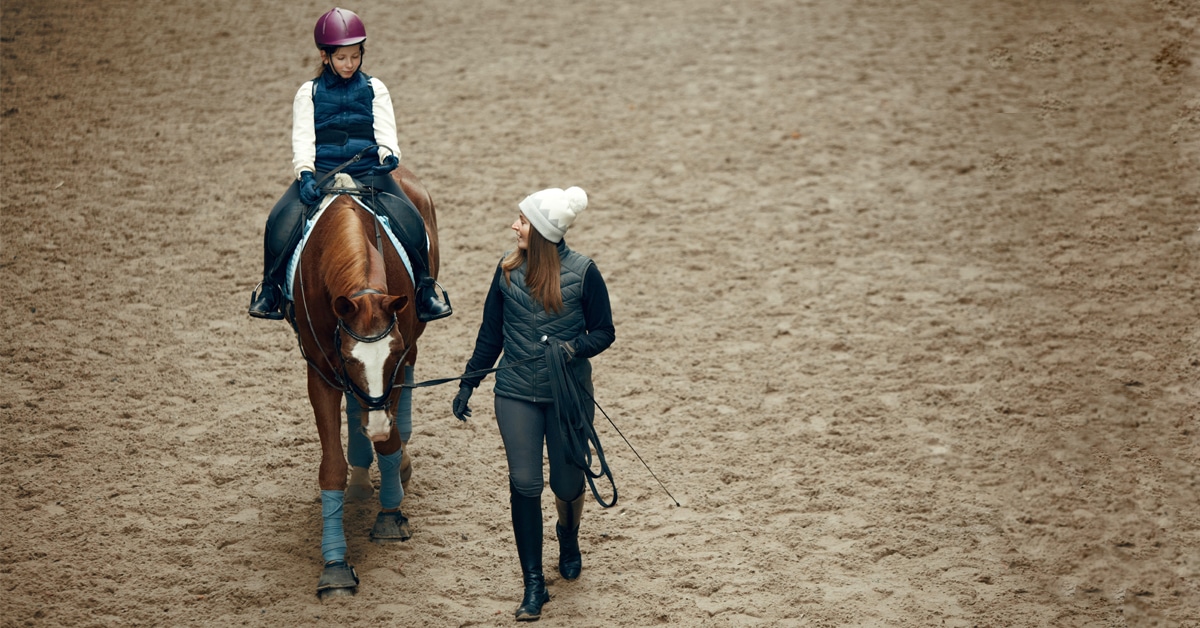
A boarder may invite a coach onto the property, sometimes without the farm owner being closely involved in the arrangement. The coach may be experienced, highly regarded or licensed through an equestrian organization, but none of that replaces liability insurance.
“So many people assume that the reputation of a trainer or coach means they must also be good risk managers,” King says. “But being successful or well known does not excuse someone from running their business responsibly.”
If an injury arises during a lesson, the coach will likely be named in any lawsuit, but the property owner may also be named.
King recommends that facilities require outside coaches to provide a certificate of insurance confirming that they have appropriate commercial liability coverage. The certificate should also name the farm or property owner as an additional insured, but only in relation to the coach’s activities on the premises.
Although this may sound complicated, King says it is a routine administrative request.
“With many policies, adding the property owner as an additional insured for the coach’s operations can be done within minutes and at no additional cost,” he says.
The one page certificate confirming coverage should be signed by the coach’s broker or insurer and kept on file for future reference in needed.
A Waiver is Not a Complete Shield
Many farms use waivers which can be an important part of a broader risk-management program. But King warns that owners should not treat them as an absolute guarantee that they will never face a lawsuit.
A rider may sign a waiver and later suffer a catastrophic injury. Even when that rider does not want to sue, a spouse, parent, dependent or other person experiencing a financial loss may have a separate interest in pursuing a claim.
“People often say, ‘She is my friend. She would never sue me,’” King says. “But it may not be the injured person you need to be concerned about.”
A serious injury can create enormous expenses, including lost income, medical needs, home modifications and ongoing care. Once those financial pressures emerge, the situation may no longer be driven solely by friendship or the injured rider’s original intentions.
Who Should be Asked for What?
Depending on the services being provided, farm owners and managers should request proof of liability insurance from any contracted company and anyone bringing employees, vehicles or machinery onto the property.
The appropriate type and amount of coverage will vary according to the contractor’s work. A coach faces different risks than a roofer, excavator or tree-removal company.
Farm owners should discuss their individual operation with their own insurance broker rather than choosing a universal requirement without advice.
Before work begins, ask the contractor for a current certificate of insurance.
The document generally includes the insured business or individual, the insurer, policy period, type of liability coverage, coverage limits, and any additional-insured wording requested by your broker.
Check that the name on the insurance certificate matches the person or business you hired and that the policy will remain active throughout the job.
For longer projects, insurance requirements should be included in the written contract. Farm owners may also want the contractor to agree to notify them if the policy is cancelled or materially changed.
Simply seeing a certificate should not be treated as a substitute for professional advice. Your insurance broker can help determine whether the coverage shown is appropriate for the work being performed.
Reputation is Not Insurance
The horse industry often operates through relationships. People often hire recommended contractors, welcome a respected coach, or allow a trusted friend to bring in a professional.
Those relationships can make requesting proof of insurance feel awkward, but the request should be no more uncomfortable than asking for a quote, checking references or confirming when the work will be completed. Even reputable people make mistakes. Equipment fails. Gates are left open. Horses react unpredictably. Riders fall. Insurance cannot prevent those incidents, but it can help ensure that responsibility does not fall entirely on the farm owner when something goes wrong.
“Things happen,” King says. “You do not want to find yourself on the receiving end of a serious claim without having taken the basic steps available to protect yourself.”
The Latest