A horse will always pick up the lead that he is balanced for.
That sounds simple, but it is an important concept that is often overlooked when we talk about lead changes. When a horse picks up the wrong lead, our first instinct can be to think that the horse made a mistake. But very often, the horse is simply telling us where his balance was.
As riders, it is our job to put the horse in the balance we want before we ask for the lead we want.
The same principle applies to flying changes. We don’t actually think of teaching the horse a flying change as teaching a completely new movement. Instead, we teach the horse to understand the process of changing his balance. The flying change is simply the natural progression of that process.
Balance Comes Before the Lead
When we ask for a canter departure, the horse needs to be organized enough through his body that the correct lead is the obvious answer. If we allow the horse to fall onto the outside shoulder, or if we don’t properly organize the shoulders and hindquarters, we shouldn’t be surprised when he chooses the lead that corresponds with the balance we have given him.
The rider has to create the balance before asking for the lead. This becomes even more important when we begin working toward flying changes.
One of the biggest mistakes we see is allowing the horse’s shoulder to fall inward during the change. The horse may understand the change of lead, but because his body is not properly organized, he changes only in front. The result is a disunited canter rather than a true change through the whole body.
This is why we believe the entire body needs to be considered when teaching a lead change. We aren’t simply asking the legs to switch leads. We are asking the horse to reorganize his entire balance.
Don’t Teach the Flying Change – Teach the Process
We like to teach simple lead changes first — and we like to use them as soon as we can after the jump or across the arena. As soon as the horse lands, we are already thinking about bringing him back, reorganizing his balance, and asking him to change the lead. The important part is that the simple change and the flying change are fundamentally the same process.
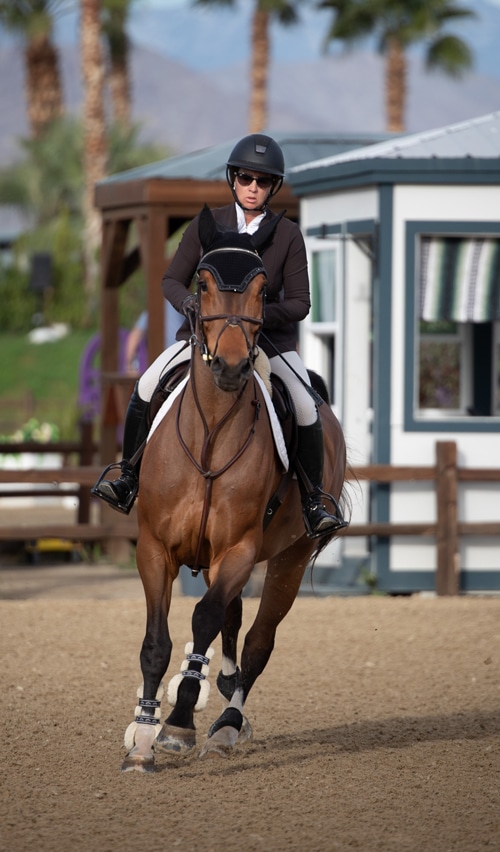
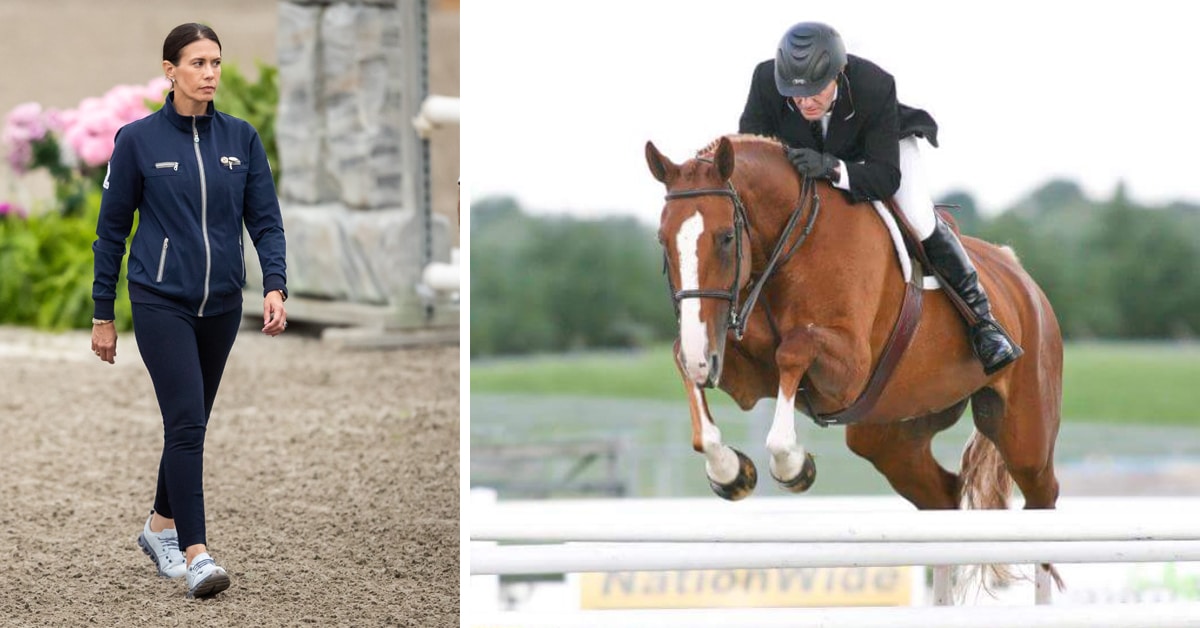
A horse and rider in good balance. Allowing the horse’s shoulder to fall inward during the lead change may result in a change only in front and a disunited canter. (H. Grayton / Grayt Designs photo)
The horse first has to rock back, stay straight, and then squat with the outside hind leg enough to allow time and space for the inside hind leg to swing through farther than before.
Think about what happens when we ask for the downward transition from canter to trot. Before the horse can make the transition, he has to shift his balance back onto his hindquarters. The same idea applies to a lead change.
The horse needs to learn to rock back, reorganize his body, and then move forward again. Once a horse becomes committed to that process, something interesting starts to happen: he will often begin to offer the lead change himself. And that is exactly what we want.
We don’t want the flying change to become a movement that the rider has to manufacture; we want the horse to understand the balance shift so well that the change becomes the natural answer.
Don’t Lose the Rock Back
This is where we often see the next problem. Once a horse has figured out how to change leads, the rider can become so pleased with the successful change that the preparation gets forgotten. The horse changes — but the rock back disappears. This is when horses can begin changing only in front.
The front end changes leads because the horse has learned the mechanics of switching his front legs, but the hindquarters haven’t properly reorganized. The answer is to go back to the balance.
The horse needs to understand that the change begins with the body reorganizing itself. We need the entire body involved; the flying change is not something we simply ask the legs to do. It is something the horse does because we have put him in the balance to do it.
***
Need a simple exercise to hep build confidence and consistency with lead changes? Try this zig-zag exercise.
The Latest