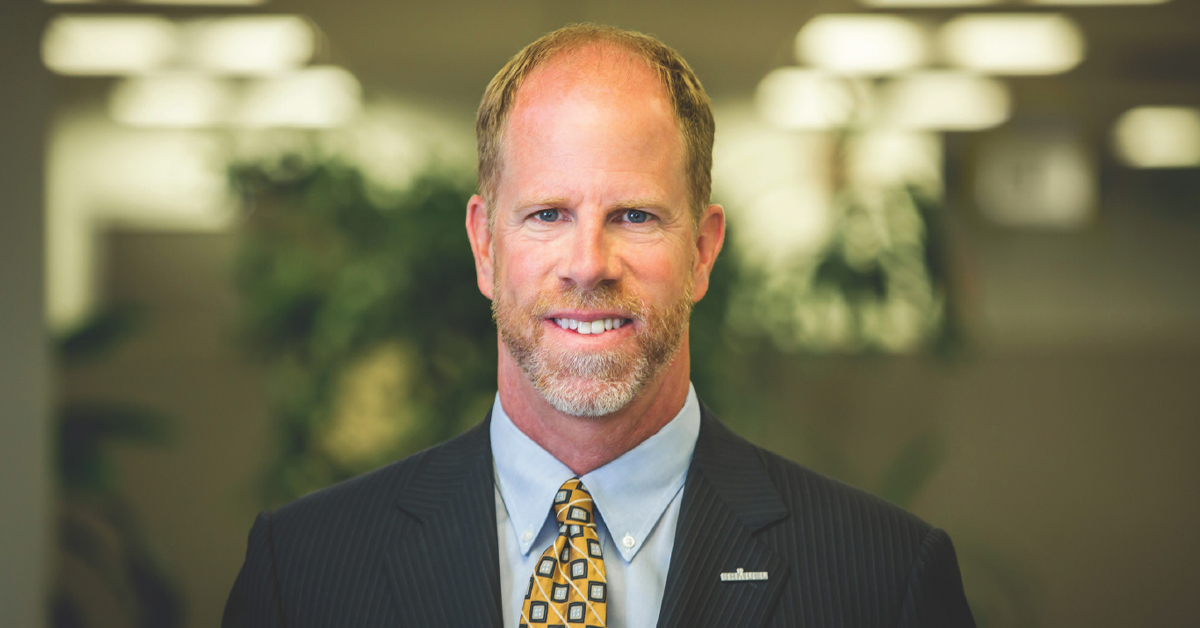
Canadian Mark Samuel is one of three candidates vying for the position of FEI President; the election takes place Dec. 5, 2026 during the FEI General Assembly in Jiangyin, China.
1. You bring experience as an international athlete, horse owner, breeder, former FEI Vice-President and Regional Group Chair and leader of a major international company. How will those experiences shape the perspective you bring to the presidency?
Many thanks for this opportunity to introduce myself to your followers.
I appreciate this question as it goes to the root of my motivation as a Presidential candidate. I have been blessed to have many different roles within the industry as well as outside of it. The FEI is a highly complex organization with sport management and equine welfare at its core. Decisions are made every day that impact a vast community of owners, breeders, riders, grooms, competition organizers, officials, veterinarians, national federations and, of course, horses. I feel that my broad personal experience in all of those sectors provides me with a unique perspective on the needs and opportunities that exist for the FEI going forward. They also allow me to be both aware of and sensitive to the voices of those communities.
I have been an athlete at the top end of the sport representing my country and I bring that practical background forward in my thinking. I have also led grass roots organizations within Canada (Ontario Hunter/Jumper Association, Jump Canada), that have been responsible for the athlete/animal progression from stable to podium. I know what is required. I have been and still am an owner and breeder of young horses so I know the cost and other challenges faced by those groups. In addition, my family once ran the largest outdoor competition in Canada (the Hornby Horse Show in the 1970s) so I speak that language and understand the burden and responsibility that comes with that opportunity. The FEI also entrusted the Officials Working Group to my leadership, twice. We brought forward important reforms and the experience also positions me well to be a leader that will further that important work in a fair, pragmatic manner. As for my experience as Group IV Chair and, subsequently, FEI Vice President, these opportunities have defined the difference between ideas and action, between dreaming and executing. Leading my Group required a sensitivity to both small country and large nation needs. I brought the ideas, priorities and voices of all nations forward in my deliberations and input into the important decisions before us. Having been unanimously elected to three terms as Chair I feel that is an endorsement of my efforts while my cultivation of an excellent successor speaks to my long term vision.
Outside of the equestrian world I have had a highly successful four decade career in business. During my tenure I quadrupled the size of the organization, expanded its geographic and product footprint, increased sales to over $5 billion and was responsible for the lives and career paths of over 5,000 employees. We have won numerous awards for being among Canada’s best employers and best run organizations. In the world of modern sport organizations, that level of business acumen is equally as important for the future success of the FEI as is a depth of relevant sport knowledge and expertise. I feel that I represent both areas of experience and depth as well as a passion for our sport, our horses and our future. I am now retired from my executive responsibilities within my company and as such, I now have the time and opportunity to fully commit to the responsibilities of this important future role.
2. What does your background allow you to contribute that the FEI particularly needs at this point in its history?
I am very proud of having contributed to the evolution of the modern FEI. Under the leadership and executive drive of President De Vos, the FEI has continued to evolve and to lead. As an FEI Board member and then, as FEI Vice President for seven years, I was a prepared, pragmatic and vocal contributor to our discussions and decisions. Given my organizational and business background, I have a proven track record of integrity, leadership, consensus building and diplomacy that the Presidential role requires. I understand the needs of both developing and developed national federations, am sensitive to the regional disparities and the right for all voices to be included and the business background to ensure that the FEI is run in a fiscally responsible manner. I feel that my deep business experience and my elite athlete background are what set my candidacy apart. We are a sport organization at our core and having the athlete’s perspective at the heart of FEI Headquarters is both overdue and transformative.
3. Your manifesto says that you plan to maintain a residence in Switzerland. Why do you believe that is important?
The FEI Presidential role has evolved significantly over the past 12 years. Once a purely governance role, President De Vos chose to pursue his tenure as an “Executive President” driving the strategy and execution of the organization from a residence in Lausanne and an office at Headquarters. When surveyed last year the NFs made it clear that they did not want to see a return to a purely governance role. The nature of sports governance has changed and as such, so too have the expectations of our leaders. I therefore fully intend to take a residence in Lausanne which will allow me to work more effectively with my Secretary General, leadership team and the incredible FEI staff to deliver on the FEI’s strategic priorities and to be accessible to our membership. It will also be valuable in maintaining positive and mutually beneficial relationships with the IOC, other International Sports organizations and various regulatory bodies headquartered there.
4. You have emphasized fiscal responsibility, commercial growth and stronger service to National Federations. If elected, what would be your top priority during your first 100 days as president?
An interesting question. The first 100 days will be spent working with the FEI leadership in Lausanne to confirm priorities and action plans. I will also use this time to reach out to national federations and continental groups to open up the lines of communication and access. The FEI has a responsibility to lead but it is also very much a service organization to our members. We have finite resources and budget and as such, we must have absolute clarity as to our objectives and path forward. As such, a deep dive with our commercial and finance departments will be a top priority to fully understand our strengths and opportunities. Completing and announcing a new top partner agreement and cultivating other strategic partnerships of merit will be a priority. While we have a proud legacy and many accomplishments that we can be justifiably proud of, our national federations, athletes and communities are looking for more than the status quo. We must be willing to re-examine what we do and how we do it and to expand the tent so that all feel welcome to participate and feel valued.
5. National Federations range from highly developed equestrian nations to countries still building basic competition. How would you ensure that both groups feel heard and well served?
Throughout my career at the FEI I have demonstrated my willingness to encourage all voices to be heard. Within FEI Group IV we have both Canada and the United States, who are complex, large organizations with robust programs and systems and who routinely field teams in all Olympic and Paralympic disciplines. I come from a large, developed nation so I naturally relate easily to the concerns and priorities of larger nations in North America, Europe and elsewhere. In Group IV we also have nine other, much smaller nations, however, who have a diversity of accomplishments and challenges. They have elite athletes as well as athletes whose ambitions are the Pan American Games, regional games, FEI challenges or simply recreation and skills development. I have trained myself therefore to be an active listener so that I might fully understand and represent their journey within the FEI. Together, we have wrestled with quarantine and sanitary issues, access issues, cost of program and officials, athlete, officials and organizational development, as well as educational opportunities and leadership turn-over. I feel I have therefore already represented, supported and given a voice to a microcosm of the FEI itself…and have been rewarded by election to three full terms representing that diversity of priorities. I have also brought that same sensitivity to my duties on the FEI Officials and Endurance Working Groups, ensuring that all regions, sizes of federations and unique developmental challenges were considered and incorporated. This is not simply a pledge therefore for the future. This is a demonstrated track record of providing access, seeking input, incorporating a diversity of opinions and building consensus in service of the best, most pragmatic solution for all.
6. Some candidates are proposing significant increases in spending on development programs. How would you balance the desire to do more for emerging federations with the need to protect the FEI’s long-term financial security?
I feel that some creative ideas have been put forward at this stage in the campaign. I think that they should be considered by whomever becomes our next President. I have spent the past 12 years in service to the developmental needs of Group IV so I am aware of, and sensitive to this priority. Indeed, I already naturally incorporate the diversity of NF priorities into my thinking. There absolutely exist opportunities to build on the strong foundation of work that has already been done through Solidarity, FEI campus, the Officials’ travel fund, the President’s and Secretary General’s course etc. Assisting our developing nations on their individual and collective journeys should remain a priority for the FEI. Developing metrics to chart our performance in this and other areas are also important management tools as it is very difficult to manage what one cannot measure.
Having said that, ambitious development plans cannot exist or thrive in a vacuum. The FEI does not have infinite financial, personnel or other resources and to expand funding in one area puts strain on all the other areas of the FEI’s committed program delivery. As such, I am not in support of artificial quotas or financial commitment levels until such time as a thorough analysis can be done as to what is practical and equally importantly, sustainable. A program that exists for one or two years and then is abandoned does not serve the long term interests of our federations or the FEI. This is an example of where we must overlay sound business analysis and planning on top of otherwise promising, ambitious ideas.
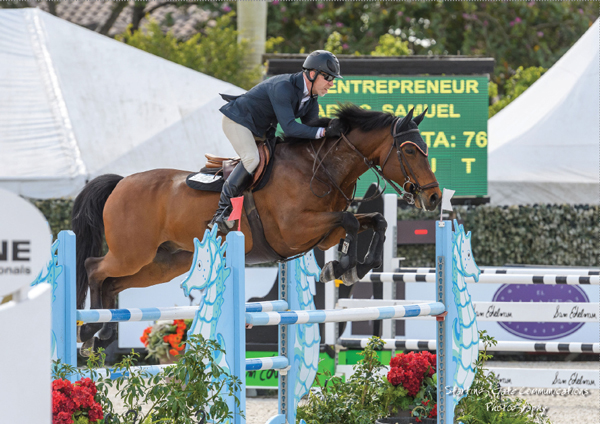
Mark has been riding since he was six years old, graduating from ponies to amateur championships and the Canadian Equestrian Team. (Starting Gate Communications Photography)
7. Horse welfare is central to every candidate’s platform. What would distinguish your leadership on welfare from the approach the FEI has taken to date?
Safe-guarding horse welfare should not simply be words, it should be proven by one’s actions. I have been a rider since I was six years old. My career took me from ponies through numerous amateur championships, to the Canadian Equestrian team and throughout the decades I have never wavered in my affection or respect for my animals. I have always put their mental and physical health first and been mindful of their “other 23 hours” at the shows or on the farm. I have also retired the vast majority of my horses onto my farm at the end of their careers in thankfulness for all that they have given to me over the years. As a breeder and owner of horses I have also always maintained the highest standards of care, veterinary care and training as well. The other advantage of my equestrian background to the FEI is that I will bring a sensitivity to the practical development and implementation of rules. We have many constituencies to address, both external and internal. While we must strive to always “do the right thing”…and be perceived to do the right thing, we must also give equal to time to education and training of our athletes, owners and grooms and we must develop practical, pragmatic solutions, consistently and equitably applied, that serve the industry and its success as well. Our commitment to the horse is and should be a life-long one and I feel that my intensive equestrian background will make sure that the needs of our equine partners will always be prioritized by the FEI.
8. You have spoken about the need for consistent rules and enforcement. Why is this important?
I have spent a great deal of time over the past 18 months listening to our internal and external stakeholders. While many feel that our rules are sufficient and the process for review and revision is appropriate, others have expressed concerns that their voices have not been fully heard. In addition, many individuals feel that our rules are not always consistently applied across geographies, disciplines or levels of competition. In order to have a fair and equitable playing field and to properly safeguard athlete’s safety and rights and the welfare of our equine partners this must be examined and addressed. There are many potential root causes. We put a great deal of pressure and responsibility on our officials to implement our rules. This is often a thankless task and leaves them exposed to the potential for an adversarial or hostile environment. They also must navigate the influence of organizers, influential athletes and the fear of making a mistake, or not being supported for taking their responsibility. We must examine all these causes, and more, to determine how we can improve the education of, and support for our officials and thereby deliver a more consistent application of our rules across the organization.
9. Young athletes often face financial and structural barriers when trying to move from national competition into international sport. Where do you see the greatest opportunity to improve that pathway?
I do not wish to presume that I have the answers to this question. Indeed, it has been a very long time since I was a young, aspiring athlete! As such, I will want to confer with the athletes themselves, their coaches, parents and NFs as well as our Discipline Chairs and Directors to develop a detailed, practical and implementable path forward. Earlier this year a panel of young, talented, emerging athletes were invited to Lausanne to take part in the annual Sports Forum and I was struck by their knowledge, poise and constructive input. This is an initiative that we can build on. They are living the opportunities and challenges every day and have a vested interest to advocate for practical solutions. We must of course discuss the cost to acquire or develop equine talent, the cost to compete, access to appropriate levels of shows, requirements to move up through the levels, the ability to gain ranking points etc, etc. This will be a priority in my first term.
10. The FEI presidency was previously an unpaid position, but that changed during Ingmar De Vos’s term. You have stated that you will not accept remuneration beyond expenses. What led you to that decision?
I have served this industry in numerous capacities and have been rewarded with amazing friendships, opportunities and memories. I have also had my fair share of success from my business career. As such, I am in the fortunate position that I neither desire nor need to be compensated for my contributions at the FEI level. Indeed, even as an FEI Board member I did not accept the annual stipend and instead donated it back to be used in the FEI Solidarity program. It is an honour to be considered as a candidate for FEI President and I am happy to receive only expense reimbursement in return. There is an additional complicating factor as well. While President De Vos was compensated by the FEI, it was not in return for his services as President. Indeed, under Swiss tax law the President position cannot be remunerated. It was only due to the fact that Mr. De Vos could offer unique background and skills including governance, strategic planning and sponsorship relations that he was eligible to be compensated for those specific duties outside of his FEI Presidential role. My intention is to work through existing management rather than to presume to take on any specific executive duty.
11. The FEI must make decisions that affect different disciplines, regions and levels of competition and often with competing interests. How do you build consensus?
I have spent my entire career in business and volunteerism building consensus. There are certain pre-conditions that are required for that process to be successful but it starts with openness, active listening, respect for differing viewpoints and above all, trust. I have demonstrated a willingness and interest in considering all voices, all geographies, all disciplines and all positions along the developmental pathway. I have built a reputation along the way of being poised, authentic and inclusive and it is exactly that background and approach, coupled with my decades of experience and learning that will allow me to both listen and lead effectively. In addition, it will be important to communicate effectively and in a timely manner and we must also be transparent as to our process and decisions.
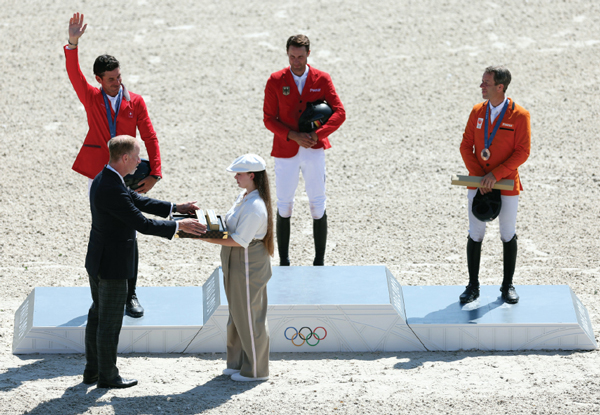
Mark foresees that in the coming years the FEI will be fiscally conservative and strong and its position within the Olympic and Paralympic movement will be secure.
12. By the end of your first term, what results would you want National Federations to point to as evidence that your presidency had made the FEI stronger?
As the famous expression goes, “first, do no harm.” The FEI is coming off a period of growth and success. We are well regarded among the community of sports organizations, we have a strong and dedicated Headquarters team, we are financially secure and we are universally regarded for our governance and integrity. That is a great foundation upon which to build. I believe that the FEI is now in need of evolution, not revolution. We should embrace our strengths and be honest and open about our opportunities for improvement. In four years time, we will have delivered a brilliant Olympic and Paralympic Games in LA, we will be secure in our Top Partner relationship and will have cultivated new relationships, we will have researched and delivered enhanced opportunities for developing nations, athletes and officials and we will have a community of larger nations who feel respected, heard and included. We will be fiscally conservative and strong and our position within the Olympic and Paralympic movement will be secure.
13. When delegates compare the three candidates, what do you hope they will recognize as the strongest reason to place their trust in you?
I think that the FEI is lucky to have three strong candidates for the position of President and I am blessed to consider both Sabrina and Jack to be friends. We have all served the FEI in varying capacities and much of our three manifestos overlap as to priorities, in line with the current FEI strategic plan. What I can offer is a trusted, authentic voice with a proven track record of inclusion, consensus building and leadership on important issues. I also bring the voice of the elite athlete to FEI headquarters which is not currently represented in top management. I understand the issues and priorities of the larger nations while also demonstrating a record of sensitivity and adjustment to developing world challenges. Combined with my decades of achievement in business, leading growth, diversification, innovation and fiscal prudence, I think that I provide a unique value proposition as a candidate. Finally, I promise that all voices will be heard, respected and considered and I pledge to lead us forward in the fields of sustainability and equine welfare from a position of research, transparency and inclusion. Together we are stronger.
***
Access Mark Samuel’s Curriculum Vitae HERE and FEI Presidential Manifesto HERE.
For more information, visit https://samuel4fei.com/
The Latest