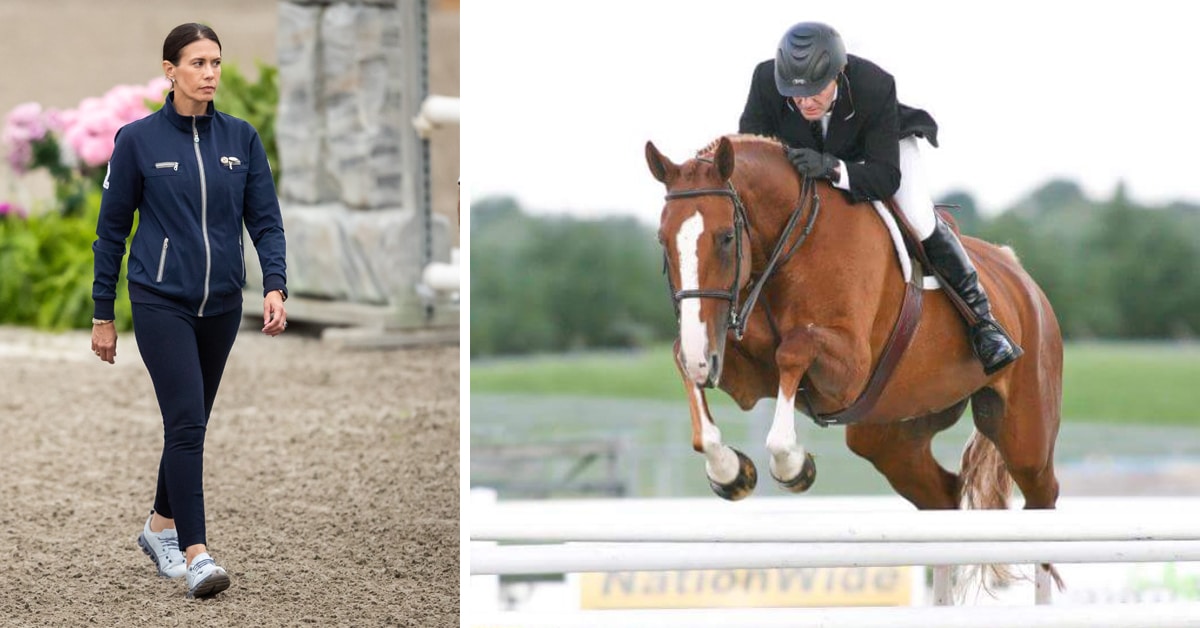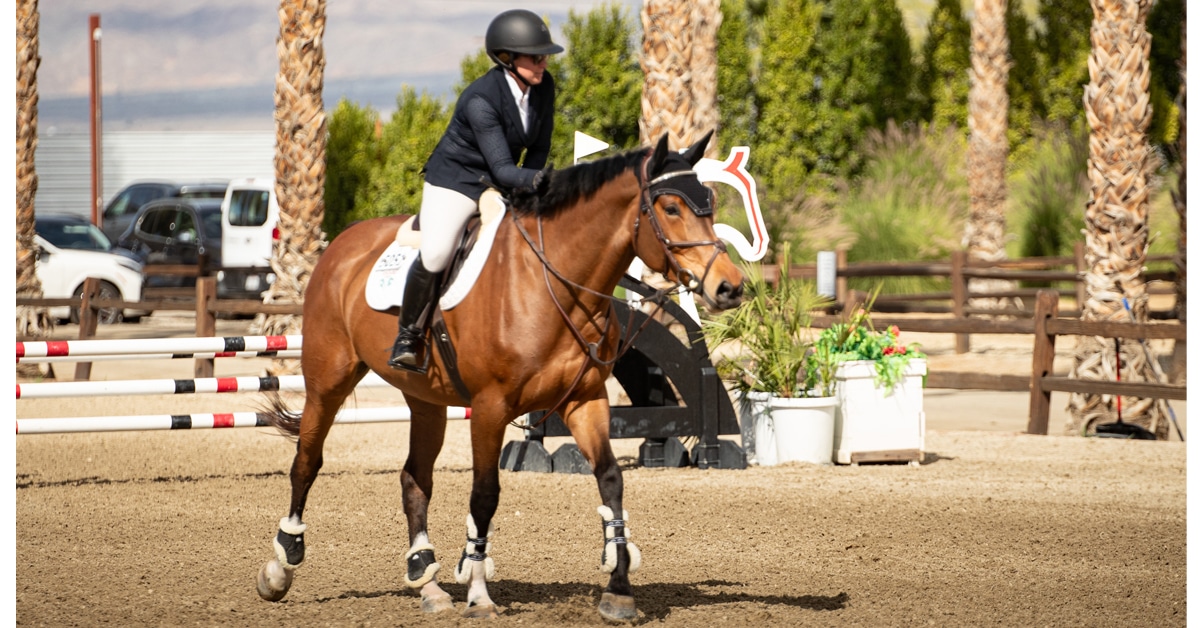
When Canada’s show jumping selectors chose the five horse-and-rider combinations of Erynn Ballard, Kyle King, Amy Millar, Chris Pratt and Kyle Timm to compete at the 2026 FEI World Championships in Aachen, they were tasked with one objective: qualify a Canadian team for the 2028 Los Angeles Olympic Games by finishing among the top seven eligible nations at Aachen.
To achieve that goal Equestrian Canada’s criteria identify three principal selection considerations: past major-games experience and results; the number of usable Nations Cup scores produced during the selection window; and the percentage of clear rounds recorded at FEI competitions.
“We are looking for consistency from horses and riders,” said Karen Hendry-Ouellette, Equestrian Canada’s Manager of Sport, Jumping. “You are not stepping up to that level just to participate. You’re going there to compete, to try to win a medal or qualify for the Olympic Games.”
The same expectation applies before a rider ever reaches a championship.
“You need to be participating at that level already and being consistent,” Hendry-Ouellette said. “In our national team program, we classify a Nations Cup score of four faults or less as usable. If you have four faults or less, that is going to give you a good result. Anything more than that is not.”
The Canadian selection window ran from January 8, 2025, until July 5, 2026. Declared combinations were monitored at competitions during that period, with particular attention paid to four- and five-star events. By May 4, Equestrian Canada narrowed the field to approximately eight to 12 team candidates. The team was announced on social media on July 14.
“Given the relatively small group of riders available at the championship level, I believe that is the best approach right now,” says team veteran Erynn Ballard of the current criteria. “We do not have formal trials, but the committee will often recommend competitions where it would like to see a combination jump before selections are made.”
Ballard believes the strongest combinations should be identifiable through international results, although she noted that Canada lacks a centralized performance database comparable to the U.S. system, which incorporates results from designated national and international competitions.
Where discretion begins
The criteria gives the Jumping High Performance Advisory Group broad authority to select the combinations it believes can best represent Canada.
The group may consider performance during the selection window, the previous experience of either the horse or athlete, their perceived reliability, their ability to jump courses of World Championship scope and technicality, and the horse’s perceived durability and soundness. Selection is decided by majority vote, with the chair breaking a tie.
Some of those factors are readily measurable. Others depend upon experienced horse people interpreting what they see.
Two combinations might have similar fault totals but very different records. One may have produced four-fault rounds consistently over large, technical five-star tracks. Another may have earned comparable scores at less demanding competitions. One horse may have championship experience; another may be talented but relatively untested under pressure.
Ballard accepts that no discretionary system will produce universal agreement. “The drawback to discretionary selection is that someone will always have a different opinion,” she said. “But with the group Canada has right now, I believe it remains the best method.”
James Hood, Equestrian Canada’s Director of High Performance explained that when two candidates are close, selectors consider “the experience of the rider, the exposure that rider has had, and where both the human athlete and the horse are in their careers.”
Selectors may also look beyond the final number on the scoreboard. Can the horse jump open water reliably? Can it handle combinations placed close to the corner of the arena? Has it shown that it can recover and jump multiple demanding rounds over several days? How does it respond to a particular course designer’s style?
Aachen adds another consideration: grass.
Most modern international jumping takes place on highly engineered all-weather surfaces. The 2026 World Championship will be held in Aachen’s vast grass stadium, where the size of the field, natural footing and long distances can create a different test.
“Just because a horse can do it on controlled footing doesn’t mean grass will be the same,” Hood said. “We know there are horses that jump differently on both.”
Canada does have an advantage in evaluating that ability. Riders can compete on grass at venues such as Spruce Meadows, Thunderbird Show Park and Wesley Clover Parks. The team’s recent Nation’s Cup appearance at Hickstead where they finished in third place, also offered an important chance to compete in a large grass arena under conditions closer to those expected at Aachen.
Planning for August, not May
Selection is also part of a much broader performance program. Hendry-Ouellette said Canada now tracks combinations throughout the winter and spring, discussing each horse’s competition schedule, veterinary care, physiotherapy and training with the athlete. Chef d’équipe Ian Millar has worked with the leading candidates to develop individual plans intended to have each combination at its best in August.
“You need to make sure your horse peaks in August, not in May or June,” she said. “It is a bit of an art to make sure both horse and athlete are peaking at the right time. The athlete also cannot over compete and arrive mentally unprepared for what is ahead at a World Championship.”
That level of individual planning has become more sophisticated since Canada’s celebrated 2008 Olympic campaign, when Eric Lamaze won individual gold and the Canadian team earned silver.
“Canada has historically punched above its weight in terms of the number of athletes we have on the world stage,” Hood said. He attributed part of that success to the internal drive of Canadian riders and the prestige they place on team competition. “When you think about Ian, Eric, Mario and that group, nobody wanted to lose to each other,” he said. “They wanted success for Canada, but none of them wanted to lose to each other. It is considered an honour to be on a Nations Cup team. People want to wear the maple leaf.”
The current system also narrows the candidate list relatively early. That permits selectors to concentrate on the combinations still capable of reaching Aachen, while allowing others to reorganize their competition and business plans.
That matters in show jumping, where elite riders manage multiple horses, owners and clients. A World Championship is a major ambition, but it is also one event within the longer development of a horse or athlete toward future Nations Cups, Pan American Games and Olympic Games.
Trust, expertise and conflicts
Canada’s Jumping HPAG includes Millar, Mike Lawrence, Marni von Schalburg, Beth Underhill, Christopher Lowe and Tiffany Foster. Foster may participate in the group but cannot take part in World Championship selection decisions if she is a declared candidate. Hood and Hendry-Ouellette assist in ex officio roles.
The criteria acknowledge that members may have real or perceived conflicts of interest. A member who declares a conflict must withdraw from the relevant discussion and abstain from voting until that conflict is resolved.
Millar’s role attracts particular attention because he is both chef d’équipe and the father and former coach of Canadian team rider Amy Millar. Hood said Millar is removed from selection discussions involving his daughter when her inclusion is genuinely under consideration.
“If Amy is clearly at the top of the group, the selection is straightforward,” Hood explained. “But when you get to that cusp point, he is out of those discussions.”
The remaining selectors, he said, have the technical expertise and access to competition footage required to make the decision. Several attend major shows through their own professional work, while others closely review videos and analytics.
That visibility may help explain why jumping selections have not generated the same record of formal disputes seen in other Canadian disciplines.
Hendry-Ouellette stopped short of saying jumpers inherently trust their selectors more. Instead, she pointed to the historic acceptance of discretionary selection and to athletes’ confidence that those making the decision understand the sport.
“There is a trust dynamic in the comprehension of all the people at the table,” she said. “It is not just Ian. The athletes recognize that there are multiple factors involved.”
How Britain and the United States compare
No selection policy can eliminate disappointment. A talented rider may meet every minimum requirement, produce strong results and still be left off the team because selectors believe another horse is more reliable, more experienced or better suited to Aachen.
The essential question is not whether discretion exists but how it is supported by relevant evidence, exercised by credible experts, protected from conflicts and communicated through criteria athletes can understand.
Great Britain’s 2026 selection policy grants its selectors discretion at least as broad as Canada’s. British criteria state expressly that the listed factors are not in priority order, may receive unequal weight and may even be disregarded if selectors believe that doing so best serves the objectives of Olympic qualification and winning medals.
Britain examines results at five-star Nations Cups and Grands Prix, normally prioritizing five-star Grands Prix over four-star Nations Cups. It may consider the quality of the field, incomplete competitions, the combination’s rate of progression, results achieved by the athlete on other horses and the ability to deliver double clears and peak performances under pressure.
Selectors may also examine health, team contribution, conduct, owner commitment, performance in championship-like conditions and the future potential of the combination.
The British decision-making structure is more concentrated. Di Lampard is listed as the voting selector, with independent chair Sarah Rowell overseeing the process. Technical expert Stanny van Paesschen, the team veterinarian, chief medical officer and a data analyst may provide evidence but do not vote. Conflict-of-interest provisions require a conflicted selector to leave the discussion, with the vote transferred according to the policy.
The United States uses a more visibly staged process. USEF selected a Short List of ten athletes and their horses in April. Those combinations competed at five designated observation events: Rome, La Baule, St. Gallen, Aachen and Rotterdam, all at the five-star level, before final team selection in early July. The list combines established championship veterans with developing international combinations.
US Chef d’equipe Robert Ridland said of making final selection, “Simply a combination of body-of-work international experience along with current form to best predict a likelihood of success over the multiple days of competition at Aachen in August.”
That line of thinking resulted in the team announcement of Mclain Ward, Laura Kraut, Katie Dinan, Lillie Keenan and Marilyn Little, who has recently been replaced by Natalie Dean
Heading into the Championships
Ballard, now one of the more experienced members of the Canadian squad, admits that accepting that status feels unfamiliar.
“I hate to think of myself as a veteran of the team, but the reality is that I am,” she said. “I may not have as many Nations Cup appearances as some riders, but I’ve had incredible experiences representing Canada.”
A conversation with renowned American horseman John Madden helped reframe how she views the pressure awaiting the team at Aachen.
“When John asked how I felt about Aachen, my first response was, ‘Be careful what you wish for,’” Ballard said. “Riding on a championship team comes with enormous pressure and expectation.” Madden challenged that perspective. “He told me, ‘This is the best team Canada has. You are the best riders in the country. Walk into the ring believing that.’”
Ballard intends to do exactly that. “I think about it every day, and I’m taking it with me to Aachen,” she said. “I’m currently the highest-ranked Canadian rider in the world, I’m going to the World Championships, and I have the best championship horse I’ve ever had. I can’t wait to be there.”
The Latest