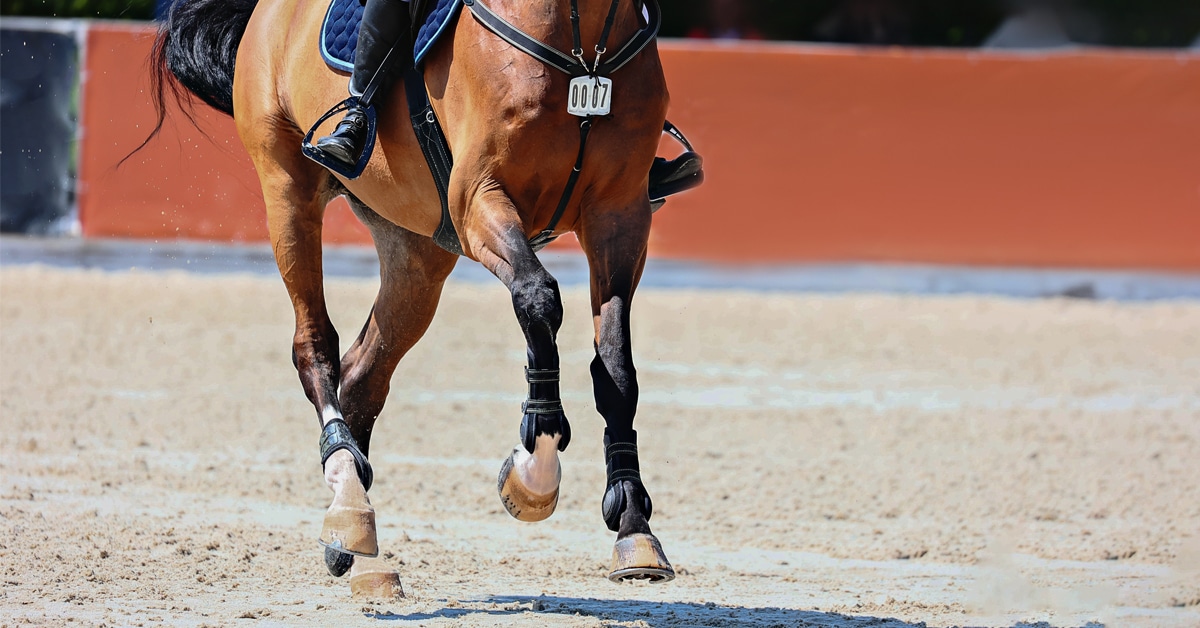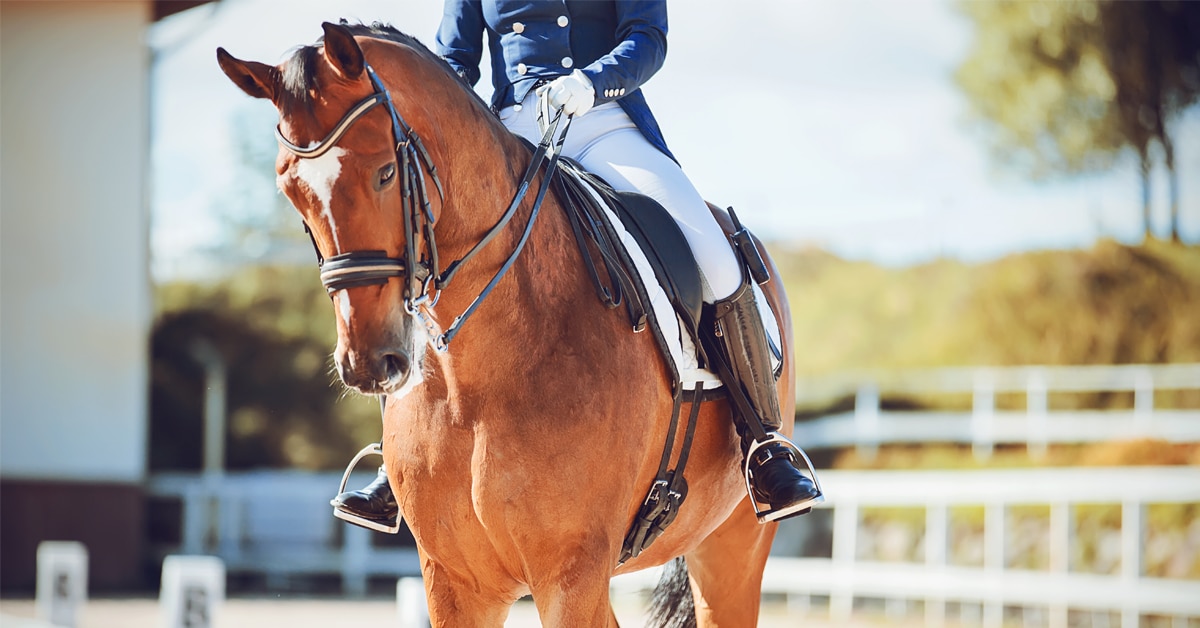
Growing concern among researchers and welfare organizations suggests that nosebands, especially when tightened excessively, may have unintended consequences for both horse welfare and performance.
A 2025 study conducted in the UK and published in the Journal of Equine Veterinary Science provides new insight into this issue by examining how different levels of noseband tightness affect pressure on the horse’s face and its movement during trot. The findings reveal a clear and concerning relationship: as noseband pressure increase, it negatively impacts the horse’s stride.
The study involved eight healthy riding horses and tested three levels of noseband tightness using the International Society for Equine Science (ISES) taper gauge: the widely recommended “two-finger” fit, a tighter “one-finger” fit, and an extremely tight “zero-finger” fit. Researchers used pressure sensors placed under the noseband to measure force on the nasal bone, while motion capture technology tracked changes in the horses’ gait.
The results showed a dramatic increase in pressure as the noseband was tightened. At the recommended two-finger setting, average pressure was about 26 kilopascals (kPa). This rose to approximately 41 kPa at one-finger tightness and surged to nearly 116 kPa at zero-finger tightness — an increase of more than 300%.
These values are significant, because similar or even lower pressure levels in other parts of a horse’s body, such as under a saddle, have been associated with pain and tissue damage.
Impact on Stride Length
Alongside increased pressure, the study found a clear decline in stride length as the noseband was tightened. Horses moved most freely at the two-finger setting, with an average stride length of 2.14 meters. This decreased to 2.00 meters at one-finger tightness and dropped further to 1.90 meters at zero-finger tightness.
Overall, the tightest noseband reduced stride length by more than 11% compared to the recommended fit. Even the moderately-tight setting caused a measurable decrease. A statistical analysis confirmed a moderate negative correlation between pressure and stride length: as pressure increased, stride length decreased.
Why Does This Happen?
The study proposes several explanations for how increased noseband pressure affects movement.
- First, the noseband sits over sensitive structures in the horse’s head, including the nasal bone, nerves, and components of the jaw system. Excessive pressure may interfere with the temporomandibular joint (TMJ), a critical structure involved in chewing, posture, and coordination. Disruption of this system could alter the horse’s balance and movement patterns.
- Second, the noseband applies pressure near branches of the trigeminal nerve, which plays a role in sensory perception and motor control. Compression or irritation of this nerve could affect how the horse processes signals related to posture and gait.
- Finally, the body’s connective tissue system, known as fascia, links different muscle groups throughout the body. Restriction in the head and jaw area may transmit tension through these connections, ultimately influencing movement in the limbs.
Together, these mechanisms help explain why a seemingly small change in equipment can have measurable effects on whole-body movement.
No Visible Behavioral Signs
Interestingly, the horses in the study did not show obvious signs of discomfort, even at the tightest setting. This highlights an important issue: lack of visible resistance does not necessarily mean the horse is comfortable.
The researchers suggest that the tissues in the horse’s head may tolerate pressure differently than muscles in other areas, making pain less immediately apparent. However, evidence from other studies indicates that sustained pressure, even at moderate levels, can lead to tissue damage over time.
Implications
The findings challenge a common assumption in equestrian practice that tighter nosebands improve control and performance. Instead, the study suggests the opposite may be true. Excessive tightness not only increases pressure to potentially harmful levels, but also reduces the horse’s natural movement. While these changes in stride may seem subtle, they have meaningful implications for both performance and welfare.
The research also supports existing recommendations that a noseband should allow space for at least two fingers between the strap and the horse’s face. Yet previous surveys have shown that many riders, even when aware of this guideline, still tighten nosebands beyond this level in practice. Ensuring a properly-fitted noseband is not only a matter of comfort, but also a key factor in maintaining a horse’s natural movement and overall well-being.
You can read the full research paper here.
~ with files from the International Society for Equine Science
The Latest