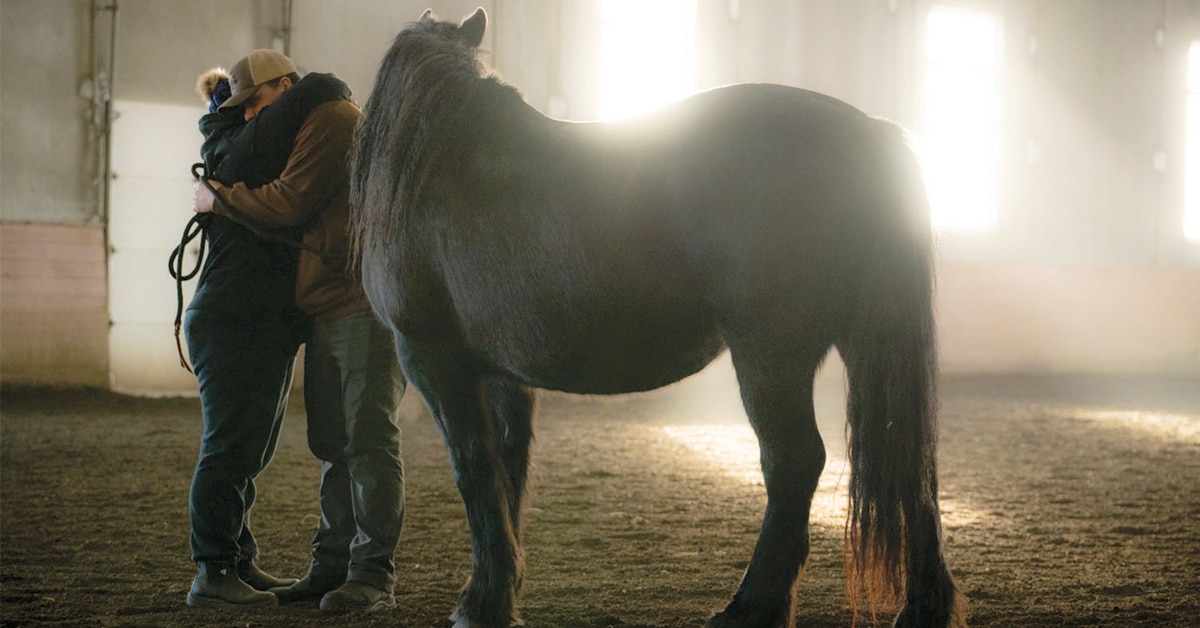
“In 2009, I was diagnosed with PTSD, and in 2012, I was released from the Canadian Armed Forces. By 2015, I was done. I was done fighting, I was done hoping, I was done caring. My marriage was in serious trouble, and I was in a dark place, thinking about turning off what light was left.
I had never heard of Can Praxis. Had no idea what equine-assisted learning or therapy was. Thankfully my wife applied, and when we were accepted, she told me we were going. I had to grab that lifeline. That’s what this program is. That’s what this program does. The facilitators push their way through our barricades, and whether we want it or not, hit us with what we need to hear.
Can Praxis teaches us not just how to ‘talk’ to our spouses, but how to communicate. How to listen and how to be heard. They link us with others dealing with the same issues and give us an extended family, to show us we are not alone.
This program gave me an exceptionally painful reality check, and showed me the damage I was doing to myself, and to others. For that, I will be forever grateful.
Today, things are different. Things are better. My wife and I talk. We face things as a team. We lean on each other again. We have taken the lessons we learned and apply them for ourselves and with people we deal with on a daily basis.
I found the courage to take ownership of my injury. I started taking those next right “small steps.” I live with PTSD. I live with depression. But most importantly, I live.
I am so grateful, for a wife that wouldn’t give up, a program that forces us to open our eyes, and an extended family of veterans, first responders, and their partners. Together with Can Praxis, you saved me. Thank you.”
~ Will Wells, Canadian Armed Forces
This powerful testimonial is one of many that touches on the struggle with mental health faced by former members of the military. When veterans and first responders return from the front lines of service, whether in combat, crisis response, or emergency care, their battles are far from over. Many grapple with operational stress injuries, post-traumatic stress disorder (PTSD), fractured relationships, and feelings of isolation.
Warrant Officer (ret) of the Canadian Forces, Steve Critchley, founded Can Praxis in 2013 and has dedicated his life to offering these individuals and their families a pathway to healing with his unique approach combining conflict mediation and the transformative power of horses.
The Vision: Why Horses?
Horses play a uniquely powerful role in this therapy, one that cannot easily be replicated by other animals. Unlike dogs, who often return affection regardless of treatment, horses respond to respect and honesty. They will back away if pushed too hard yet respond generously when approached with care. This requirement for balanced, respectful interaction mirrors the dynamics of healthy human relationships.
While rabbits or other small pets may also trigger dopamine release, they lack the social complexity and herd-based instincts that make horses natural teachers of communication, boundaries, and trust. Their size, presence, and sensitivity to non-verbal cues ensure participants cannot ignore the feedback, making lessons immediate, authentic, and lasting.
Critchley’s approach is rooted in science as much as in horsemanship. Horses, he explains, are social herd animals that operate on trust and respect. Unlike the unwavering loyalty of dogs, for example, they respond directly to body language, tone, and non-verbal cues – which are the very elements that make up the majority of human communication. This makes them extraordinary partners for people struggling with PTSD, where traditional dialogue often breaks down.
For veterans and first responders who are trained to suppress emotion in order to survive, this reconnection is vital. Horses, acting as mirrors, provide feedback without judgment. A horse pushed too hard resists; a horse treated with respect and understanding responds. These lessons translate into practical strategies for communication, relationships, and self-awareness.
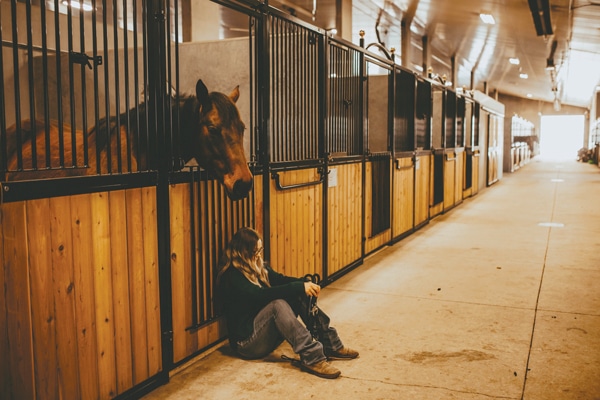
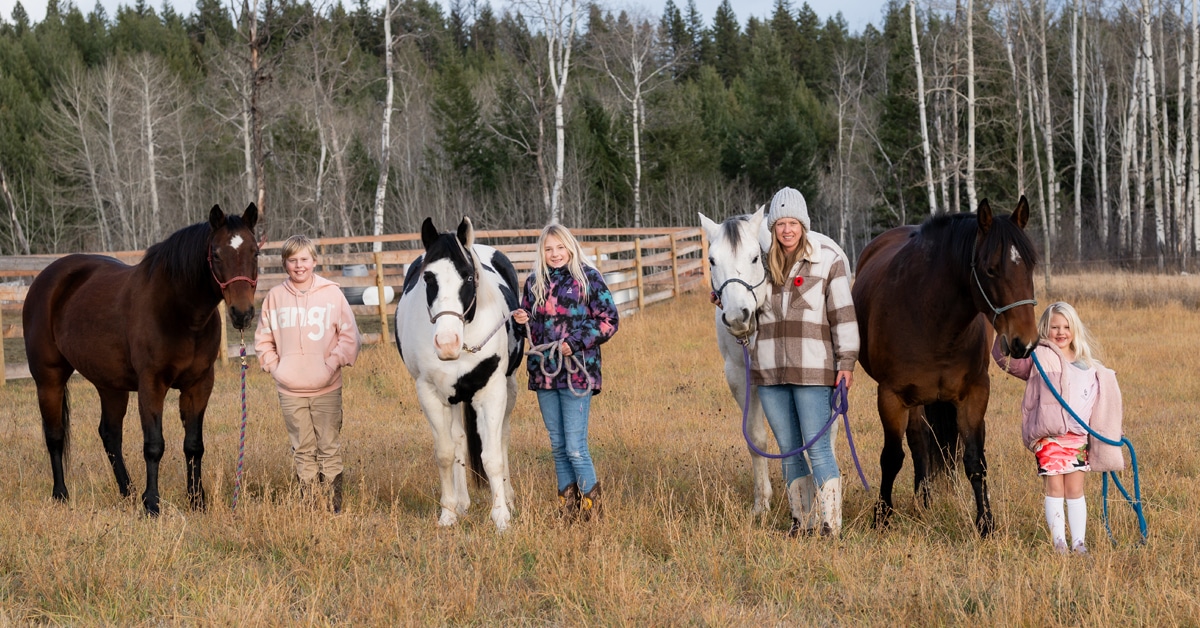
Can Praxis programs such as Breaking the Cycle help children understand that a parent’s bad day isn’t their fault, and teaches them to identify emotions through observing horses. (leahtylerszuckiphotography)
Most of the horses used in Can Praxis programs are Canadian Horses from Critchley’s own herd, bred and raised as a family. Each foal is named after a fallen member of Critchley’s regiment the Lord Strathcona’s Horse (Royal Canadians), adding another layer of meaning for participants. Veterans often feel a bond with the horse they work with, knowing it carries the name of someone who also served and sacrificed.
Critchley stresses the importance of using horses that live together as a herd. Their social dynamics make the lessons authentic, which better helps identify issues and then build confidence.
“When a new person is introduced to a herd of horses, they are curious and want to know where you are in the pecking order. If someone is abusive, the horses will just back away. If someone has little self-esteem, self-respect or self-confidence, the horses will push them around,” explained Critchley.
As attendees work with horses through the three phases of the Can Praxis program, they learn to recognize their triggers and reactions and discover new, more successful ways of interacting.
“When you have people that are starting to feel self-confident, their self-esteem starts to increase. People with self-confidence, self-respect, and self-esteem don’t die by suicide.”
The Facility: Creating a Safe, Respectful Environment
The setting matters as much as the curriculum. Critchley emphasizes that participants must feel like VIPs, not patients.
“We want to bring them to a facility where they feel like they’re being treated like rock stars,” explained Critchley. “Unfortunately, over the last couple of decades the Armed Forces have been given second, third, and fourth-hand equipment without the ability to maintain it properly and so you get to feel like you’re not important and no one cares about you. We bring our first responders to the right facilities and show them that they are important, and they matter. We want to hear what’s going on in their lives so we can help them move forward with family and regain relationships. All of that and so much more can be accomplished with the right facility.”
In Alberta, the program runs at Horse In Hand Ranch, which offers spectacular facilities in a clean and welcoming environment with no outside interruptions. Privacy is paramount, given that every program includes at least one suicidal participant. The environment, Critchley stresses, must eliminate distractions so facilitators can focus on building life-saving connections.
Phase 1: Starting the Conversation
In this first phase, participants are introduced to the fundamentals of communication through mediation practices paired with horse interaction. Each participant attends with the person in their most important relationship, whether that’s a spouse, parent, sibling, or close friend because, as Critchley says, “there’s no point in teaching someone a new language if the people at home can’t understand it.”
Through groundwork, horses help participants grasp the concepts of pressure and release: knowing when to push, when to let go, and how to balance logic and emotion, and understanding that you can’t approach every problem the same way.
When you have people that are starting to feel self-confident, their self-esteem starts to increase. People with self-confidence, self-respect, and self-esteem don’t die by suicide.
“One exercise we like to use is asking the horse to walk sideways. Participants will comment that the horse doesn’t want to move. They have pushed as hard as they can, but the horse won’t move,” explained Critchley about how this exercise reveals patterns in behaviour. “We use the opportunity to ask how that reaction relates to their home life. They will often comment that all they do at home is yell louder to no effect, but then suddenly the penny drops and they recognize that their approach was to use more force, which isn’t the way to work with a family.”
Another key lesson comes during grooming. Couples grooming a horse together may insist that everything is fine, while the horse’s body language with ears pinned, tail swishing, and unrest reveals underlying tension. Horses expose what words conceal, making it impossible to ignore unspoken conflict.
“Only seven per cent of every conversation are your words,” cited Critchley. “Ninety-three per cent of every conversation are nonverbal tones, grunts, moans, inflections, body movement, heaves, sighs, eyerolls — that is the vast majority of any conversation we have. Horses focus on that ninety-three per cent. They will give you a response or reaction based specifically on the conversation they’re having with you. That is why horses are so valuable in this type of work.”
Phase 2: Rebuilding Through Practice
This phase builds on phase one and takes place over three days in a relaxed ranch setting. In this phase, first responders and veterans attend separately from spouse/family/friend and recall/reinforce lessons learned in phase one and discuss with peers how to continue using accumulated knowledge and experience. Such peer-to-peer exchanges are powerful, and often carry more weight than facilitator advice.
Days are spent learning to care for and ride horses, while evenings are devoted to structured debriefs. Each night focuses on a different timeframe: what has worked since phase one, what is working now, and what will continue to work.
“It’s always easy to find the negatives,” commented Critchley about the positive focus. “Finding positives in life can take a lot more work and concentration. We introduce the habit of seeing and recognizing positive.”
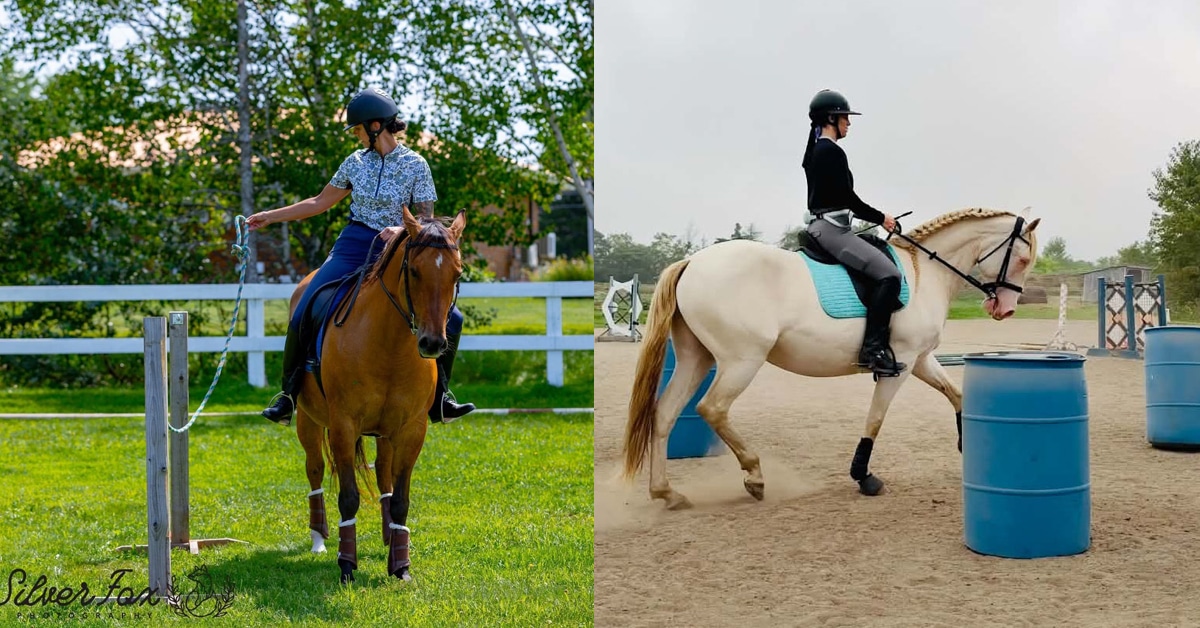
While the first phase is done on the ground, phase two introduces attendees to riding outside. The activity helps teach how to be present in the moment, which can be difficult for those who are constantly tense and suffering from PTSD and anxiety.
“Using all the tools we are giving them, people learn how to just ‘stop.’ What we’ve been doing since day one is helping people be aware of being in the moment and how good it can feel – how to slow the hell down and be present.”
The lesson can be transformational.
“We’ve had people say that for the first time in twenty-five years they saw the colour of the leaves on the tree. Another time a group of spouses got off their horses and sat down eating wild Saskatoon berries and laughing and having a good time. That’s being present and in the moment and when you’re living with someone with severe disability, you don’t get to relax and think and live for yourself.”
Phase 3: Living the Lessons
The third phase is a three-day wilderness immersion where couples reunite. Together, they ride into the mountains, camp without electricity or running water, and engage in nightly debriefs around a campfire. The discomfort of the trail ride and the rustic setting amplify the lessons of resilience, communication, and presence.
“Phase three is about recognizing you can have an argument without it escalating into a crisis,” Critchley explains. The horses, the natural environment, and the supportive peer group combine to reinforce the skills learned in earlier phases. Participants practice being present, slowing down, and recognizing the physiological signs of stress before they spiral out of control.
“This phase gives them the opportunity to understand their own physiological state: what’s helping them be in a good place, what starts to trigger them, and what helps them have those good conversations. To do that, we use the horses to help pump that dopamine and make them start feeling comfortable and confident and recognize that they have accomplished something. When you feel that you’ve overcome an obstacle in a good way, that’s a huge thing in helping you move forward with your mental health. It says if you can do it with a 1,200-pound animal with a bunch of strangers and make something good happen, what can you do at home?”
Beyond the Phases: Family and Specialized Programs
Recognizing PTSD as a family injury, Can Praxis also runs programs like Breaking the Cycle, which includes children. Many veteran families have neurodivergent children and these programs help kids understand that a parent’s bad day isn’t their fault. Children learn to identify emotions through observing horses, often revealing unexpected insight and resilience.
Can Praxis also offers the Three Sisters Camp, designed specifically for women veterans who face unique challenges, including military sexual trauma and systemic discrimination. Mornings are devoted to group therapy, while afternoons with horses provide reflection, accomplishment, and healing.
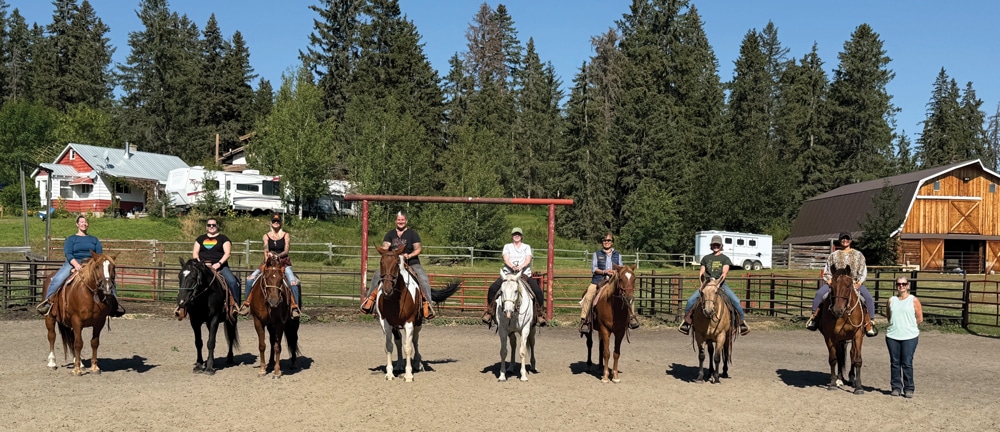
Participants progress from riding indoors to venturing outside and eventually embarking on a three-day couples’ wilderness excursion.
Challenges and Funding
Can Praxis faces constant challenges in finding the right facilities, qualified facilitators, and sustainable funding. While Veterans Affairs Canada provides some support, much of the program relies on private donations and grassroots fundraising. A registered charity, Can Praxis accepts any donations here:
• $4,000 would send one family/couple to our Phase 1 Program
• $12,000 would send one family/couple to all three Program phases
• $25,000 would send six families/couples to our Phase 1 Program
• $75,000 for six families/couples to all three Program Program phases
Expanding into Ontario is a top priority. More than half of Can Praxis participants come from east of Manitoba, so an Ontario facility would reduce travel costs and allow more veterans and first responders to access the program. The savings would allow donations to be used to fund additional programs rather than travel expenses.
“We have a huge waiting list,” Critchley said. “If we had the right facility and trained facilitators in Ontario, we could run more programs without spending so much on flights and logistics. That means more families getting the help they need, faster.”
Critchley remains candid about the stakes. “We’re not going through the program just for the sake of it. These [psychological] injuries are killing people, and that is not acceptable.”
In a world where the invisible wounds of trauma often go unacknowledged, Can Praxis stands as both refuge and revolution — a place where healing begins with a conversation, a horse, and the simple truth that no one is broken beyond repair.
“If your computer breaks, you go to the store and buy a new one, but if a leaf falls off your plant it doesn’t mean that it’s broken. The plant is injured and the only way for that plant to survive is with the right environment and the right nutrients. A new leaf won’t grow back overnight, it takes time. The new leaf will not be the same as old leaf, but the new leaf can make the plant healthier, stronger, and better than it ever was.
“The same applies to our injured veterans and first responders: they are not broken, they are wounded. They’re injured and with the right environment, the right nutrients, they will grow healthier, stronger and better than ever.”
The Latest