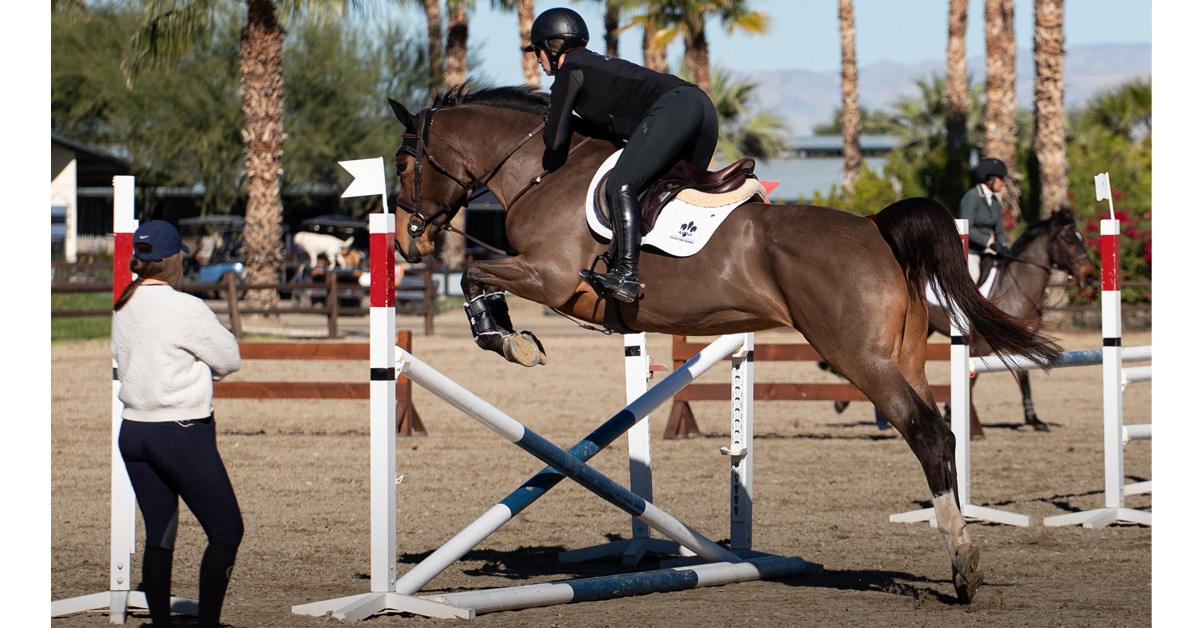
Finding a distance is one of those concepts in riding that seems simple — until you try to define it. Is it something you see, something you feel, or something you create? Riders at every level have heard the phrase “develop your eye,” yet the path to getting there is often unclear, inconsistent, and sometimes even frustrating.
To explore this topic from multiple angles, I’ve invited four respected professionals — Alexander Grayton, Brian Morton, Darrin Dlin, and Johanna Seifert — to share their perspectives. Each brings a unique background in riding and coaching, and, as you’ll see, their approaches don’t necessarily rely on the same ideas. What’s especially interesting is how their insights overlap in philosophy, even when their methods differ.
Rather than offering a single formula, this collection highlights an important truth: finding a distance isn’t about one rigid system. It’s about understanding the canter, developing awareness, building consistency, and learning to trust both the horse and yourself. Whether you’re just starting out or refining your skills in the ring, these perspectives aim to shift the focus from chasing the “perfect distance” to creating the conditions that allow it to appear naturally.
Alexander Grayton.
Alexander Grayton – Horse Position Awareness
My opinion on seeing a distance is rooted in many years of doing so on my own two feet, along with a strong belief that the concept of “an eye” is a mistake, and a misnomer. It places too much emphasis on something visual, when that simply isn’t how it works.
When a person walks down a street, they step up onto a sidewalk without worrying about a “distance” — they just step up when it’s time. It is what it is. We don’t think about it, we simply deal with it when we get there, and we are almost never surprised. Our legs don’t take off at a random moment, yet we also don’t make a conscious effort to step — it happens in the background, subconsciously.
This is proprioception: an intrinsic awareness of how our body moves and where it is in space. It allows us to focus on other things while trusting our body to do its job at the right moment.
My approach in riding is to develop that same level of awareness of where the horse is at all times. Where is their balance: are they stable or shifting? Where is their body: are they truly straight, with the hind end following the shoulders and the shoulders following the head? If any of these things are unclear, you increase the chances of a “mystery distance” — not because of your eyes, but because your horse (the equivalent of your legs when walking) is not where you think it is.
Everyone’s eyes are good enough to see a distance — I will stand by that. The issue is that riders don’t pay enough attention to where their horse is, and instead spend too much time trying to see something that is only ever a reflection of the horse’s position, not the rider’s.
As soon as riders become consistent in managing their horse’s location, straightness, balance, and stride length, they suddenly “see” distances all the time. That doesn’t guarantee it will always be a good one, but you will know what it is and be able to make the subtle adjustments needed.
Brian Morton. (Kim Gaudry photo)
Brian Morton – The Mind’s Eye
I don’t really have what I would call a system for seeing a distance; I think of it more as having a system for producing a distance.
For me, the distance is a product of the quality of the canter, the regularity of the rhythm, and the quality and predictability of the track. For the canter, the essential qualities are pace, impulsion, and balance. When I say balance, I’m referring to both the longitudinal and lateral balance of the horse.
There are many different types of corners and tracks, and a lot of them can lead to a good presentation to the fence. What I think is important is that the rider is intentional about the track, and that the horse follows the exact line the rider draws in their mind’s eye.
It’s all of this coming together that produces a distance and creates a sense of awareness of what’s happening at the jump for the rider, getting horse and rider on the same page in the final strides.
In both my riding and teaching experience, if there’s a problem with picking up a distance, I believe the solution lies in taking the rider’s mind off looking for it and instead focusing on using a system to create it. I almost always find that this brings the rider’s “eye” back.
Troubleshoot the canter and identify what’s missing. Choose your track, visualize it clearly, and make sure the horse follows it exactly. Stay in rhythm and avoid significant changes of pace in the final ten strides to the jump. Take the pressure off meeting the jump at a perfect distance — prove to yourself that most horses can jump well from a wide variety of distances. Most importantly, believe in yourself.
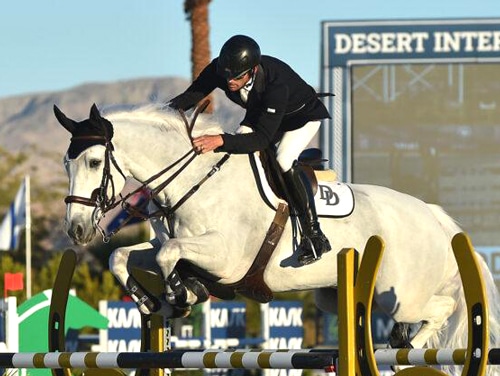
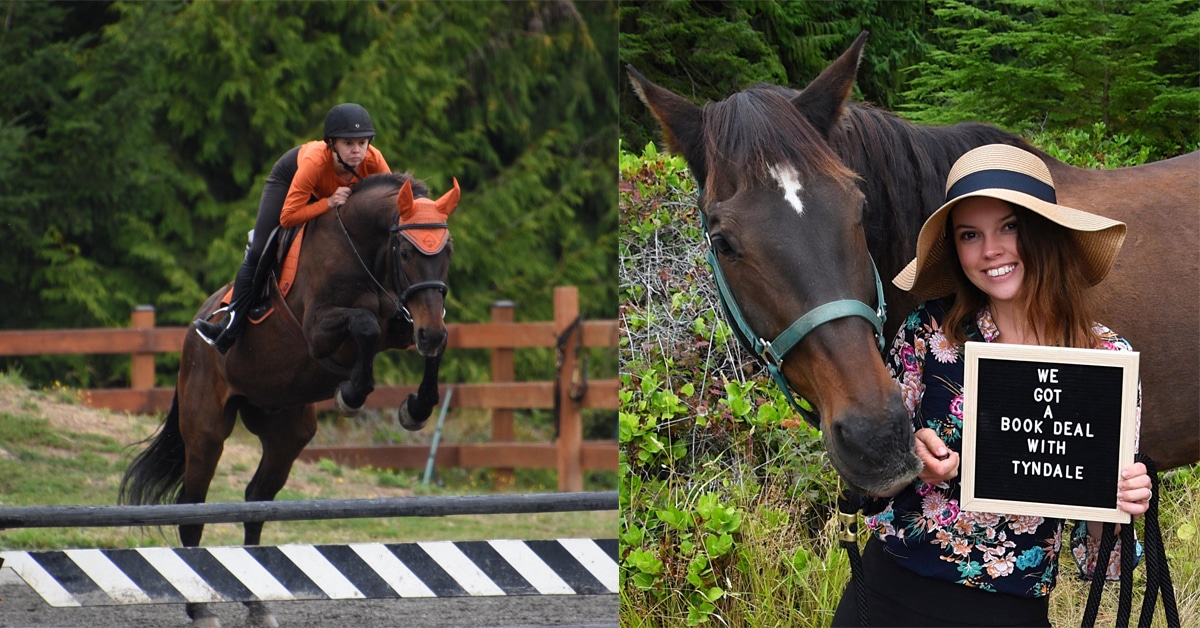
Darrin Dlin and Buddy Bounce at DIHP. (ESI Photography)
Darrin Dlin – All in the Rhythm
As a riding coach, I’m often asked about the best way to develop a rider’s eye to the jump — in simpler terms, how to teach a rider to find a distance to an obstacle. Throughout my career, I’ve been exposed to many different approaches, but the one I prefer is having the rider concentrate on the horse’s rhythm.
As a horse canters, it establishes its natural rhythm. I find that by counting a simple “one, two / one, two” (whether in the rider’s head or quietly out loud), it helps focus the rider’s mind on maintaining consistency in the canter.
From this rhythm, riders often find that the jumps begin to “come to them,” rather than feeling like they have to work so hard to find the “perfect” distance. I don’t like placing too much emphasis on developing an eye alone, because it creates unnecessary pressure to constantly see a distance. This can actually have a negative effect, as it distracts from maintaining a good, consistent canter rhythm.
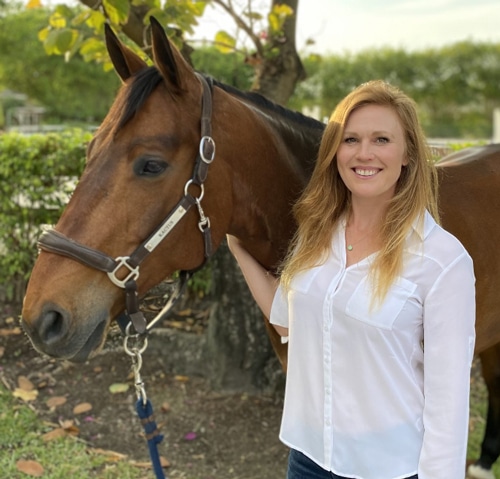
Johanna Seifert.
Johanna Seifert – Trust the Horse
My secret method of finding a distance is… to not “find” one! I feel it’s the horse’s job, since their feet are on the ground, to see and seek the distance. That said, they need the right tools from me, the rider, to do so. My job is to manage the turn, pace, straightness, and track.
To give the horse the best chance to see where to leave the ground, I establish a good canter with a consistent rhythm, as rhythm is ultimately how they judge where to take off. Then I make sure the canter is straight on the track of my choosing. I focus on making a good turn using an opening rein and outside leg, then connect both legs to establish straightness out of the turn without losing rhythm. From there, I keep the horse on that straight track, maintaining the same rhythm until we reach the “zone,” about three strides from the fence.
This is where I expect the horse to give me a feeling of the distance. I support that by either maintaining the rhythm, slightly opening the stride, or slightly closing it. The horse should give a clear indication through their body language of what’s there in that moment.
I believe that the more we allow the horse to find the elusive distance, the fewer mistakes will happen. Their feet are on the ground, and they know what they need to do to get to the other side — we should simply follow seamlessly.
The Latest