
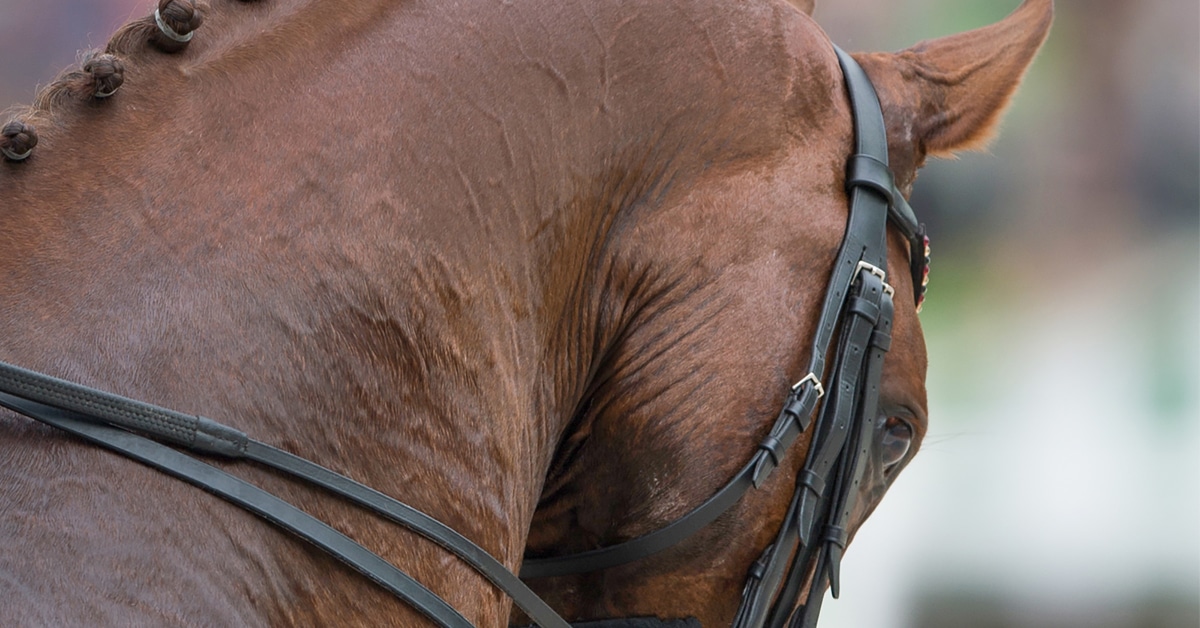
Only four per cent of horse abuse allegations reported in the first year of the new FEI welfare hub system have resulted in cases being opened, with another 15 per cent under investigation.
While some allegations lodged by the public will fail through misunderstandings about suitable evidence, Horse Sport has learned that high-profile veterinarians, experts in animal pain, and welfare campaigners have received no follow-up from incidents they raised via the hub or by emailing senior FEI executives.
 The FEI launched the online reporting facility in November 2024 to maximise information provided from the outset by “whistleblowers” and to offer anonymity (although 72% gave names so far). It is mostly for allegations raised after competition (a different process applies on the day) and arising out-of-competition, i.e., at private barns.
Previously, formal protests had to be lodged with the FEI secretary general; others would contact various FEI departments. In 2025, most people uploaded evidence to the hub, but 20% used email or phone; 52% allegations arose from competition, 30% out of competition and the rest are “unknown.” Exact numbers are not available.
Summarising the hub’s first year, FEI Equine Community Integrity Unit chairman Martin Gibbs said: “The FEI knows that coming forward with sensitive information is a big decision, which can be very difficult and is certainly not taken lightly. The FEI applauds the person’s courage to speak up and raise any concerns they have. By reaching out to the FEI, the persons have chosen to put their trust in us, and the FEI takes that very seriously.”
Low follow-up rates
The very low follow-up rate emerged when Horse Sport revisited our most-read story of 2025, Researchers Ask for Review of Top Riders. Last February, we covered the “letter of concern” sent by a group of eminent equitation scientists to the FEI, alleging hyperflexion and “blue tongues” at two European CDIs. The group’s coordinator, Cristina Wilkins, simultaneously reported eight riders for alleged abuse on the hub, uploading multiple sequential high-resolution images. Isabell Werth responded here ‒ number 6 on our “most-read” list.
The research group – Prof. Paul McGreevy, Dr. Cath Henshall and Prof. Amy Lykins (Australia,) Prof. David Mellor (New Zealand, architect of the “five domains”), Dr. Kati Tormola (Finland), photographer Crispin Parelius Johanessen (Norway) and Wilkins – was invited to address the FEI veterinary committee in the spring. Horse Sport reported on this, highlighting ‘Bits Work Because They Hurt’ their frank message, “Bits Work Because They Hurt.”
However, this did not turn into the “Emperor’s New Clothes” moment some have hoped. There is still no sign of the FEI updating its position on hyperflexion nor, in consequence, handing official warnings to transgressors in dressage. Wilkins says she never received any explanation as to why her hub submissions only warranted an auto-acknowledgment, although the FEI disputes this.
FEI General Regulation Art. 142 defines abuse as “an action or omission which causes or is likely to cause pain or unnecessary discomfort to a Horse.” It may be noted that the singular is used – “an action” – and that pain does not have to be proved.
The scientists group has long history in researching the oral cavity. Wilkins – an advanced eventing rider in her native Spain in the 1990s before marriage and relocation to Australia – is currently working on a PhD at the University of New England on welfare outcomes of human-horse interactions. Wilkins stressed the group is welfare-motivated and does not regard its intervention as a justice system.
She felt compelled to formally report the riders under discussion. Wilkins told Horse Sport: “In general, all instances [in the presentation] where the lips are open enough to see inside the mouth showed highly compressed tongue, stretched lips, and the other signs of very high forces exerted by the bits on oral and facial tissues.
“The FEI publicly encourages people to report suspected horse abuse, yet when detailed, expert-reviewed evidence is submitted, the process becomes opaque. Reports receive an automated acknowledgement and no substantive response unless an investigation is opened. From the perspective of welfare science, this creates a troubling situation where credible evidence of pain appears to disappear into a procedural void, with no explanation of why it falls short.
“If evidence of sustained, equipment-induced pain in competition does not trigger investigation, then the threshold for action is effectively higher than the threshold for harm. That raises serious questions about how the FEI’s stated commitment to safeguarding horse welfare is operationalised in practice.”
Anti-hyperflexion campaigner Dr. Eva van Avermaet told Horse Sport she had no response to several protests with photos/videos of alleged horse abuse emailed to the FEI secretary general in 2024, and only an auto acknowledgement to a protest submitted via the hub last year.
Dr. van Avermaet, a veterinarian practicing in France, has for many years attended European CDIs to monitor the warm-ups. Although a well-known figure on the circuit, she says only one senior executive from the FEI has contacted her “unofficially,” and that was to discuss a different matter, not her abuse protests.
Professor Paul McGreevy of the University of Sydney is a founding father of equitation science; honours include the 2020 World Veterinary Association’s Global Welfare Award. He co-authored 300 peer-reviewed studies including 22 on interconnections between nosebands, bits, tongue ties, rein tension and hyperflexion.
In July 2024, he emailed high definition photos of four horses at a European CDI, plus his expert concerns, to FEI president Ingmar de Vos and secretary general Sabrina Ibanez. He was perplexed that the FEI legal department queried photo authenticity, due to allegations of digital enhancement in previous cases. They wanted originals. Prof McGreevy asked FEI Legal how he should send these huge digital files – usually shot at 8,000 frames per horse per Grand Prix test – but heard no more.
Eighteen months on, he told Horse Sport: “I’m still waiting to hear back on forensic software, admissible evidence and file sharing. As you can imagine, this is quite dispiriting to experience so little cooperation, especially since we were all told to take responsibility for uplifting horse welfare.”
(To ensure no photoshopping, FEI commissioned its own photography of equine mouths during the Paris Olympic dressage, resulting in informal discussion between ground jury and approximately five riders.)
Autoreplies for Clean Endurance
Another receiving zero feedback from the hub is Pauline van Drumpt of campaigning group Clean Endurance. Their four successful protests at FEI Tribunal before the pandemic substantially contributed to case law on horse abuse, and three were cited in the recent Andrew McConnon decision. Van Drumpt is the only non-lawyer to have defended an appeal against an abuse ruling at the Court of Arbitration for Sport (CAS) and can reasonably be said to have a sound understanding of what is required.
Their earlier protests went directly to the FEI secretary general. But Clean Endurance’s three reports to the new hub in 2025 were only auto-acknowledged. One involved an endurance rider who abandoned her horse after it collapsed near the finish – with a last loop recorded average speed of 30kph – leaving the stricken animal unattended. Another supplied video of a rider repeatedly kicking her potential winner to go faster in the closing stages of a 120km race in which it had travelled throughout at speeds in excess of 26kph – it suffered a catastrophic injury (fracture) seconds later.
A FEI spokesman said that all hub submissions receive an autoreply which ends “please kindly note that the FEI is not in a position to provide individual updates on reports.” Many allegations do not meet the threshold for opening a case as set out under FEI Rules and Regulations, and sometimes there is insufficient or unsubstantiated evidence. If it opens a case, FEI follows up with the reporter. If they remain anonymous, communication is not possible. If, therefore, the reporting person hears no more, they can assume the FEI is not pursuing it.
Regarding Cristina Wilkins and Eva van Avamaert’s submissions, the FEI spokesman said: “Various members of the FEI have been in contact with them on multiple occasions concerning several items and allegations. On several occasions, we explained that their allegations did not constitute horse abuse under the FEI Rules and Regulations and that, accordingly, the FEI would not open disciplinary proceedings.
“While the FEI acknowledges that they may disagree with this assessment, we did follow up with them. Their position reflects a disagreement with the FEI’s conclusions, rather than an absence of engagement by the FEI.”
Why protests against hyperflexion may currently fail
Any horse abuse protest related to hyperflexion seems destined to fail, due to the FEI’s indecision on the controversial technique. Although a large body of research exists, with 58 known peer-reviewed studies to date from institutions around the world, the FEI is carrying out its own.
FEI “condemned” hyperflexion in 2010. But contrary to public belief, while stewards are obliged to keep an eye in the warm-up, hyperflexion is not mentioned at all in FEI Dressage sport rules, FEI General Regulations and FEI Veterinary Regulations. If it is not expressly mentioned, it is not banned.
The only two yellow warning cards known to be handed down for hyperflexion involved eventing riders, one of them only after PETA’s intervention during Paris. Answering media enquiries about he latter, Ingmar de Vos did not use the word ‘hyperflexion.’
In recent Tribunal cases, hyperflexion has twice been mentioned as an example of abuse in an FEI legal case. Horse Sport queried this last fall. FEI elaborated that while its legal team mentioned hyperflexion in connection with disgraced trainer Cesar Parra, it was clarified (in expert testimony) that hyperflexion only became abusive when combined by Parra with other harsh techniques.
The FEI’s list of abusive practices under Art 142 of the GRs is meant to be illustrative, not exhaustive, although unlisted practices rarely figure in a Tribunal finding of abuse. Last year Poland unsuccessfully lobbied to add hyperflexion to Art 142.


