The COVID pandemic, escalating costs, supply chain issues, people’s changing priorities and other factors have created major challenges for the equine industry, especially at the grassroots level.
Among those that have felt the pain are lower-level show venues and riding schools. We asked a few show and stable operators in Ontario (the province with the highest demand/concentration of English disciplines) about what they see as the major challenges, and how they have adapted.
‘Big Business’
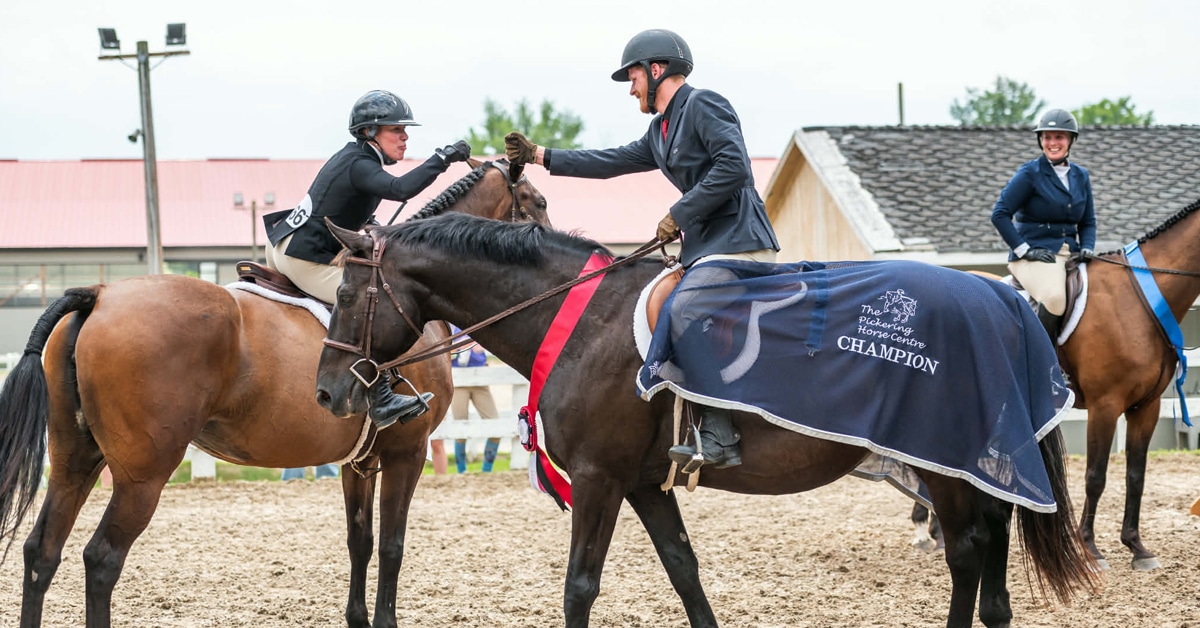
Gary Yaghdjian, owner of Pickering Horse Centre (PHC) in Durham Region, has served on multiple Equine Canada and Ontario Equestrian committees, and served as OE president for a term.
Yaghdjian says the sport structure is supposed to provide a pathway from grassroots to FEI level, but what exists is more of a business model – a concern he addressed in a recent letter to EC regarding its Competition Structure Review.
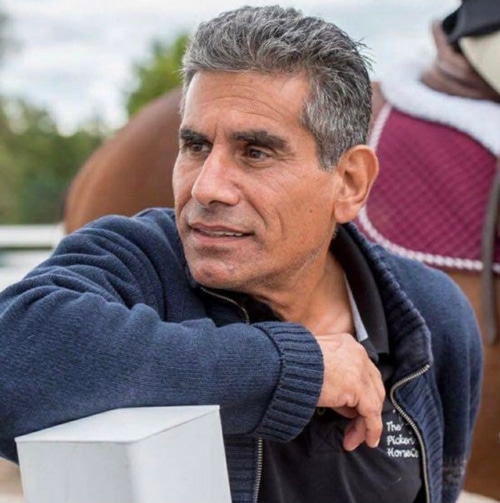
Gary Yaghdjian: “The demand is there, but you have to cater to it. Customers are discerning.”
He has witnessed many smaller shows and stable-based competitions go extinct over the last 10 years, as bigger venue operators have taken over more market share. Horse shows have become big business, Yaghdjian says, but don’t encourage cultivation of new equestrians, as the cost to compete at the big venues is beyond the means of the majority of riders.
The big venue shows are impacting lower-level shows in two ways, Yaghdjian says. In the hunter/jumper discipline, for example, competitors with EC memberships don’t have to be successful at one level to proceed to the next. A rider can skip all lower levels and go directly into Gold competition, so they don’t have to attend lower-level shows.
Another issue is “no floor” at major Gold venues, Yaghdjian explains, as they now offer everything from cross-rail and two-foot hunter classes up to Grand Prix competition. While lower sanctioned shows have jump height and prize money restrictions, there’s no such restrictions at Gold shows.
“It’s done for the benefit of trainers, who can go to one venue and take all their clients,” says Yaghdjian, but he believes commercial convenience doesn’t foster growing the sport.
PHC offered Trillium (Silver) shows for three decades and was impacted when lower-level classes started being offered at Gold shows. PHC numbers dwindled from 30 to six or eight riders per class. Yaghdjian had built PHC’s infrastructure to accommodate shows, but not at a national level. In 2024, PHC made a pivot to Skills Development (ESD) shows. These are introductory, schooling-level events where riders don’t need an EC Sports License, just an OE membership.
“The goal was to offer Skills Development for horse enthusiasts who want to be part of the sport, but don’t have endless budgets, those developing horses, or riding schools wanting to offer their students the next step,” says Yaghdjian. “We focus on the level of judges and the level of jumps we used to have at the Silver level. It’s been extremely successful, but it’s been a bittersweet pill to swallow.”
He admits he was petrified. “We were hoping to get to the magic number of 75 riders for one-day shows and we hit that target. Some days, we got 150, with three rings and three judges.” PHC will host five 2026 ESD shows and has joined the 2026 Trilogy combined test schooling show series.
Last year, Yaghdjian introduced show monitors at EDS shows, who answer questions, correct improper etiquette or equipment, educate riders and trainers, etc. in a kind, approachable way. It’s been very well received, he says.
Focus on Fun and Community
One goal of Equestrian Canada’s The Canadian Equine Sector: Socio-Economic Insights 2023 report was to gain a better understanding of challenges and opportunities. The research included a nationwide survey of 4,263 people, representing 19,491 in the sector. Those surveyed advocated for a shift in the culture to focus more on the health and well-being benefits of participation in horse activities, rather than simply prioritizing continuous improvements in skills and competition levels. They wanted more fun, social, and community-focused events and activities.
That’s not lost on Kristi Newman, founder and CEO of Silverfox Equestrian Club in Ashburn, Ontario. She shifted her riding school program to “connecting with people where they are at, rather than where you think they should be.”
Newman is an EC Competition Coach, has managed large stables and was a Canadian equestrian specialist volunteer at the Tokyo 2020 Olympics. Silverfox clientele consists mainly of adult amateur riders, from beginners in the school to advanced dressage riders.
“People are looking for a place that’s low-stress, where they can escape from reality and just feel good about themselves,” says Newman. “People don’t want high pressure or to feel bad about themselves.”
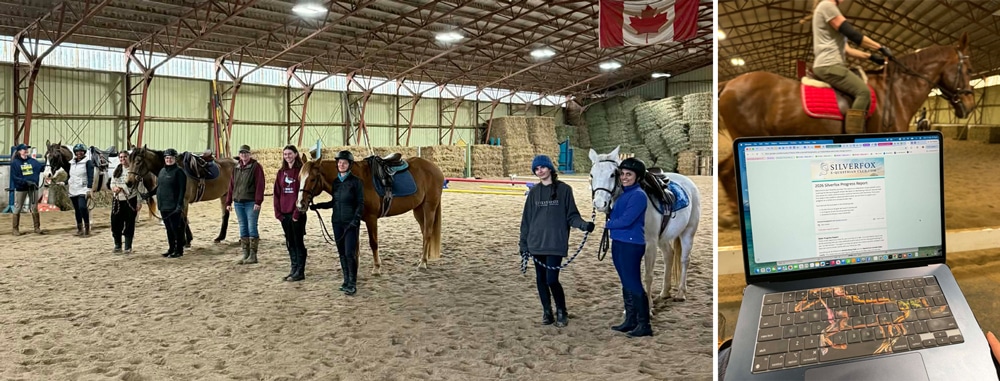
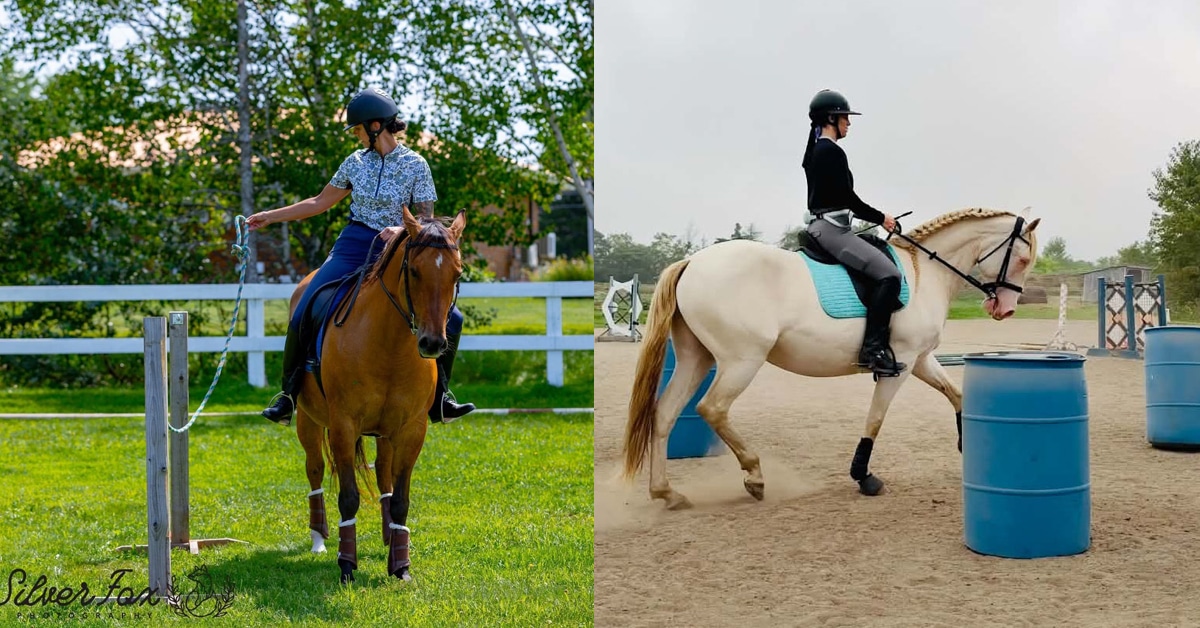
The innovative new Learn to Ride program at Silverfox Equestrian Club pairs new riders with volunteers, while the Rider Progress Report allows riders to see how their skills are developing. (Silverfox Equestrian photos)
She says the competition world has largely been ego-driven, but now people want to be a non-judgmental environment that’s positive for their mental health. People are not willing to push themselves like they used to, she says, and she’s noticed a lot of anxiety in children and adults alike.
This year, she initiated a Learn to Ride program. It’s a group lesson for five adults, taught by a certified coach, with experienced volunteers leading school horses for the entire lesson, so riders can focus on themselves. Some have never ridden before, or are fearful due to past experiences. March and April programs sold out. Almost 100 percent of participants move into regular riding lessons, Newman says.
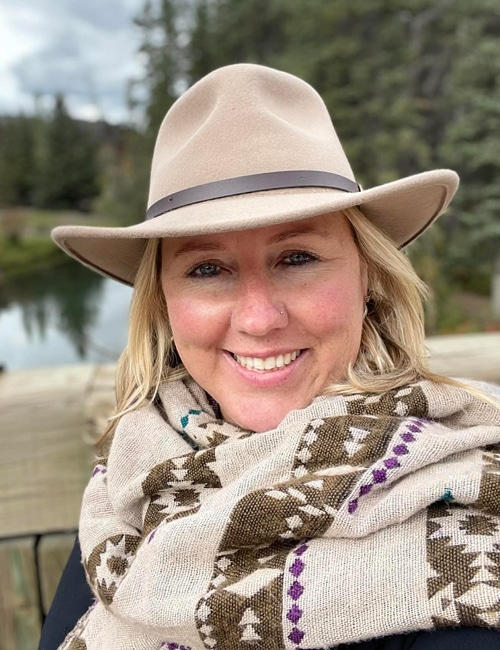
Kristi Newman: “It isn’t a shortage of money. It’s that people aren’t willing to spend it on things that don’t make them feel good anymore.”
Newman takes students to Bronze dressage shows, as she finds “90 per cent” of her riders don’t care whether they are competing at Bronze or Gold. She selects shows she knows are well-run and will best support rider confidence.
Linda Hale, who with husband George Daunt owns Old Orchard Farm in Moffat, Ontario, used to take her riders to Gold shows, but doesn’t anymore due to the pressure of competition and the cost.
Old Orchard holds its own schooling shows. As it’s the home barn of the University of Guelph Ontario Collegiate Equestrian Association (OCEA) Team and the university’s hunter jumper lesson program, it also hosts two to three OCEA shows a year. Hale is a big supporter of the OCEA program, as it includes riders of all levels, and fosters camaraderie and fun.
Most entries for Old Orchard shows come from in-house. Hale says the shows used to be much larger, with up to 180 riders at a one-day show, pre-Covid, and before Gold shows started offering cross-rail classes. Still, the shows attract enough riders to make them feasible.
“Most kids in our riding school want to show here or at Silver shows,” says Hale. “At our shows, we’ll have 30 school horses going twice. People don’t have to ship out. They can take riding lessons and show here. We keep it affordable, at $5 to $15 for a horse rental and $45 for a division.” The only people paid are judges and medics. The ring crew and all other show helpers are volunteers. The shows are low-key, but riders have to dress properly, braid their horse, and have clean tack.
Hale’s daughter Tess’s social media skills have helped build business as “she makes it look like fun. If it’s not fun, people don’t want to do it.”
Customer Service and Added Value
Despite rising costs, Newman hasn’t found money to be a deterrent. “It isn’t a shortage of money. It’s that people aren’t willing to spend it on things that don’t make them feel good anymore. You can’t make lessons or shows cheaper, but you can provide more value.”
She adds value by offering a range of in-person and online learning options, such as the Silverfox E-questrian Club, a wellness learning portal and community, built on how horses live and lead. She also holds regular in-house social events for students.
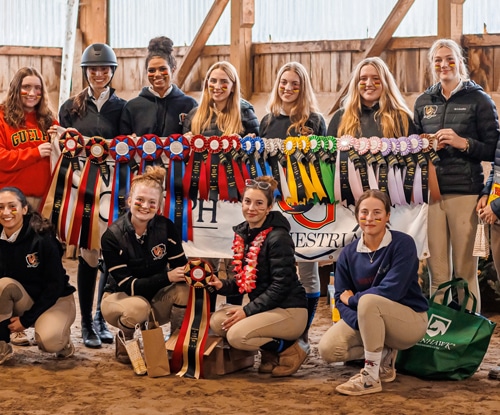
Old Orchard Farm is the home barn of the University of Guelph Ontario Collegiate Equestrian Association, and hosts OCEA shows and reasonably-priced schooling shows. (Old Orchard Farm Facebook)
“There is huge interest in riding,” says Yaghdjian. “I’m always flabbergasted at people in the industry who say the sky is falling, numbers are dwindling. It helps that we are well-established with a prime location and we’ve learned from all of our mistakes. The demand is there, but you have to cater to it. Customers are discerning.”
Hale hosts a year-end banquet for anyone who showed at Old Orchard, even if they’re from other barns. “The kids really enjoy that aspect,” says Hale. “We all dress-up and treat it as a big deal.”
Long-Term Solutions
Hale would like to see volunteerism required, like other sports. “For instance, you can’t be on a swim team unless you agree to so many hours of parental volunteerism. It’d like to make it more of a culture again.” She says removing the HST on children’s riding lessons would also be an incentive, and make lessons more affordable.
Yaghdjian says better coordination between provincial programs and EC is needed. He notes that Ontario Equestrian has “been wonderful at identifying gaps and developing programs,” and while programs are supposed to dovetail with EC programs, but often don’t.
Newman would like to see more education and support at shows. She gives the example of a dressage show facility in Florida that holds monthly schooling shows where riders wear an earpiece, and their trainer coaches through them their tests. Newman thinks this is something Canadian venues could replicate.
The shrinking number of grassroots and lower-level shows is starting to be felt “at the top of the pyramid,” says Yaghdjian. And Gold shows are becoming shows only the wealthy can afford.
“It’s become an unbelievably rich man’s sport,” he says. “It’s not the same cost as a Silver show. That realization is starting to set in and the pendulum is starting to swing back.”
While PHC has found success with ESD shows, “we need 30 PHCs,” Yaghdjian notes, to support building the sport from the grassroots up and ensuring a pathway for riders of all levels who want to build their skills.
The Latest