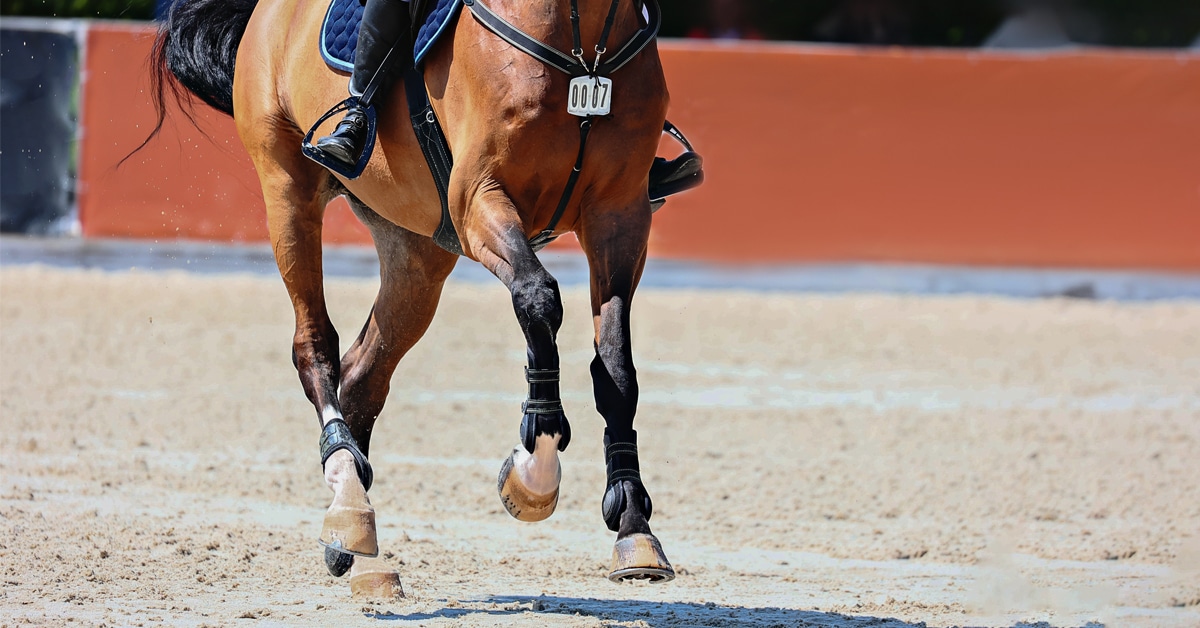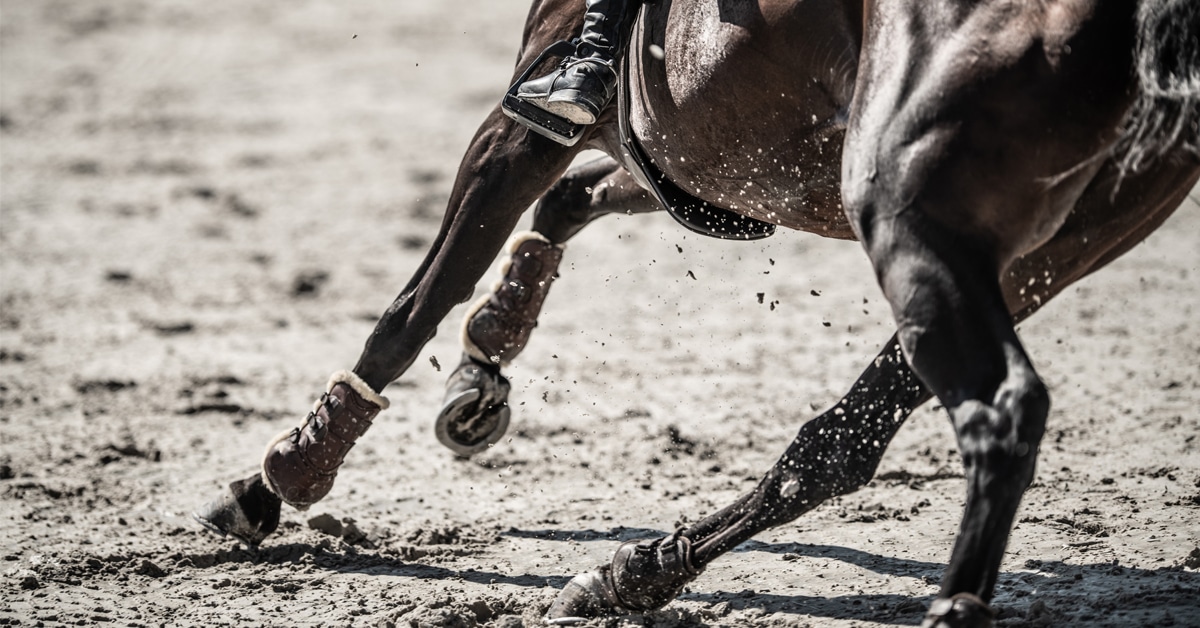
This interesting course can be used many ways, and I have to thank show jumper Carly Kist for setting it in our arena a while back. It was inspiring and a really useful tool to help prepare for the upcoming shows.
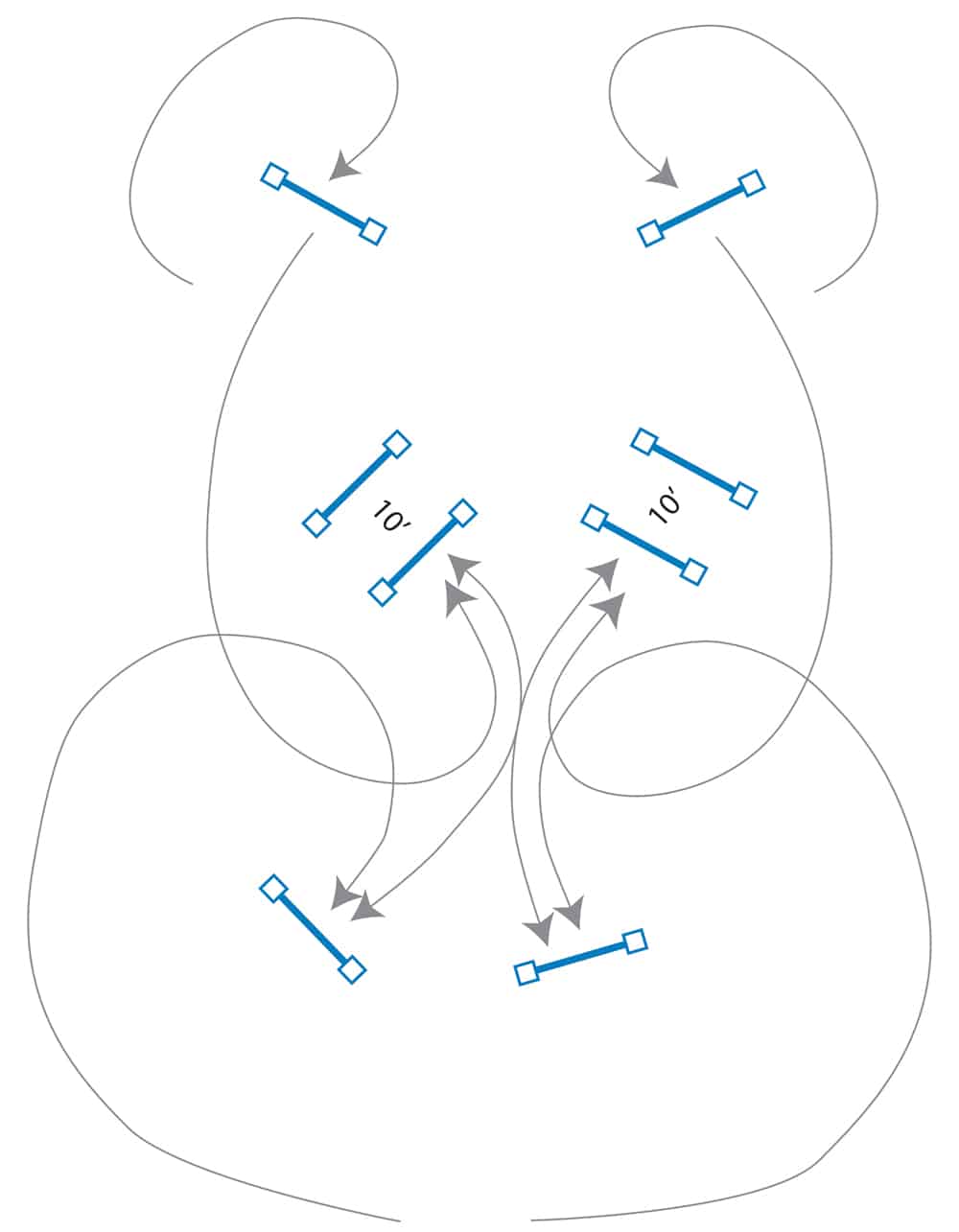
As you can see in the image, we set two sets of bounces at cavaletti height. You should be able to bend those bounces to the angled verticals, and the angled verticals at the far end of the arena should be set so you can fairly easily roll back out of the turn to them.
There are many ways to use this pattern, but the aim of the game is to be able to keep going and going!
The proper setup for a rollback is to establish a good pace — a useful gallop we like to describe as “medium,” where you can go forward and also come back. As we all know, it is a common tendency to start with too small and short of a canter. This leaves the horse and rider short on options when arriving at the first fence, often needing to change the canter dramatically in the last couple of strides to make the distance work. Ideally, we want a canter that supports all distances, making any adjustments more minimal.
I should note that if your horse isn’t familiar with bounces, refer back to these articles (Bounce Grid and Advanced Bounce Grid) to see how to best introduce them.
You can start anywhere on course, but begin with a good gallop as mentioned above. Like any small turn, you must shorten the canter — but to shorten, you must keep the engagement. The horse should shorten by sitting more, keeping the front end light.
Once you are at the apex, or point, of the turn, this is where the outside rein and leg become a boundary. Some people think of the outside aids as what turns the horse, but I like to think of them more as a boundary. It’s important the horse continues to look where they are going, and if you overuse the outside rein, they will start to look to the outside.
Also, at the apex is where you step the horse back up to your hand. This may mean increasing the stride length to get up to the jump, or it may mean adding “rpms” (a nod to a driving term) to create more impulsion. The horse needs power on arrival — so even if the distance is deep, they still have their hind end under them and are able to do the work required to jump.
On landing from each rollback, re-establish the gallop and pick up the next rollback to repeat.
When you get to bending the line from the bounce to the angled vertical, follow the same process: slow down with an engaged canter and maintain that outside boundary for support.
Happy jumping!
The Latest