It is often said that your landing from one jump is the approach to the next fence — but I can’t tell you how often I see riders in the ring miss the opportunity on landing to properly set up for the next jump.
So often, how we meet a fence has more to do with the corner before it than with the rider’s eye. This isn’t just about pace — it’s about balance.
Here is a simple course designed to address this issue. After every jump, you land and must rebalance: slow down, shift out, and re-establish your gallop before turning to the next fence.
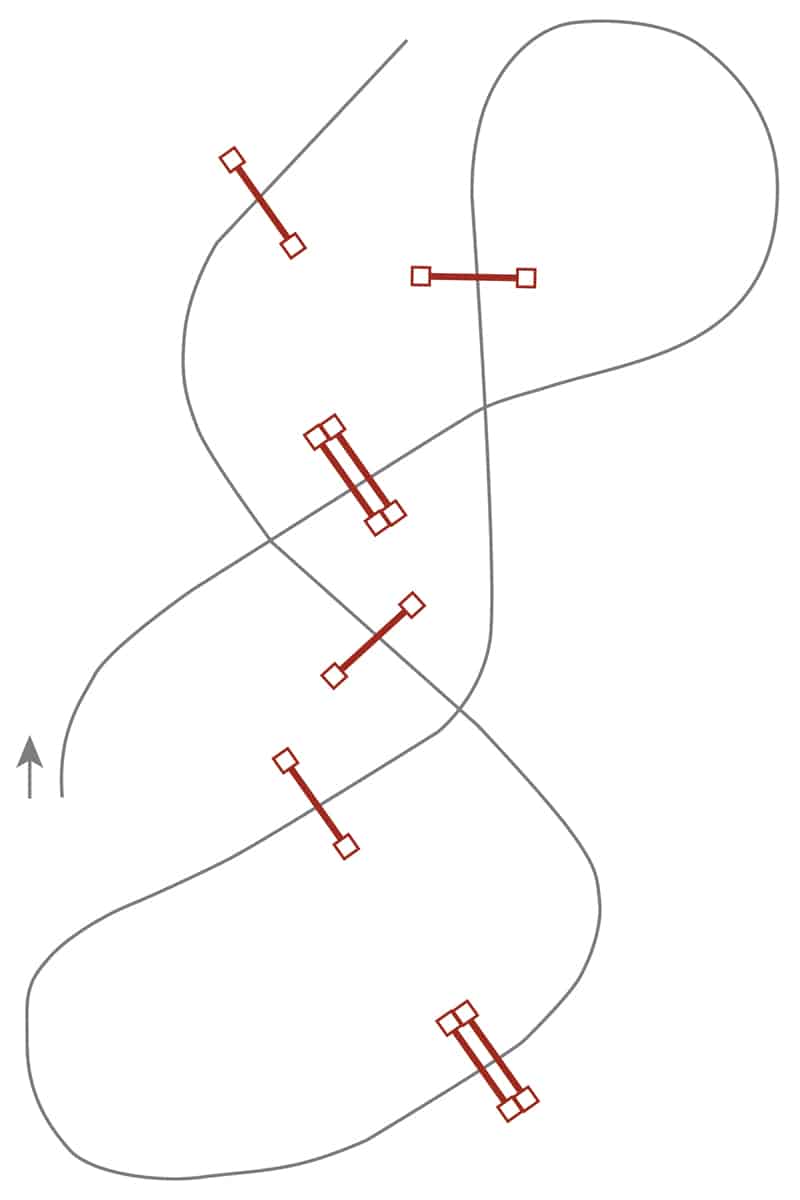 From the start, give yourself enough space to develop a medium canter. This means a canter that can both move forward and compress. If your canter is too big or you’re on the “end of your step,” you won’t have the option to step up to a jump. If your canter is too small or too slow, you won’t have the option to find a waiting distance.
Once you’re on the approach to the jump, keep your rhythm consistent. Too often, we change the canter as we get close because we haven’t seen our distance yet. The reality is you don’t see your distance because your rhythm is changing.
After jumping fence #1, get your horse back. This can mean different things—it’s not just about slowing down. It might mean lifting their frame or, if they backed off over the jump, adding leg to re-establish the canter. What matters is that you regain a quality, balanced canter.
From there the horse should shift slightly out into your outside rein. If you do this consistently, they will begin to anticipate and help you. They should move out just enough to allow you to step forward again in balance. If you don’t feel that shift, don’t turn — period.
If the horse falls in, resists your leg, or speeds up, correct it. This might mean a stronger half-halt, a leg yield, a downward transition, or even a leg yield at the walk. Whatever it takes — make your point clear.
Horses are incredibly good at recognizing patterns. They want to help, and they anticipate. This is a good thing — until it leads to cutting turns or leaning in, which will compromise your next jump. Instead, teach them the right pattern: anticipate the shift out and support the balance.
Once you have them back and shifted out, re-establish your canter. This doesn’t always mean moving forward; you need to assess what was lost and add or subtract as needed to restore balance and quality.
Then move on to the next jump, and repeat.
The Latest