Some of us have spent the winter honing our jumping skills, while others are just getting started in preparation for the show season. In either case, here are a couple of fun exercises that work for everyone.
Bent Line Exercise
Build two verticals — small cavaletti-sized or X rails — on the ¼ line with a bent line between them (see figure 1). Add a single vertical across the middle for changing direction. We are going to work on arrival and landing tracks.
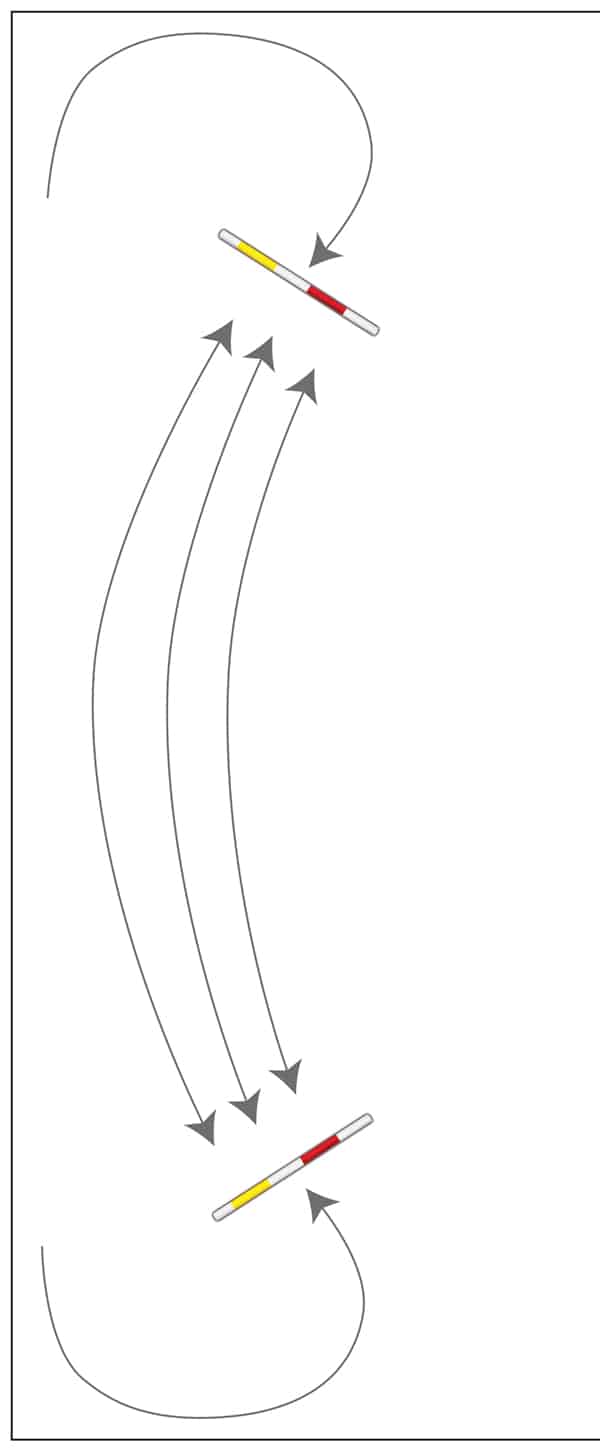
Figure 1.
To start, I like to just jump each of the jumps out of the turn to get going. Once you have that mastered — including a consistent pace, determining if one rein is better than the other, and noticing if your horse shifts one direction or falls in or out in either of the turns — you can start to make adjustments based on this information.
Then we start to connect the two jumps. I like to begin with a medium track: count the strides, do it a couple of times each way, and really get a feel for the line. After that, you can start to change the track in the middle. If you keep the entry line consistent and then adjust the line and number of strides within it, you create a really good way to practice fixing your landing track.
As an example, when we are in the show ring, we often get jumped to the inside or outside of the planned line in a bent line. It is very helpful to have schooled ways to fix it. So often we are caught off-guard with the shift in track that many riders “go with it” instead of having the confidence to correct it.
I like to walk my bent lines knowing my options. If I have a horse that likes to shift one way, or I know may land on the outside lead and therefore fall in on the line, understanding what work you will have ahead of you is just good planning.
Being able to confidently shift to the direct or outside line is very helpful once you get to the show. Sometimes you need an extra stride to get organized, or you need to get back onto the inside track for time allowed. With these small jumps, the consequence is low, allowing you to practice — and inevitably make mistakes — so you can learn how to fix them.
Bounces on a Bending Line
We don’t often jump our horses big in an effort to preserve their legs, but we still need to keep them engaged, thinking, and developing the patterns we’ll rely on in the ring.
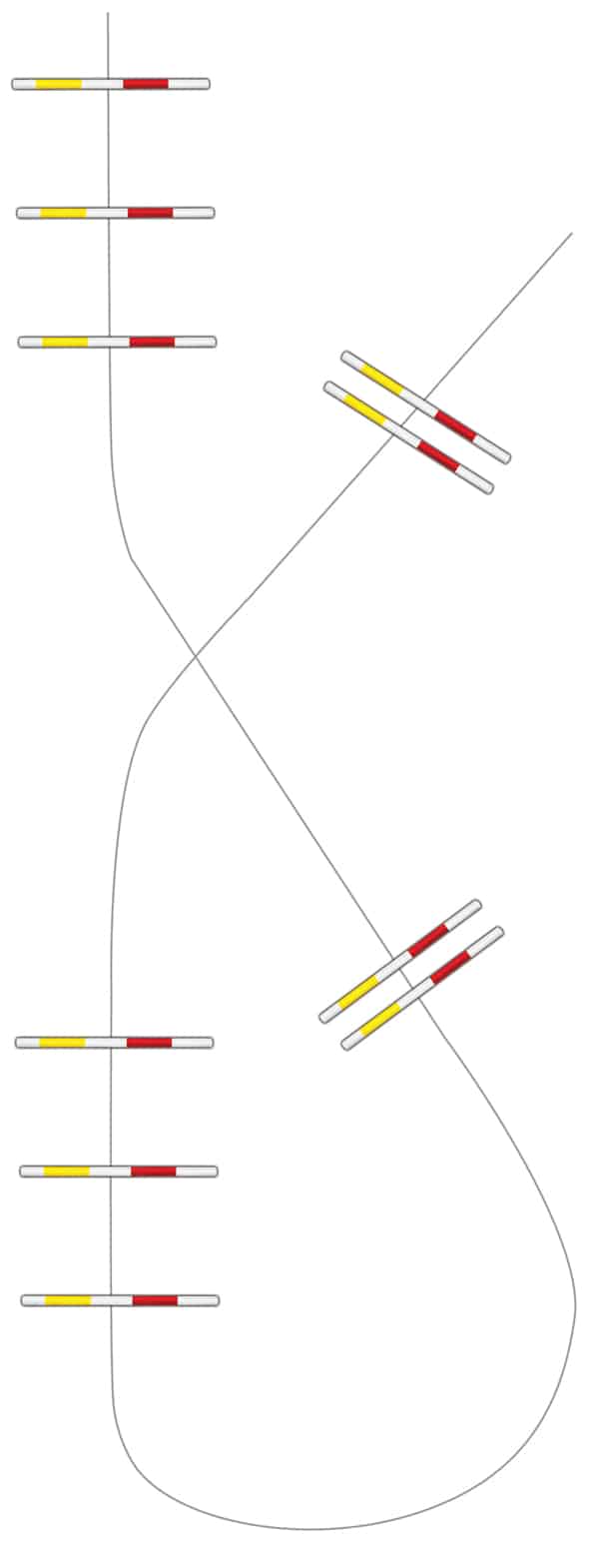
Figure 2.
The setup:
Build three bounces set 10.5 ft apart (you can adjust slightly to suit your horse), followed by approximately 44 ft to another line of three bounces. On the diagonals, set small oxers about 55 ft apart on a bending line (see figure 2). If you have the space, you can extend these distances in 11 ft increments.
The bounces should start at cavaletti height, and the oxers can be set to your comfort level — but ideally no bigger than about 0.90–1.00 m.
If your horse is unfamiliar with bounces, begin with poles on the ground. Gradually raise one element at a time until they are confident and comfortable with the exercise.
Once your horse understands the bounces, you can begin to play with the bend in the line. The oxer encourages the horse to stretch and open their body, while the bounces require them to shorten and compress. This contrast helps develop an elastic, responsive, and thinking horse.
Be sure to stay true to your line. This is key — you don’t want the line to ride too long, creating excess speed into the bounces, or too direct, making the oxer feel abrupt instead of smooth and flowing.
As you progress, you can ride the exercise in a figure-eight, and eventually go straight through from bounce line to bounce line as well. Changing it up like this keeps the horse mentally engaged while encouraging elasticity in their body — without excessive wear and tear.
The Latest