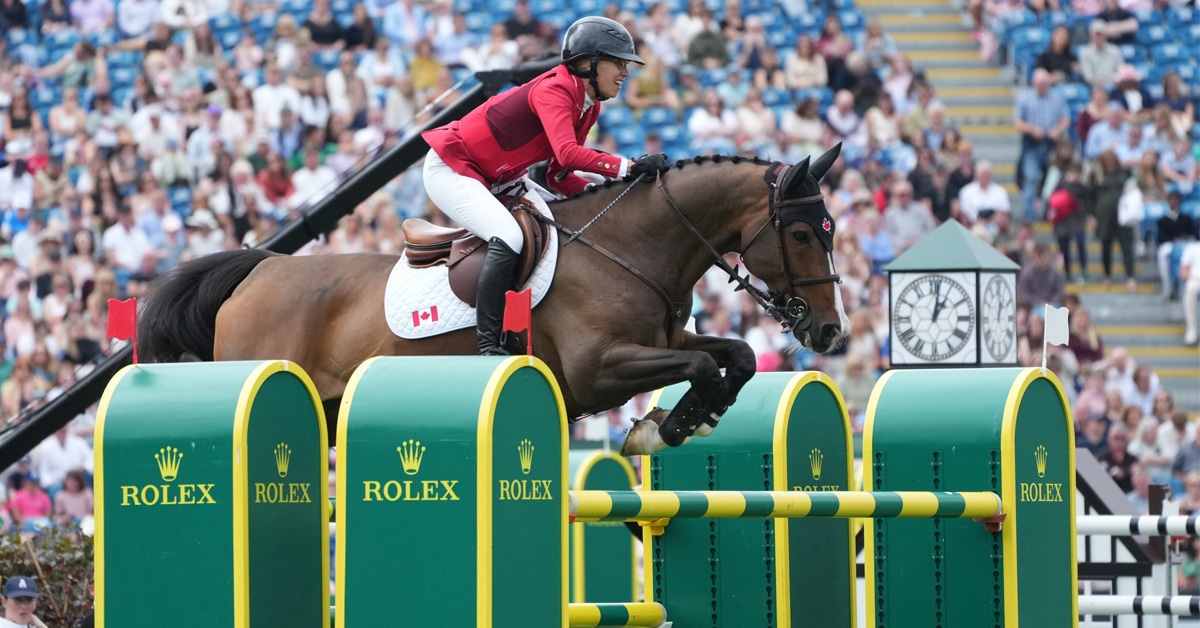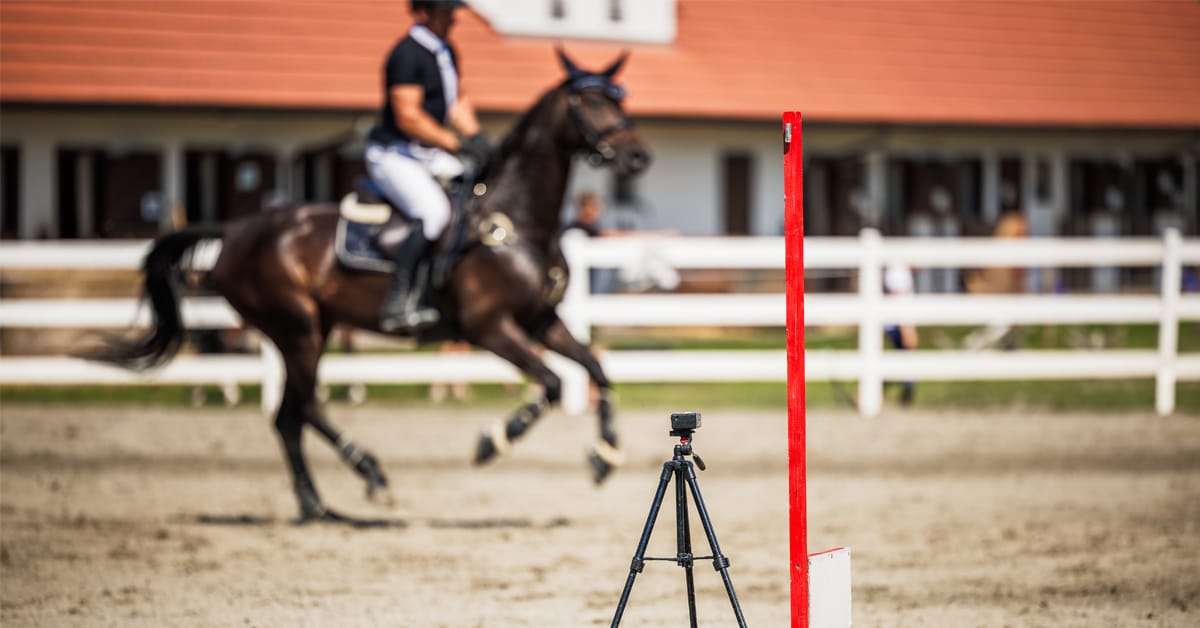
As competition season gets underway in Canada, it’s always a good idea for coaches and competitors to review their rulebooks at the beginning of the year. Along with knowing the rules, understanding proper competition ring etiquette, which may vary by discipline, is also important. This is especially important in the jumper ring, as failing to follow proper etiquette can result in additional faults, the loss of precious seconds, or elimination.
“Rulebooks are free, and you should know the basic rules back to front,” says Christine Reupke, an Equestrian Canada (EC) Senior and FEI Level 1 jumper judge. “Many riders don’t understand the options they have available to them for assistance in the event that a jump blows down, or something is not built correctly.” These examples are why reading the rulebook is important.
Entering and Leaving the Ring
It is important for competitors to understand how pre-loading in the competition ring works. “It’s a privilege to get extra time in the ring with preloading, not a right,” says Christine. “Be very considerate to the person who is still on course, and additionally, stay away from the finish timers! We’ve had top athletes not paying attention in a Grand Prix inadvertently stop the time because they turned the wrong direction and went through the timers that were armed for the competitor on course.
“Also, if you’re the one finishing your course, be sure to be efficient when leaving the ring as a consideration for the person competing next and STAY AWAY from the START timers!” says Christine, laughing.
“Too many athletes at lower levels only think about the .65m class they are currently screaming around the course in, rather than the bigger picture.”
Poopy-pauses and Speedsters
If you expect the judge to hold the countdown clock for a ‘poopy-pause,’ Christine says the horse must be stationary, and the competitor must signal their request by halting and raising their hand. It is not incumbent on the judge to stop the countdown for the competitor – it is a courtesy and not all judges will do it. According to Christine, “If a competitor has stopped and raised their hand, but I’ve missed it because I was writing a number or score down, I will try to pause the clock for what I believe was the amount of time the horse was pooping and stationary. We are here to try and help them succeed, not fail.”
One of Christine’s pet peeves in the jumper ring is the mindset that faster is always better. “Too many athletes at lower levels only think about the .65m class they are currently screaming around the course in, rather than the bigger picture. Honing their skills and training their horses should come first if they want to progress to bigger jumps and more technical courses. They will be better riders and horsemen, thinking about this. Also, many times, the slower round with the more efficient track wins the class. It’s not always pure speed that wins the jump off.”
This is especially true in optimum-time jumper classes where the fastest time doesn’t necessarily win the class. The winner is the rider who finishes closest (either over or under) the optimum time, which is set four seconds under the time allowed. This class is frequently used in lower-level jumper classes to prioritize safety over speed. Not knowing the rules results in an excess of time faults when the competitor completes this course with speed and is unaware of the optimum time requirements.
Retiring and Eliminations
Christine reminds competitors, “If it’s just not your day and you need to retire, please make sure you pull up and signal with a tip of the hat and/or a hand up wave to the judge.” It’s not only respectful, it also lets the judge know you are choosing to retire. “A retirement on your official results is better than an elimination – certainly the case if a horse is for sale.”
She continues, “The judges are there to help competitors, not hinder them, so be respectful and polite. If you’re eliminated, it’s not the judge’s fault. Be kind to your horse. Temper has no place at any time on horseback, and you must never hit your horse after elimination. Riding your horse is a privilege, and you should ask yourself what the cause of a disobedience is and how you played a role in the issue prior to disciplining your horse. Likely it’s your fault; either a bad ride, poor preparation, or poor training and rideability are the issues at hand.”
Common Start Line Violations
In the jumper ring, a start line violation occurs when a competitor fails to follow the proper starting procedure after the starting signal is given, usually resulting in penalties or elimination.
- Time Limit After Signal: Once the judge rings the bell to signal the start of the round, the rider has 45 seconds to cross the start line in the correct direction. If the competitor fails to cross the start line within 45 seconds, the timer automatically starts, which may cause time faults to accumulate by the time the competitor crosses the finish line. As a result, don’t waste too much time once the signal to start is given. It’s also important to remember that once the competitor crosses the start line, taking more than 45 seconds to jump the first obstacle after the round starts will result in elimination.
- Jumping Before the Start: Jumping the first obstacle before crossing the starting line between the designated flags will result in elimination. Starting before the signal to begin the round, and jumping the first obstacle of the course, also results in elimination.
Jumper Ring Etiquette
Jumper judge Lisa Osachoff, an Equestrian Canada (EC) Senior and FEI Level 3 jumper judge, says after years of judging, she has started to notice patterns – some admirable, some less so. Lisa was willing to share some of her jumper ring pet peeves, but stresses that they are offered not as criticism for their own sake, but as a reminder of the standards that keep our sport fair, humane, and respectful.
Show Appreciation for Your Horse
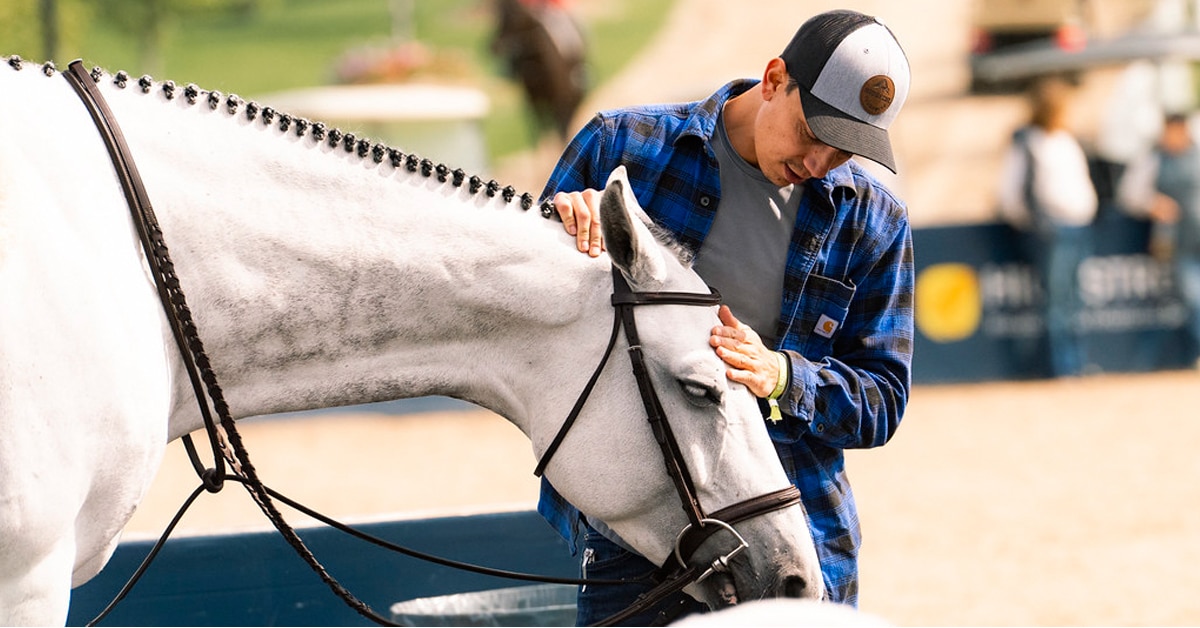
“This one is simple,” says Lisa. “You don’t need theatrics or an Oscar-worthy victory lap performance, but a genuine pat on the neck goes a long way. Your horse just navigated a technical course with you — acknowledging that effort is part of good horsemanship. When riders exit the ring without so much as a gesture, it’s noticeable — and not in a good way.”
“Watching a rider direct a temper tantrum at the very people supporting their participation is, frankly, one of the most distasteful things we see ringside.”
No Venting After Elimination
According to Lisa, “This should not still be an issue, yet here we are. Every season, I still see this, and we are still dealing with this. Using the whip after elimination is strictly prohibited — both nationally (Equestrian Canada rules) and under FEI rules — and has been for years. The same principle applies to aggressive kicking, pulling, or any form of temper-driven reaction. Elimination is not a license to discipline; it’s a moment to regroup. Riders, know your rules. This is your sport. Trainers yelling from the in-gate for riders to “kick,” “spur,” or “hit” after elimination is also unacceptable. You’re shaping behaviour, so make sure it aligns with the standards of the sport.”
Tack that Fits and Serves a Purpose
“If you choose to use a piece of equipment, it should fit properly and serve a purpose,” Lisa says. “Bits that don’t sit correctly or martingales that flap uselessly raise obvious questions. Poorly-fitted tack isn’t just ineffective — it reflects a lack of attention to detail that matters at every level of competition.”
Sportsmanship
“Respect is non-negotiable,” says Lisa. “That includes how you treat fellow competitors, trainers, officials, stewards, and show staff. And for juniors, how you treat your parents matters, too. Watching a rider direct a temper tantrum at the very people supporting their participation is, frankly, one of the most distasteful things we see ringside.”
Lisa points out that these pet peeves aren’t obscure expectations — they’re foundational. “Horsemanship, rule awareness, attention to detail, and respect for others define the sport just as much as clear rounds and fast times. The best riders understand that what happens between fences matters just as much as what happens over them.”
***
Tracy Dopko is an FEI L1 jumper steward and EC recorded jumper judge and senior steward.
The Latest