Horses are herd animals, but how much can human interaction make up for being separated from other horses? The results of a recent study out of Poland published in the scientific journal Animals and presented at the 2026 ISES conference set out to test whether human contact can reduce stress when horses are temporarily isolated.
The study used 12 healthy recreationally-ridden Warmblood mares and geldings, which were tested in the presence of accompanying horses, and under conditions of social isolation from other horses. Researchers applied four different types of human “support” during that isolation:
- No human contact
- Voice only
- Touch only
- A combination of voice and touch
Behavioural observations to detect signs of stress including agitation or tension were carried out on a five-point scale, and heart rate, a reliable stress indicator, was also measured. Each horse went through multiple trials so the researchers could compare responses under different conditions.
Key findings
1. Horses prefer other horses
The biggest takeaway was that human contact does not replace the herd. Even when a person was present and interacting, horses still showed signs of stress when isolated. This reinforces the growing realization that companionship from other horses is a core welfare need.
2. Human interaction helps (but only a little)
While the presence of humans didn’t eliminate stress, they did make a small difference in some cases. Certain forms of contact slightly reduced stress responses, but the effects were not strong or consistent across all horses.
3. Voice may matter more than touch
Interestingly, talking to the horse appeared to have the most noticeable calming effect compared to touch alone or combined voice/touch contact. This suggests horses may respond more to familiar auditory cues than we tend to assume.
4. Geldings and mares responded differently
The study found that geldings were more responsive to human support than mares. Mares showed less change in behaviour or heart rate regardless of the type of human interaction. This could reflect temperament differences, although the small sample size and the fact the study did not include stallions, young horses, different environments, or human influences on upbringing and training, so it is unknown how these unexamined factors might have affected the results.
5. Personality matters
Calmer, more emotionally stable horses benefited more from human interaction than reactive ones.
This study provides several practical takeaways:
- Turnout with other horses is critical for their mental well-being
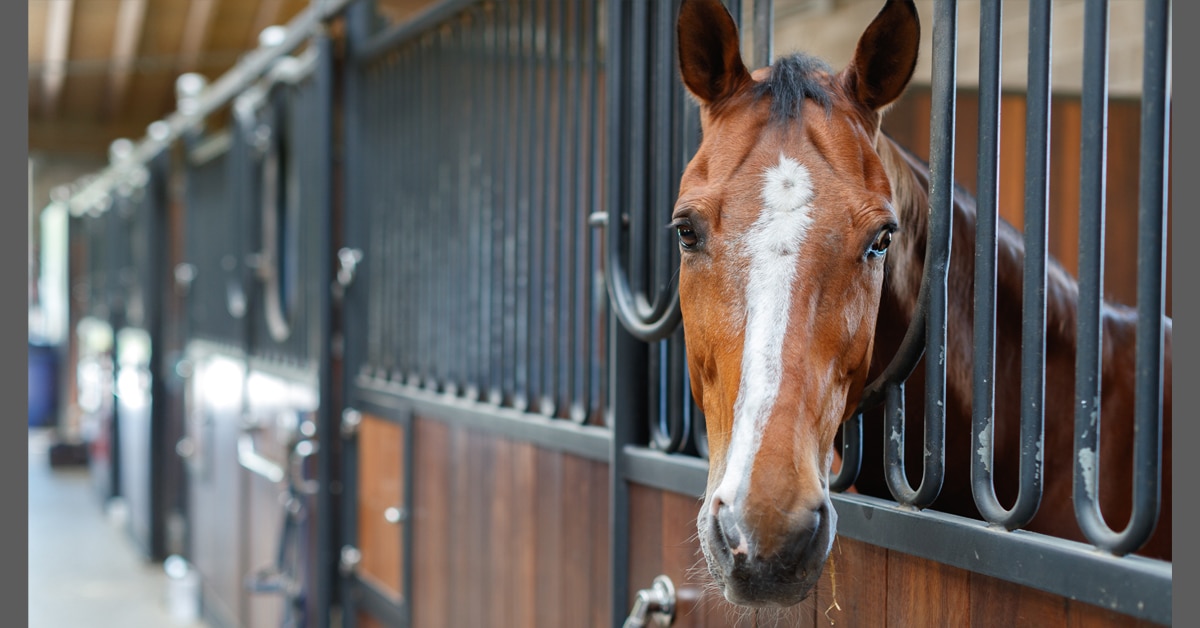
- Stabling horses alone should be minimized, especially long-term
- Human interaction is helpful — but not enough on its own
- Talking to your horse may actually help more than you think
For situations where isolation is unavoidable (e.g., veterinary care, quarantine, travel), adding a calm human presence, especially voice, can slightly reduce stress, but it shouldn’t be seen as a substitute for social contact. Thoughtful management — group turnout when possible, and supportive handling when isolation is unavoidable — should be employed to reduce stress as much as possible.
The Latest