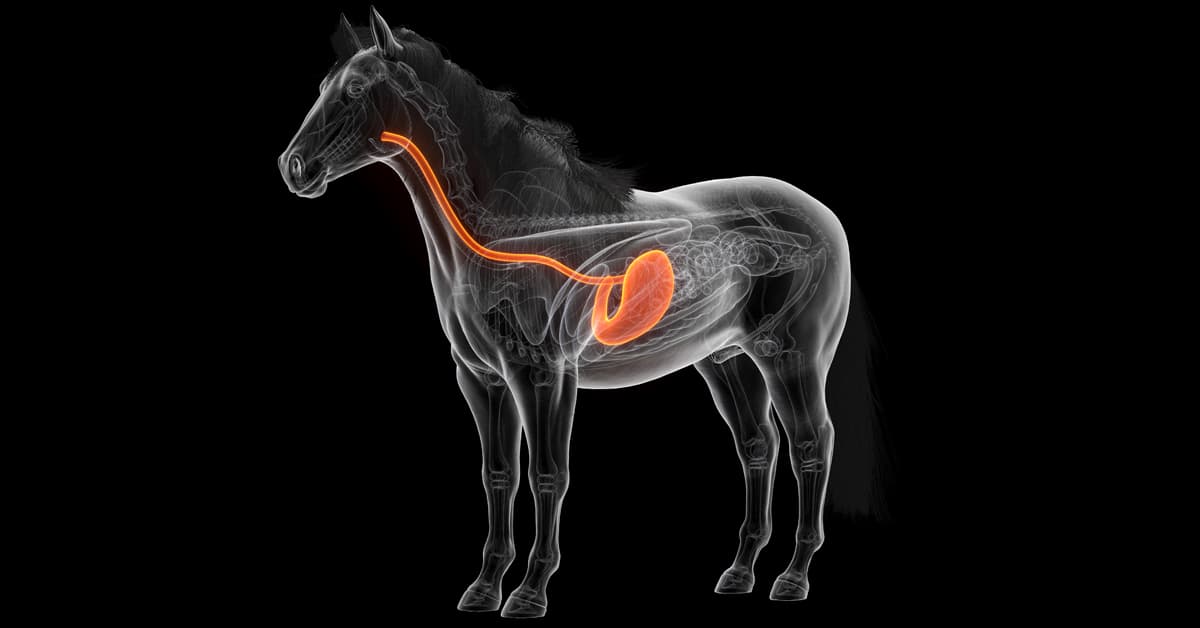
Free fecal water syndrome (FFWS) is a condition in horses that have relatively normal fecal ball consistency followed by excess water being excreted either before or after defecation. It should be noted that this is not diarrhea, as the manure pile is normal. This condition has not been tied to serious health consequences such as dehydration or weight loss, but the excess water does indicate gastrointestinal (GI) disturbance.
In the GI tract, the horse has tight junctions which are the protein links that hold the cells together, creating the gut lining in the hindgut. When these tight junctions are not functioning properly, there are changes in the gut permeability which impacts the horse’s ability to absorb water. The breakdown of these tight junctions can happen in response to any type of stress. Although the cause of FFWS is unknown, it is thought that the tight junctions play a role.
What Causes FFWS?
Research has not determined the cause of FFWS, but there are a few studies investigating possible risk factors for the development of the condition. A 2016 study using 42 horses diagnosed with FFWS and 37 healthy horses concluded that geldings, Paint horses, and horses lower in the herd hierarchy had a greater risk of developing the condition. It was also concluded that fecal egg count (FEC) did not influence the risk of developing FFWS. The authors of that study noted that social stress could play a role, however, larger studies are required.
Additionally, there are several smaller studies that have investigated the potential role of the microbiome in FFWS; however, these studies have conflicting results. Some have found no differences in the fecal bacterial microbiota of horses with FFWS compared to healthy horses, whereas others have shown increases of certain types of bacteria.
More research is required to be able to determine the causes of FFWS, and unfortunately, without understanding the cause of the condition, it is challenging to treat. Despite this condition not being tied to serious health consequences, it is extremely difficult for owners to manage with manure stained legs often causing skin irritation and frozen tails in the winter.
Dietary Changes to Resolve FFWS
Most frequently, dietary changes or supplement additions are made to help resolve fecal water syndrome symptoms. Forage is the largest component of the equine diet, so it is critical to consider when working to resolve this condition. Switching the source of forage that your horse is being fed can impact FW symptoms. For example, one study showed that 46% of horses showed symptoms improvement when switching from haylage to pasture.
Other diet changes that have been shown to have a positive impact on horses with FFWS include pre- and probiotics, beet pulp, psyllium and bentonite clay. However, the improvements are not reliable across all horses, so many of these common recommendations do not produce consistent results. GI support supplements such as those that include butyric acid, and support for the tight junctions might also help resolve symptoms.
Although largely anecdotal, one of the most popular management strategies is to replace some of the horse’s daily intake of long-stem fibre (hay, or pasture), with a processed forage replacer such as a complete feed. As with any dietary change for a horse, it must be done slowly, and if you are reducing their intake of long-stem forage and replacing with a pelleted forage replacer or processed fibre source, it is recommended to work with your veterinarian or qualified equine nutritionist.
Fecal Microbiota Transplantation
Alongside dietary changes, there are also medical interventions that can be made to work towards resolving this condition. Fecal Microbiota Transplantation (FMT) is a treatment method that has been investigated for horses with FFWS. With this treatment, fecal samples are collected from healthy horses and mixed with saline, then filtered to create an inoculum which is then administered to the horse by your veterinarian. Similar to much of the other research on FWS, the results varied with a general pattern that the symptom severity was temporarily reduced.
Take Home Message
Free fecal water syndrome is a complex condition that is not well understood, and although it is not a serious threat to equine health, it does indicate a GI disturbance and can result in skin irritation issues. As the cause is unknown, the current treatment recommendations largely rely on dietary changes with altering fibre source and providing supportive supplements. If your horse is struggling with FFWS, it is recommended to work closely with your veterinarian and a qualified equine nutritionist.
The Latest