The thoracic sling plays a vital role in movement and soundness, contributing to balance, coordination, and strength. Unlike humans, horses do not have a collarbone; instead, this network of fascia, ligaments and muscles connects the horse’s forelimbs to the thorax. This web of tissue suspends and lifts the ribcage between the shoulders like a dynamic hammock. Key muscles include the pectorals, serratus ventralis, trapezius, rhomboids, latissimus, among others. Together, these muscles stabilize the chest, absorb concussion through the forelimbs, allow shoulder freedom, and support collection.
Why a Strong Thoracic Sling Matters
A well-developed thoracic sling creates visible lift through the withers and base of the neck, smooth transitions, and freedom of movement through the shoulders. When strong and functioning correctly, they create an uphill balance, improved dexterity, and suppleness through the front end.
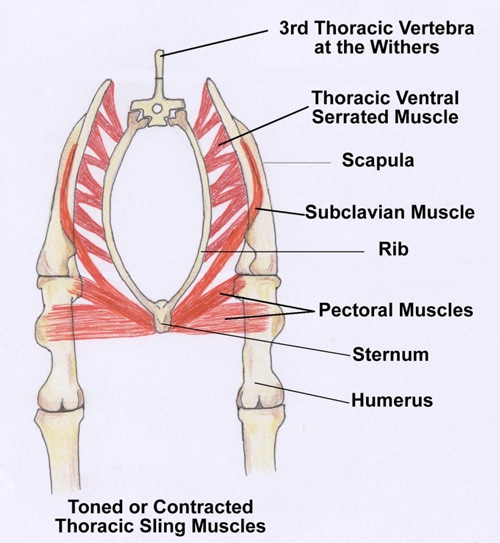
(Illustration courtesy Gillian Higgins / horsesinsideout.com)
Horses that struggle with a weak thoracic sling will travel on the forehand, are more likely to stumble and trip, and are prone to increased concussion on the front legs, heightening the risk of injuries. They are more likely to have a dropped chest, which shortens stride length and limits shoulder mobility. These horses also tend to experience tightness in the back and neck, struggling more in general, as other muscles compensate.
A horse that struggles to carry themselves correctly will have even more difficulties with the added weight of a rider. All horses – including pleasure horses – benefit from exercise that targets their thoracic sling, as it supports healthy posture and movement patterns and prevents long-term wear and tear.
Strengthening the Thoracic Sling
Exercises to target the thoracic sling encourage the horse to lift the ribcage and engage the shoulder girdle. Whether in-hand, on the lunge, or under saddle, they benefit horses of all fitness levels and rehabilitation stages.
Backwards Weight Shift
This exercise can be done daily, two or three times, before or after work, and consists of asking your horse to shift their weight back without actually stepping backwards. By applying gentle pressure at the base of the chest, you can ask your horse to push up and back through the chest, which contracts the muscles of the thoracic sling, multifidus, and muscles around the stifle. In addition to the activation of the shoulder girdle, this also helps teach the horse to load and engage the hind end.
Increase the difficulty by lifting one leg at a time, holding it up while you ask for the backwards weight shift.
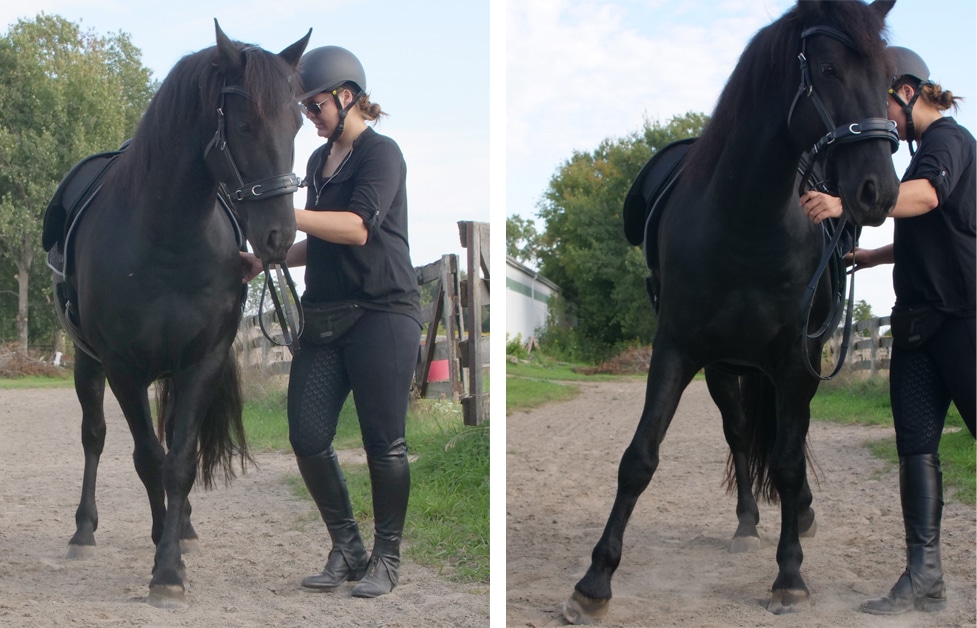
(Left) Leg yielding requires the horse to lift his ribcage to be able to move laterally and can be difficult in the beginning. Guide the nose with one hand, and place the other behind the girth to ask for sideways and forward steps. (Right) Encourage forward motion along with lateral steps, keeping the horse’s body as straight as possible. There should be only a subtle bend away from the direction of travel. (Photos by Joe Frechette)
Poles & Cavaletti Work
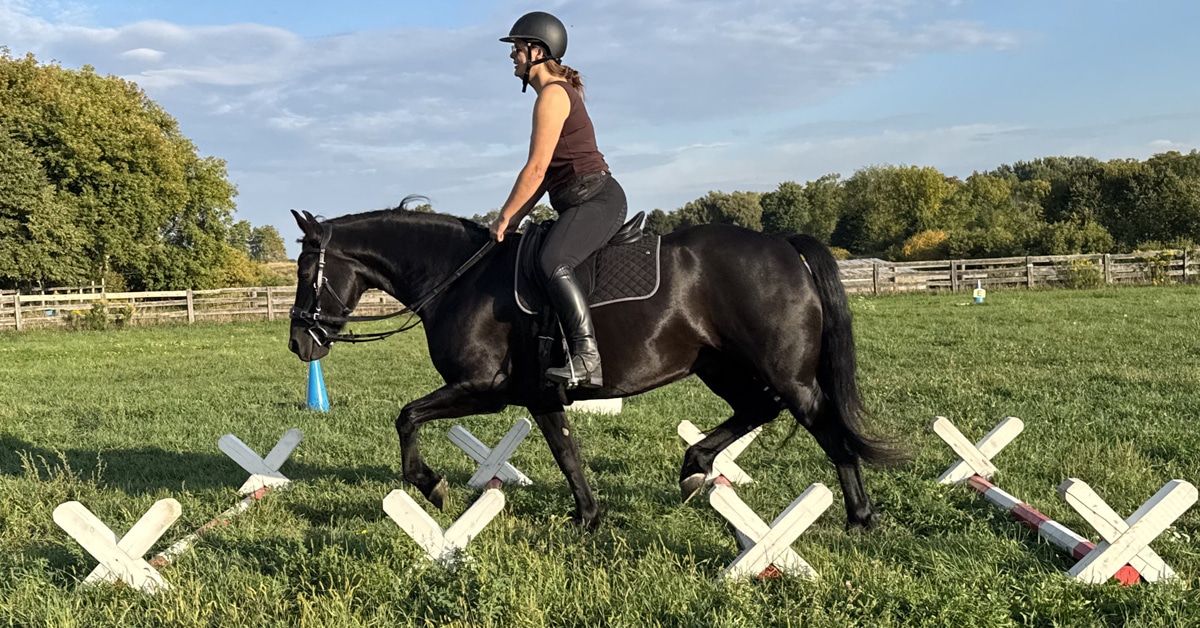
Poles and caveletti work are a fantastic way to help develop the thoracic sling and a great place to start in a fitness or rehabilitation program. There are tons of ways to include pole work that encourages the horse to lift through the shoulder and ribcage while improving coordination and proprioception, including spacing them for walk, trot, and canter work, angled poles, raised cavaletti, and infinite configurations and patterns to navigate.
Spacing matters to support the natural gaits while boosting the horse’s confidence.
- Walk poles: 0.7-1 metre (or 2-3 heel-to-toe steps)
- Trot poles: 1.2-1.7 metres (or 3.5-4.5 heel-to-toe steps)
- Canter poles: 2.6-3.2 metres
If poles are raised, be sure to slightly shorten the distances.
Navigating poles not only requires the horse to lift their feet higher, deepening the articulation of their joints, but also teaches them to be more mindful of their feet. Especially with horses that are heavy on the forehand (and clumsy), this can be especially helpful to develop coordination and better equip them to carry a rider.
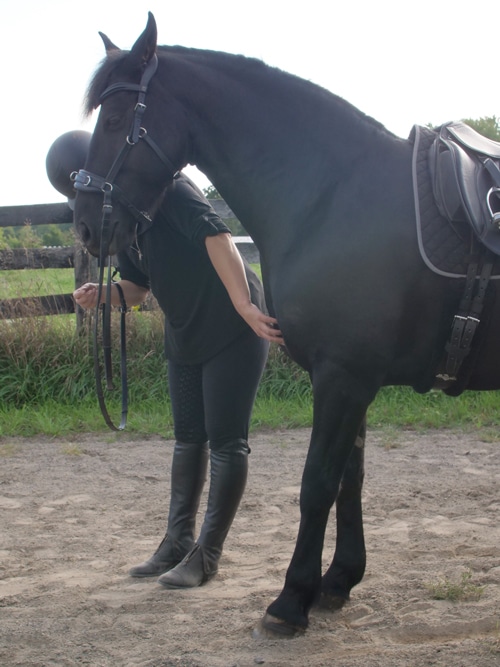
This exercise is best done while standing square. Ask gently for the horse to lean back, pushing up with the front end, with a light touch or tickle on the chest. This helps draw awareness to those muscles. Just be sure to release quickly before they take a step backwards. (Photo by Joe Frechette)
Backing Up (Rein-Back)
The rein-back activates the deep pectorals and serratus muscles while promoting balance. Backing up 4-10 steps a few times in-hand every day, allowing the horse to lower its head, encourages the horse to use its thoracic sling muscles.
Quality matters more than quantity. Slow, controlled steps with correct posture are far superior to rushing backwards or hollowing their backs. Ideally, the horse will lower its head and push up through their chest to reverse.
Increase the difficulty by reversing up a hill.
Hill Work
Working on hills, either in-hand or under saddle, helps strengthen the thoracic sling while also building overall balance and hindquarter engagement. Even work at the walk is enough of a challenge; there’s no need to rush. You can include various gymnastics on hillsides to deepen the intensity and coordination required, including serpentines on a gentle slope, downhill leg-yielding, and halting while going downhill to encourage the horse to sit more on the haunches (which is especially helpful if they rush).
Shoulder Mobility & Lateral Work (Leg Yield, Shoulder-In)
Lateral movements, as challenging as they may be, are beneficial for developing the thoracic sling, because they improve shoulder freedom and encourage the horse to lift the ribcage while stepping under with the hindquarters. These movements require balance and coordination, activating the stabilizing muscles around the shoulders and chest.
Start along a fenceline to help guide the horse and ask for one or two steps of leg yield by gently asking the horse to move away from pressure while maintaining forward motion. Keep sessions short, focusing on smooth, deliberate steps with correct posture, paying attention to rhythm and straightness.
Begin with only a few correct steps at a time to prevent fatigue or confusion, then gradually progress to more complex movements such as turn on the haunches, leg yielding to/from the quarterline, or during hill work.
Jumping
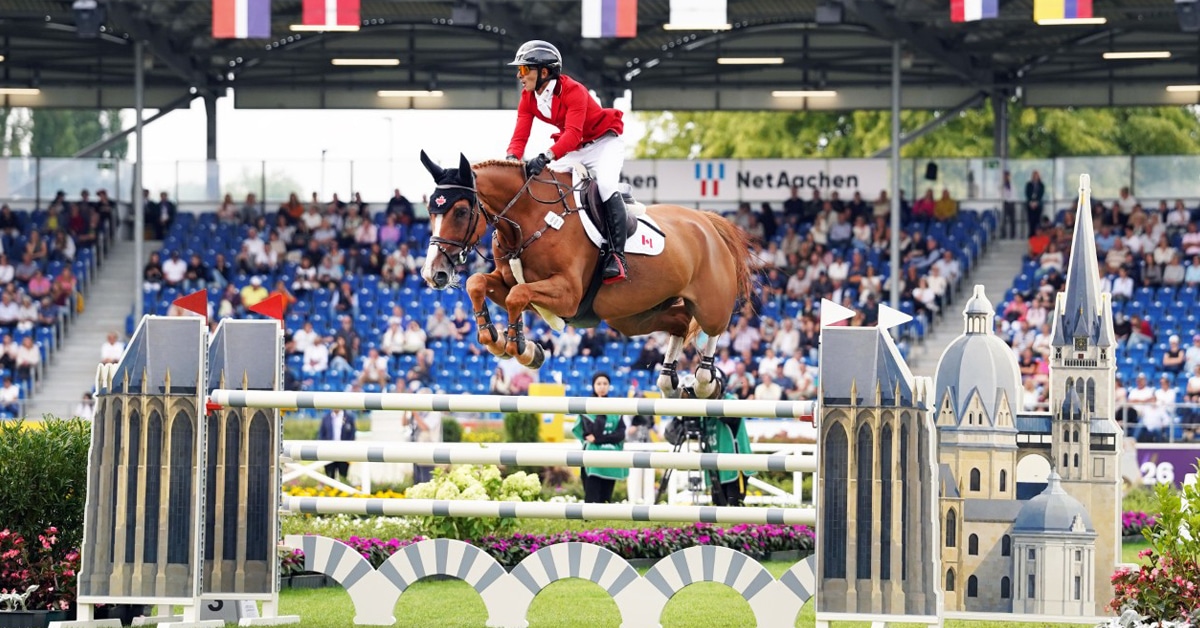
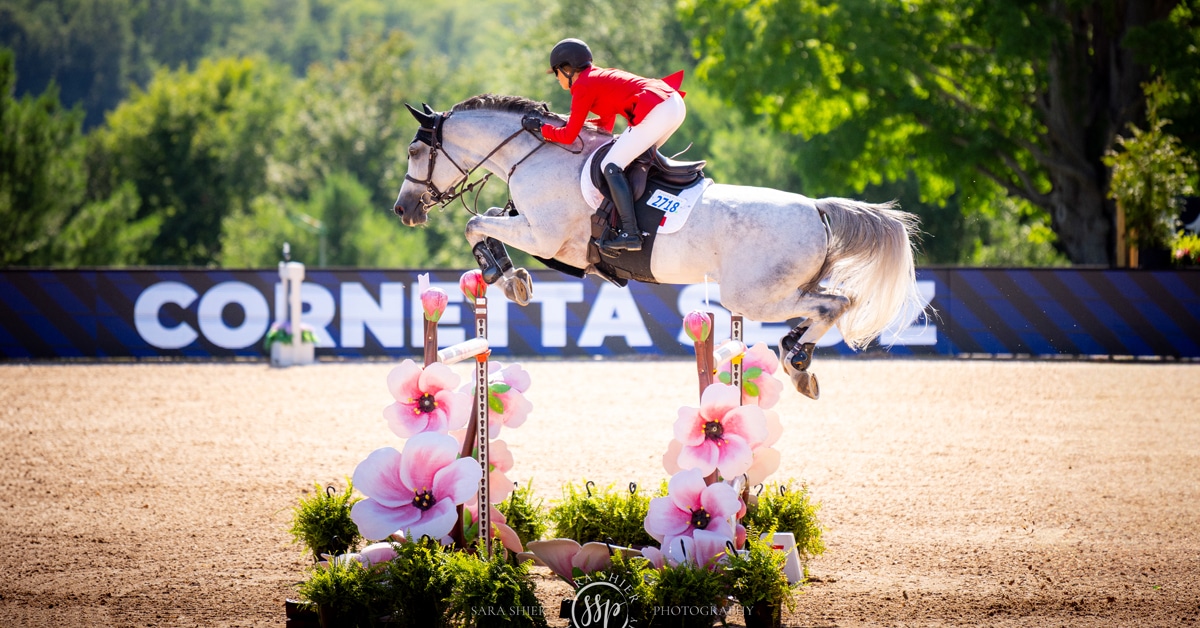
Gymnastic grids and small jumps naturally engage the thoracic sling by encouraging lift, coordination, and support in the landings, and can be a fun addition to any fitness program. Start small to build confidence alongside strength and dexterity, and gradually increase difficulty into gridwork and lines.
The best results come from regular, progressive conditioning to build muscle safely with correct postural support. Introduce exercises gradually, paying attention to signs of fatigue, and vary the work, including rest days and rotating between different exercises, to keep the horse engaged and both of you having fun.
***
This article originally appeared in the 2026 Canadian Horse Annual – order your copy here.
The Latest