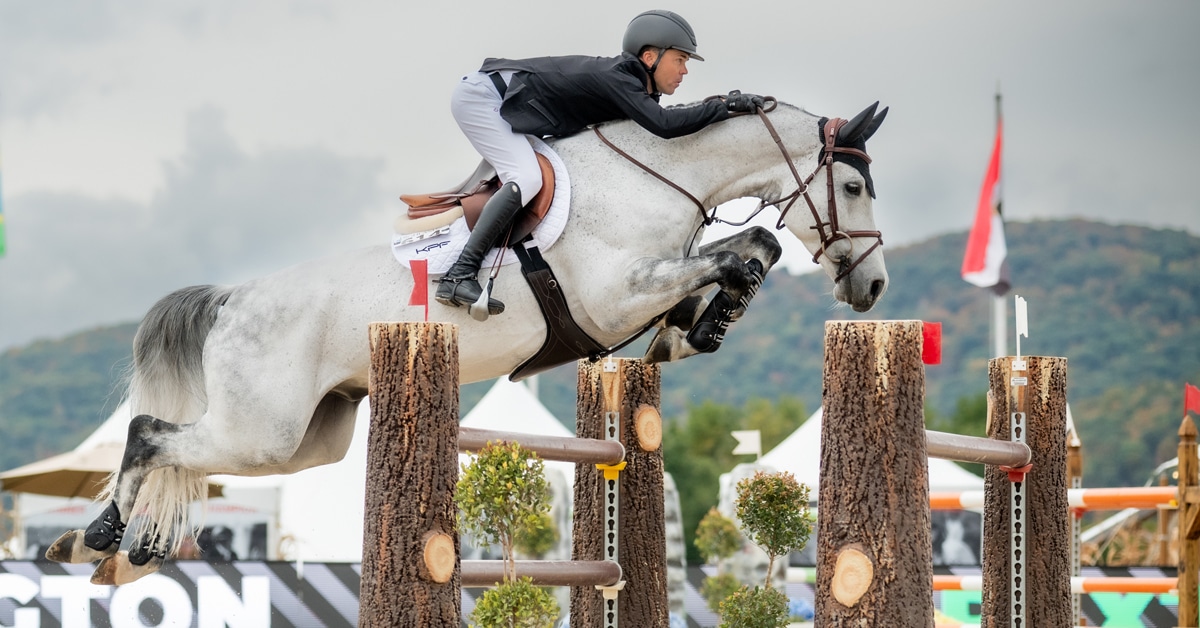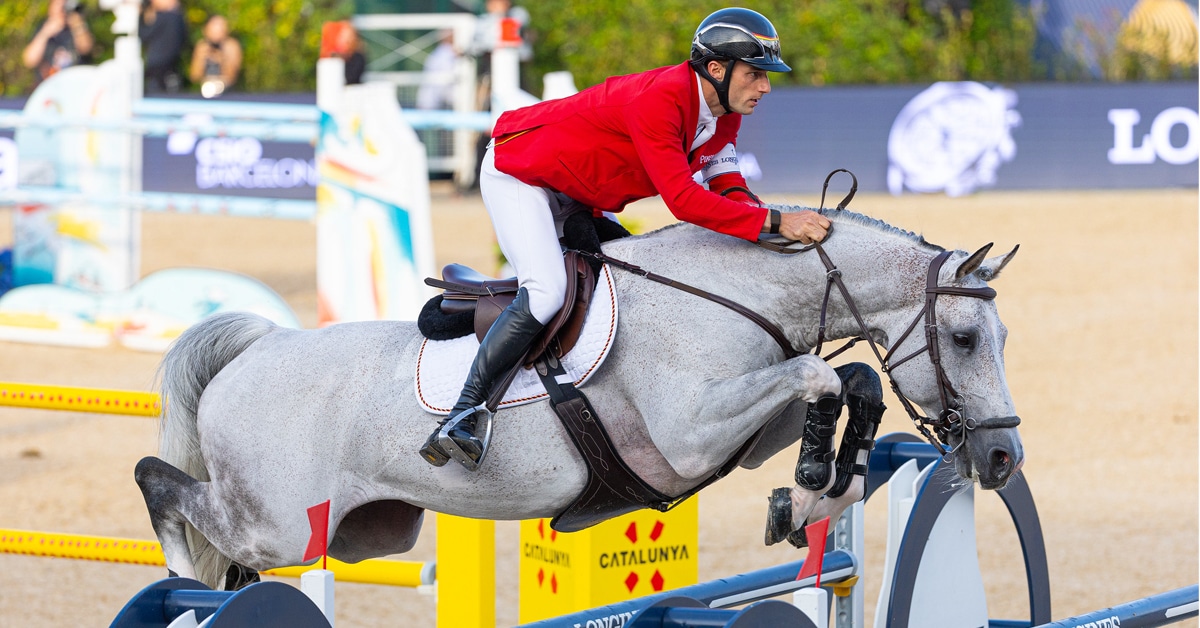
The FEI Tribunal has ruled that French showjumper Simon Delestre’s appeal against his elimination at the 2025 Global Champions League Playoffs is inadmissible due to the “field of play” regulations.
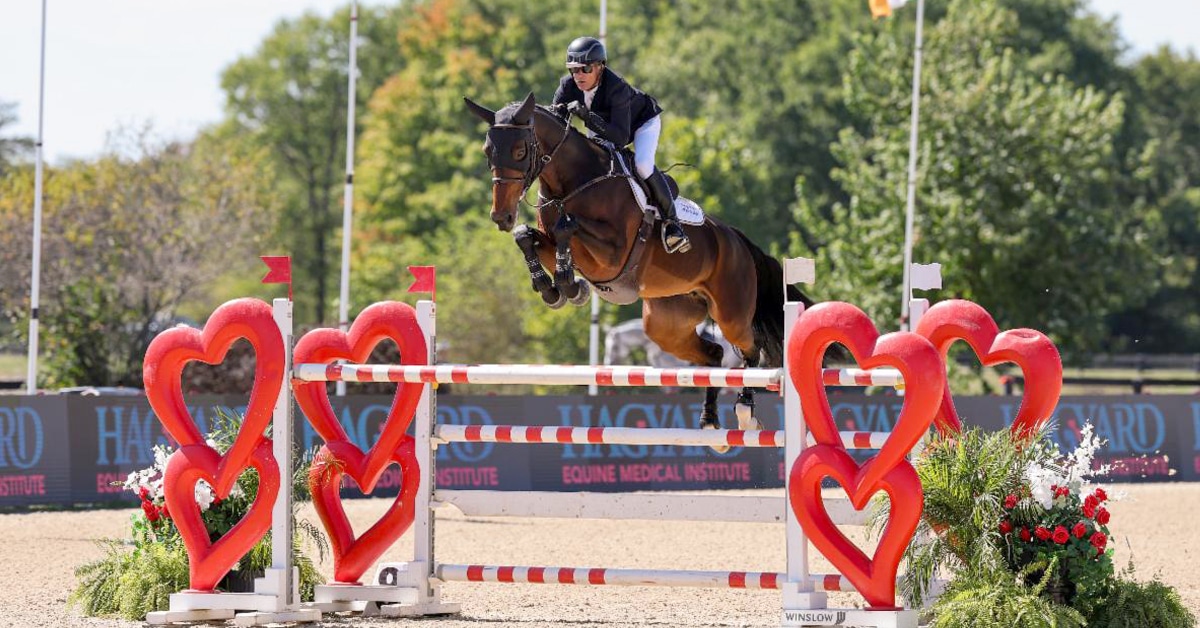
The case stems from the Global Champions League Super Cup quarter-final held in Prague on November 20, 2025. Delestre, riding for the Istanbul Warriors aboard Cayman Jolly Jumper (a son of Hickstead), initially completed a clear round with no penalties. However, several hours after the class had concluded and results had been published, the Ground Jury informed him that his helmet harness had become unfastened during the round, retroactively eliminating him under Article 256.1.4 of the FEI Jumping Rules.
This elimination had major consequences, as the Istanbul Warriors were assigned 40 penalties, which dropped the team from 8th to 12th place, eliminating them from further competition.
Delestre immediately protested the decision, arguing that no official had observed any issue during his round and that the ruling relied on a post-competition video review. “Equipment approved by the FEI becoming defective during the course, regardless of the rider’s will, should not be able to influence the result of the competition, especially when the jury did not deem it necessary to interrupt the course to ensure the rider’s safety,” Delestre said in a statement (translated from French). The protest was rejected by the Ground Jury, prompting Delestre to appeal to the FEI Tribunal.
The Tribunal first had to determine whether it actually had jurisdiction to hear the appeal. The FEI argued that the decision was a classic “field of play” determination and therefore not subject to appeal under Articles 161 and 162 of the FEI General Regulations.
Delestre countered that the decision was not a true field-of-play ruling, as no irregularity had been identified during the round and the elimination was imposed only after results were published. According to the rider, this retroactive and video-based decision should be considered ‘administrative’ and therefore open to review.
Delestre had also noted that many other riders have not been disqualified in identical situations, even if the helmet malfunction took place as early as the beginning of a course. “I find this decision unfair and inappropriate. Why do other riders, in the same circumstances as me, see their scores maintained, while I am disqualified?”
The Tribunal rejected this argument, reaffirming that the “field of play” doctrine which is well established in sports law and Court of Arbitration for Sport (CAS) jurisprudence and prevents tribunals from reviewing decisions made by officials regarding events occurring during competition. Such decisions are considered final and binding unless exceptional circumstances, such as fraud or arbitrariness, are proven. The Tribunal found that determining whether Delestre’s helmet was unfastened during the round was a factual assessment directly related to performance in the competition and fell within the category of decisions described in Article 161.2 of the General Regulations, even if not explicitly listed among the examples.
The Tribunal also held that the fact the elimination occurred after the round and even after results were published did not remove it from the field-of-play category. FEI rules expressly allow officials to use video evidence to review and correct results after the fact, provided certain conditions are met. In this case, the use of video review was undisputed and authorized under the rules.
Finally, the Tribunal emphasized that allowing appeals against such decisions would risk undermining the authority of on-site officials, create uncertainty in competition results, and open the floodgates to challenges.
Having concluded that the Ground Jury’s’s ruling was a field-of-play decision, the Tribunal held that it lacked jurisdiction to review the case and therefore dismissed Delestre’s appeal in its entirety. It ordered that no deposit be returned, required the appellant to bear reduced procedural costs of CHF 500, and directed each party to cover its own legal expenses.
The decision leaves Delestre with one remaining avenue: an appeal to the CAS, which must be filed within 21 days.
Read the entire FEI Tribunal decision here.
More News