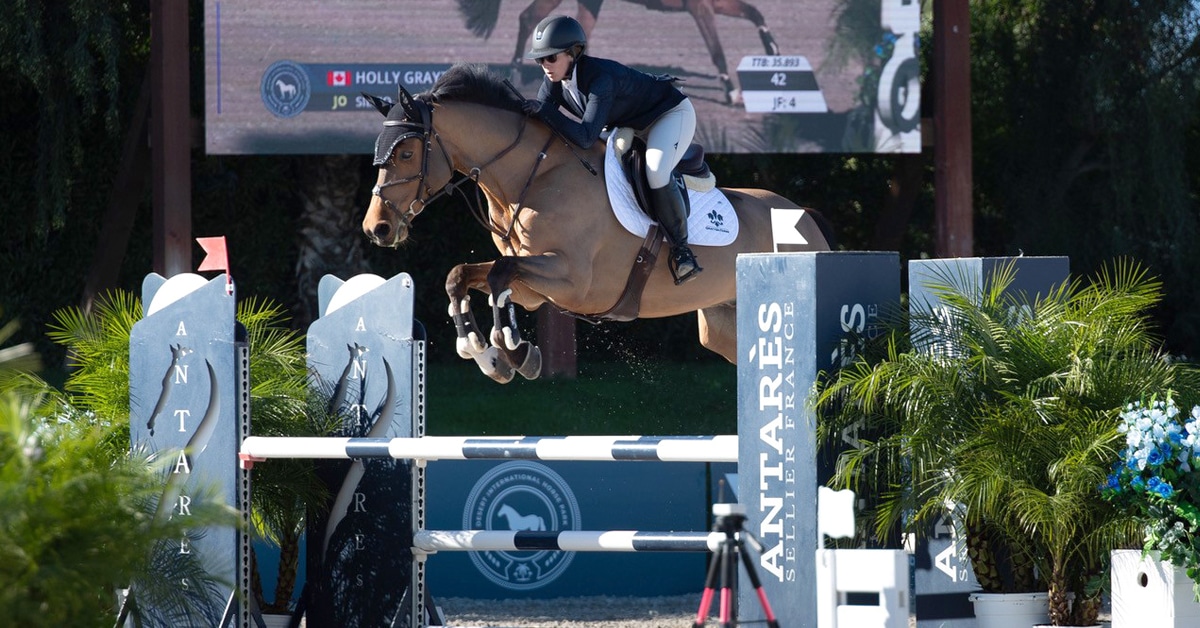
For nearly two decades, it’s been a large part of our business at Grayton Farms in Calgary, AB, to travel to Europe to source horses to import to North America. Sometimes we buy horses for ourselves to invest in, develop, compete, and ultimately sell. Sometimes we are on a trip with a client looking for a specific horse – a young prospect, a high junior/amateur horse, or something beyond. We are extremely lucky to have been able to do that, and it is a lot of fun (mostly), but it’s also a high-stakes situation.
There is a lot of responsibility to try and do right by our clients – and ourselves – to try to find the right fit for the desired purpose. Understanding where the horse will be, its training program and competition schedule, the ultimate goal (resale? forever home? achieve a big goal and then re-evaluate?) are all really important factors to consider. And of course, the budget.
Having imported dozens of horses over the years, we have learned a few things and continue to educate ourselves more each time as the sport and the world both evolve. Here are some of the things we’ve learned along the way:
Before you go
Understand the exchange rate: what does your CDN/USD translate to in Euros? Check with an importer as to what the flight and quarantine will cost. How long will the quarantine be? It’s different for mares, stallions and geldings, and USA/CAN have different time regulations.
We have imported horses to Los Angeles and had the horses shipped up to Calgary, and we have flown the horses directly to Calgary at different times for different reasons. Ask around for suggestions of importers and contact them before you go. The import fee can be $20,000-plus CDN – and that’s a big chunk of a budget.
Trust your gut, always
If you don’t like the seller, don’t like a horse, or you simply can’t put your finger on why something feels off, walk away. There are too many horses and too many good people in this business to waste time with situations that don’t feel right.
Most importantly, don’t try a horse you can’t pay for. It’s a great sales tactic to show you a horse a little out of your budget, but with our exchange rate these days even 5-10k Euro can really affect the price.
Seek out people who come well-recommended
If you’re meeting someone for the first time, ideally it’s because they were recommended by someone you trust. Anyone can have a great horse, and equally, anyone can have one that looks great, but isn’t. A good recommendation is worth a lot.
Expand your network
On every trip, we try to meet at least one new contact. We ask trusted friends who they think we should see and continually grow our circle of connections. We don’t always buy from these meetings, but it’s valuable to shake hands, look people in the eye, and build relationships. Even if they don’t have the right horse this trip, they may have one next time if they give you a good feeling.
Be prepared to drive … a lot
Some people are close to major cities, some aren’t, and the major cities themselves are often several hours apart. Expect plenty of time on the road getting from place to place. Thank goodness for Google Maps! Getting around used to be so much more difficult. Directions from people were wild and a real task to sort out.
I prefer a direct flight to a major city such as Amsterdam, Brussels, Frankfurt or somewhere that is central to the area you plan to be in. It’s important to have access to the bigger rental car companies such as Enterprise, Sixt (my favourite) etc., so you don’t arrive at a small airport and they have somehow run out of cars (that Seinfeld episode comes to mind!). The big hotel chains are great, just like at home, but if the people you are going to see can suggest a local hotel, in my experience they are beautiful, full of great food and have tons of character and makes the trip that much more fun!
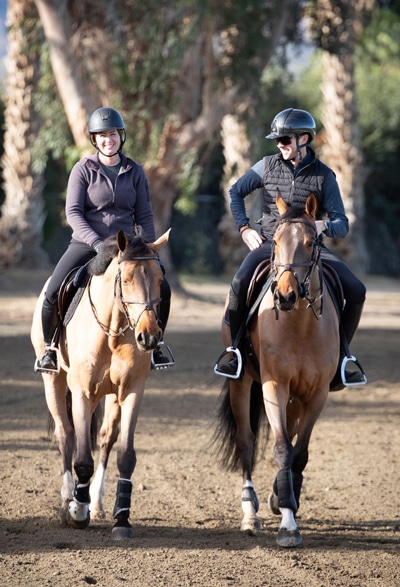
Holly and Alexander Grayton. (photo courtesy Holly Grayton)
The list of horses always changes
A couple of weeks before a trip, it seems like there are too many options. A week before, the list shrinks, sometimes drastically. Horses get sold, they’re showing, or something else comes up. By the time you arrive, you’ll probably still have more horses to see than you realistically can, and you’ll have to make choices. This is a good place to be, but especially when bringing clients along for the trip, it’s helpful to have these conversations in advance so that timeline and scheduling is understood on both ends. While it’s great to get excited before a buying trip, it’s a reality that sometimes horses move quickly.
Record the clinical exam during vetting
No matter who does the vetting, whether you know them or not, make sure the clinical exam is videoed. Send that video and the X-rays to your own vet at home. We always get a North American vet’s opinion, because in our experience they’re stricter about radiographs than many European vets, specifically for our purposes of eventual resale to the North American market.
This is a big topic right now. Buyers want assurance that a horse will be sound and happy forever ‒ which is an impossible guarantee, of course. There are things that show on X-rays that will never cause a problem, yet people still won’t buy those horses. It’s a strange time in the horse market, and there are plenty of opinion pieces out there to dig into on this exact subject. As buyers for resale, we need horses to pass North American standards, but that isn’t always fair to the horses themselves and their sport career. It’s a balance.
Prepare for jet lag: it’s real
For us, from Calgary, the best flight is the overnight direct to Amsterdam, landing at roughly 8 am so you can hit the ground running. On our most recent trip, however, by the time we went to bed the first night in Europe we had been awake for 29 hours, as none of us slept on the plane thanks in part to a crying baby and uncomfortable seats. If you can squeeze in a nap on day one, it helps you adjust to European time. We usually stay only three to four days, so it’s a tough turnaround. Coming home, your own bed will feel amazing!
Miscellaneous Tips
- Bring a Friend. You’ll need a co-pilot in the car, and you’ll want someone that you trust at the end of the day to review your videos with you. And when you are exhausted, not being alone will help you avoid taking a wrong turn, help devise a daily plan, or just provide a little support if you didn’t ride your best. But the best reason to have a friend with you is that they may hear things you don’t; for example, you may be riding a prospect when your friend hears the sellers say something important about the horse’s experience or character – good or bad.
- Gas station bathrooms require payment, either with coins or, thankfully, now also by tapping with your phone, just to get through the turnstile.
- Restaurant service is often slower by North American standards. They don’t rush you or check on you constantly, which can be nice if you want to chat about the day and the horses, but tough if you’re trying to get to bed after a long day.
- Study the road signs beforehand. They aren’t always intuitive or as clear as the ones we have at home, and mostly the confusion is from the twisty, turny roads – what looks like a simple off-ramp can have subsequent off-ramps leading from them, and so on. One exit from a major highway can become an exercise in quick lane changes to end up going mostly the same way as you were, but on a much different road.
- Speed limits (especially in the Netherlands) are enforced seriously. There are cameras everywhere, including ones that calculate your average speed between two points. They do not mess around. I’m currently awaiting tickets from my last trip!
Drive safely, and happy horse hunting!
The Latest