In a year already filled with blockbuster theatrical and streaming releases, one of the most visually stunning offerings early in 2026 won’t be a traditional mainstream feature — it will be a documentary. For horse lovers comes Horse Power, a new IMAX film narrated by Academy Award nominee Josh Brolin (No Country for Old Men, Outer Range), produced by Emmy-winning Plimsoll Productions and EOS Films and distributed globally by SK Films.
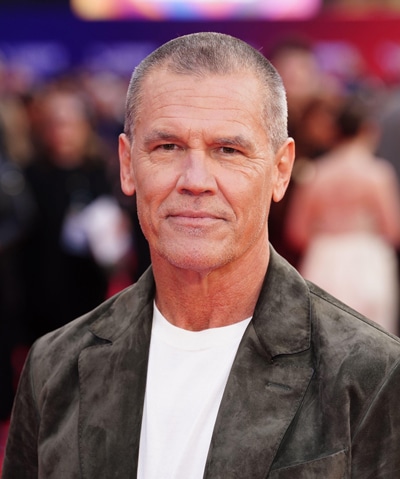
Josh Brolin. (PA Images / Alamy Stock Photo)
Brolin — himself a lifelong horseman with deep roots in the American West — lends his voice to the film’s rich narrative, helping audiences across the globe connect emotionally with the subjects and their stories.
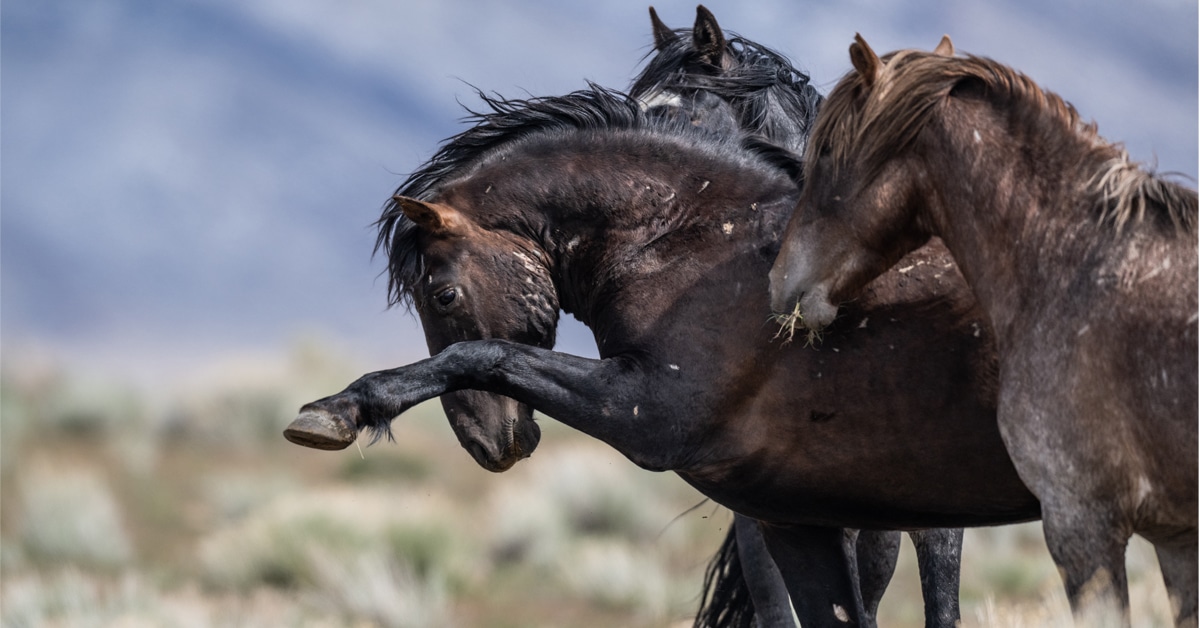
At its heart is the coming-of-age tale of eight-year-old Julaa and her young Mongolian horse, Tulai, as they prepare for an 18-kilometer race across the Asian steppe — a test of endurance in harsh conditions that few riders finish. Interwoven with their journey are stories from strikingly different cultures and landscapes: wild mustangs battling for herd dominance in the American West, speedy Arabian horses racing across desert sands, disciplined Dutch draft horses training for police work, and miniature therapy ponies like Digby offering comfort to children in hospital wards. All of these stories underscore the remarkable courage, intelligence and emotional complexity of horses — and the ways humans have come to depend on them.
Mark Brownlow, Head of Natural History at Plimsoll Productions and executive producer of Horse Power, told HorseSport.com the film was conceived as a project of both cinematic scale and emotional resonance. “Horses are our closest ally,” Brownlow says. “They have changed the course of human history and have a remarkable story to tell. It was an opportunity to make a film of scale, grandeur and one with real heart that will genuinely surprise.” His team’s approach — combining traditional cinematography with cutting-edge 3D and drone technology — allows audiences to feel as though they’re galloping alongside the horses themselves.
One of the challenges of a film of this scope was logistical: capturing footage across multiple continents, ecosystems and cultural contexts demanded not only technical expertise, but also sensitivity to local traditions and working conditions. Brownlow highlights how filming in the Gobi Desert, the Sierra Nevada and other remote locations pushed both crew and equipment to their limits. Yet he says the payoff — particularly in sequences featuring Julaa’s race — is unlike anything audiences have seen before.
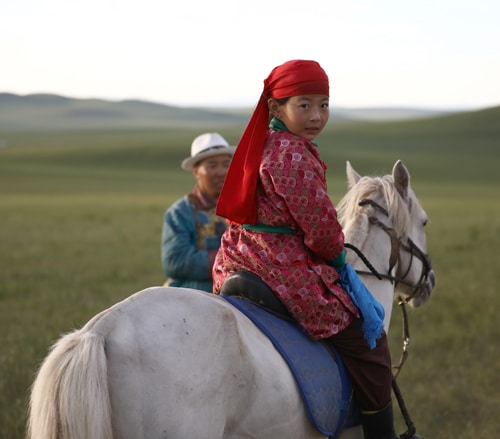
The film follows Julaa, an eight-year-old Mongolian girl, as she and her horse train for the race of a lifetime. (SK Films)
Brownlow credits director Rob Sullivan with orchestrating much of this global storytelling. For Sullivan, the project wasn’t just about thrilling action or cinematography; it was about conveying the depth and diversity of the human–horse relationship.
“Being a lifelong lover of horses, I wanted audiences to understand and appreciate their remarkable qualities and the fundamental role they’ve played throughout the ages in shaping civilization,” Sullivan says. “From miniature care horses to police horses charging into riots, it was a glorious opportunity to show the world what makes the horse so unique and why they have become the most important animal in history.”
The film’s commitment to conservation is more than symbolic: Horse Power received significant funding and support from American Wild Horse Conservation (AWHC), an organization dedicated to protecting the freedom and ecological context of wild horses in the United States. Their involvement provided not only essential access, but also scientific guidance to ensure the film portrays America’s iconic mustangs with both accuracy and respect.
Patricia Miller, board chair of AWHC, says the giant-screen experience helps audiences connect with horses as living symbols of heritage, not just icons of the past. “Horse Power will move audiences to see America’s wild horses not just as icons of freedom, but as living, breathing symbols of our shared heritage — worthy of lasting protection,” she says.
The iconic IMAX format (invented in Canada, the company continues to have its head office in Mississauga, Ontario) plays a key role in this emotional connection. Brownlow emphasizes that seeing horses in immersive 3D — watching every muscle ripple under the sun, hearing the thunder of hooves in a theater large enough to encompass nearly your entire field of vision — is not merely a novelty, but a way to deepen understanding and appreciation of these animals.
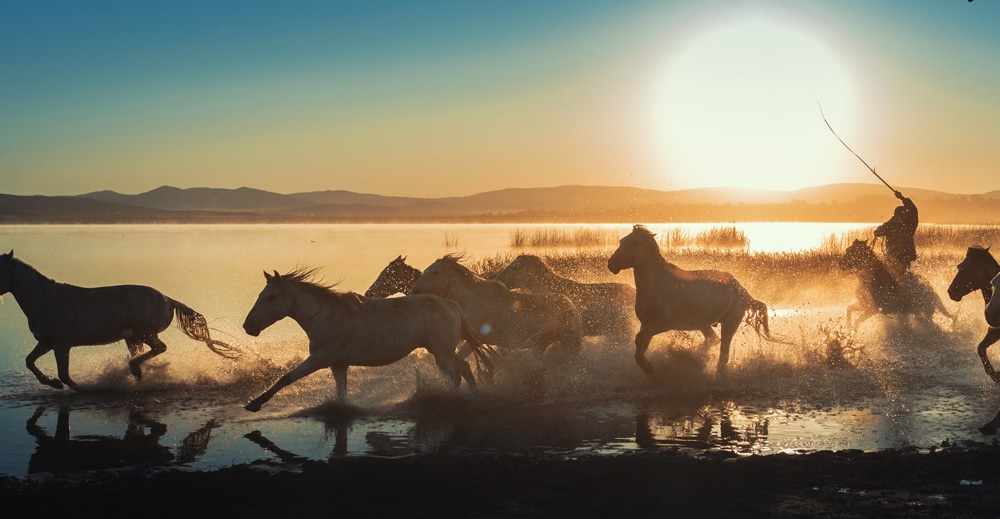
Camargue horses in southern France. (SK Films)
“The joy of IMAX documentaries is that your work speaks to a broad audience, from schoolchildren to families, who want the mind-blowing experience of literally riding alongside a horse at thirty miles per hour on an eighty-foot giant screen,” Brownlow says.
The educational potential of Horse Power is being supported by accompanying school programs and classroom materials, allowing the film to serve as a foundation for curricula that explore everything from animal behaviour and ecology to cultural anthropology.
The film is already playing on IMAX screens in select museums and science centres worldwide and premieres March 2 in Canada in Sudbury, Ontario and in Victoria, BC on March 20 (info here). Next year, the plan includes a longer version to debut on streaming platforms.
Watch the trailer here:
The Latest