Veterinary specialists report that primary thyroid disease is very uncommon in horses, and diagnosing it can be difficult. More often, horses with abnormal thyroid hormone levels are actually experiencing nonthyroidal illness syndrome (NTIS), a condition which occurs when a horse is systemically ill and can cause hormone changes that resemble thyroid disease. However, these hormone shifts are not caused by the thyroid gland itself, but rather by underlying conditions such as pituitary pars intermedia dysfunction (PPID) or equine metabolic syndrome (EMS).
“Supplementing horses with iodine or levothyroxine [synthetic thyroid hormone] is not warranted in horses with NTIS,” said Kathleen Crandell, Ph.D., a nutritionist for Kentucky Equine Research.
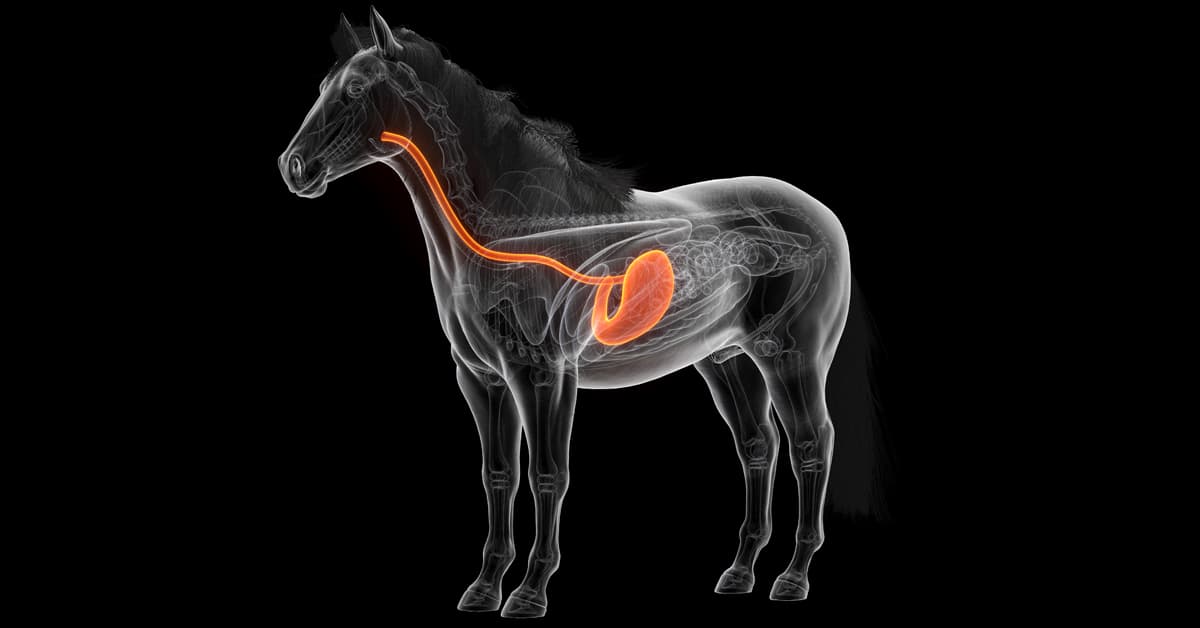
The thyroid gland consists of two lobes located beside the trachea near the larynx. It is vital for regulating metabolism, supporting growth, and maintaining body temperature. In studies where horses had their thyroid glands removed, signs of hypothyroidism included sensitivity to cold, delayed shedding, a rough hair coat, lethargy, swelling in the hind limbs, and reduced feed intake despite weight gain.
Confirming hypothyroidism in horses is particularly challenging. In affected horses, levels of the thyroid hormones T4 and T3 decline, while thyroid-stimulating hormone (TSH) should increase. However, there is currently no validated commercial test to measure TSH in horses. Other diagnostic procedures commonly used in humans, dogs, and cats, such as TSH stimulation tests or thyroid-releasing hormone stimulation tests, are costly and time-consuming, so they are rarely used in routine equine practice.
Researchers noted that between 2009 and 2024, only nine horses were referred to their facility for evaluation of suspected thyroid disease, representing just 0.06% of all patients. These horses were brought in for issues including goiter, poor performance, chronic laminitis, colic, and collapse when the head was elevated.
Each horse underwent a thorough evaluation that included measuring T4 and T3 levels, conducting a TRH stimulation test, and performing ultrasound and computed tomography imaging. In addition, veterinarians collected fine-needle aspirates or biopsy samples when appropriate. Ultimately, seven horses were found to have benign thyroid tumors or cysts. One horse had an iron-related goiter that required mineral supplementation, and the final horse was diagnosed with NTIS.
The researchers concluded that many signs commonly attributed to thyroid disease are actually related to NTIS, aging, diet, or training level. Before diagnosing primary thyroid disease, veterinarians should first rule out PPID or EMS instead of immediately treating with iodine or levothyroxine supplements.
“EMS, characterized by insulin dysregulation, may present with clinical signs that can be confused with hypothyroidism such as poor performance and resistance to weight loss,” explained Crandell.
Testing for insulin dysregulation is relatively simple and is often done using an oral glucose test. When EMS is diagnosed, treatment usually involves both dietary management and exercise. In some situations, veterinarians may also prescribe medications such as SGLT2 inhibitors.
Regarding feeding management, Crandell said, “Feeding horses with EMS requires careful weight and dietary management. Hay and other forages should be low in nonstructural carbohydrates (NSC), preferably less than 10%. This may involve restricting access to pasture, especially during times of growth or high sugar content, or using a grazing muzzle.”
She also recommends ensuring that horses have regular opportunities to exercise — provided they are not currently experiencing laminitis — or are turned out in environments that encourage movement throughout the day.
“Although calorie intake may be reduced, vitamin and mineral requirements remain the same. To ensure adequate intake of these essential nutrients, use a low intake feed like a ration balancer (All-Phase) or a concentrated vitamin and mineral supplement.”
~ with files from Kentucky Equine Research
The Latest