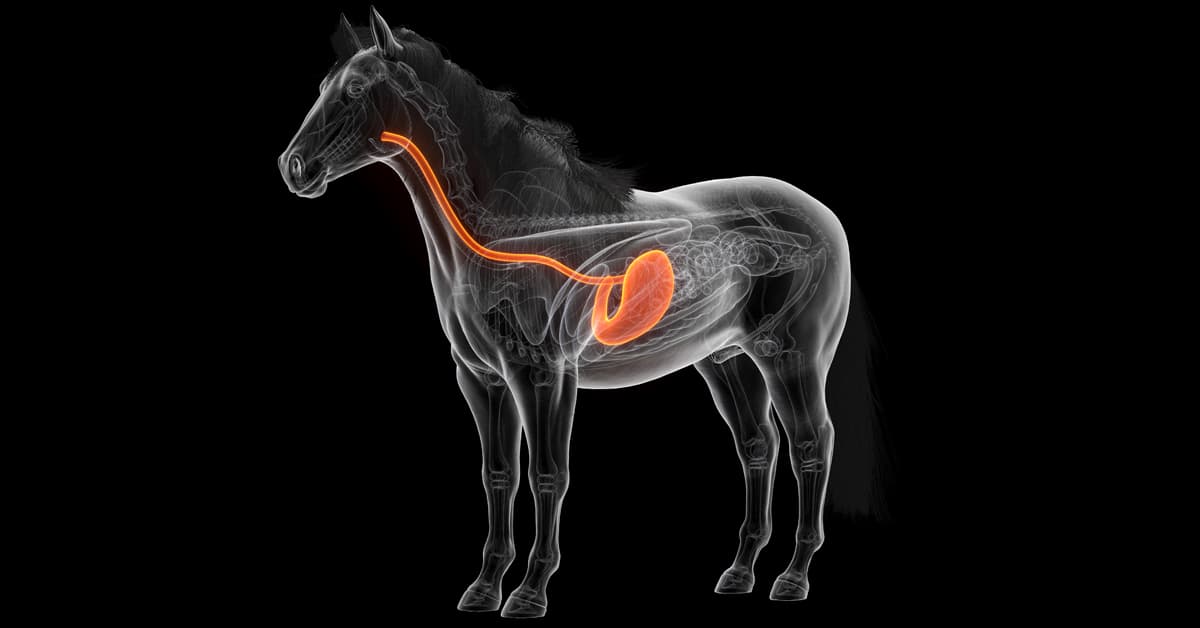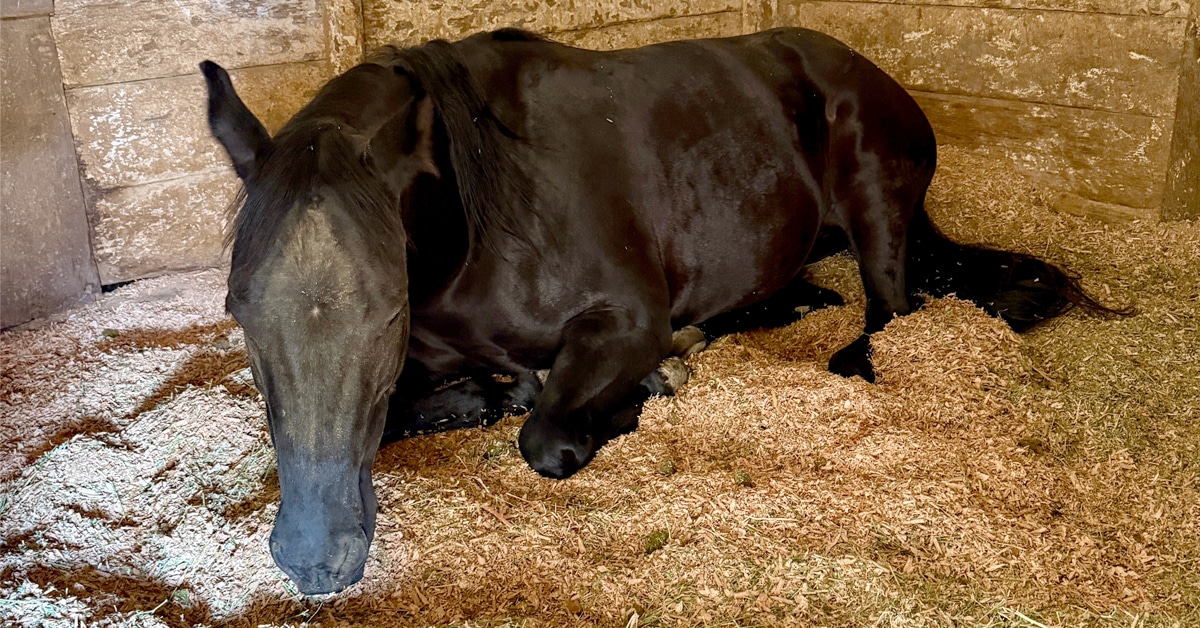
Following the death of Diallo BB, one of German Olympian Jessica von Bredow-Werndl’s top grand prix dressage horses, Equine Borna Virus was initially suspected, although later ruled out. The exact cause of the 11-year-old Hanoverian’s sudden illness remains unknown.
The death of Diallo BB sparked curiosity about Equine Borna Disease, which is primarily found in specific endemic regions of Germany, Switzerland, Liechtenstein, and Austria and may be unfamiliar to most North American horse owners.
Equine Borna Disease Virus (BDV), also called Borna Disease Virus 1 (BoDV-1), is a neurotropic virus that primarily affects horses and other mammals. It is named after the town of Borna in Germany, where a major outbreak in cavalry horses was documented in the late 19th century. The virus infects the central nervous system, leading to severe and often fatal neurological disease.
History
Early descriptions of the disease trace back to European reports in the 1800s, with the most famous outbreak occurring in 1885 in Saxony, Germany, where large numbers of cavalry horses developed strange neurological symptoms and many died. For decades, the causative agent remained unidentified. It wasn’t until the late 20th century that scientists isolated Borna virus and established its role in equine neurological disease. Subsequent research has broadened understanding of the virus, revealing that it can infect a variety of warm-blooded animals, including horses, sheep, cats, and even humans, albeit rarely.
Clinical Symptoms in Horses
Borna disease typically presents as a progressive neurological disorder. Early signs are subtle and may include behavioural changes such as anxiety, reduced interaction, or decreased responsiveness. As the disease advances, more pronounced neurological symptoms appear, including:
- Ataxia (loss of coordination)
- Head pressing
- Circling
- Impaired vision
- Tremors
- Muscle weakness
- Dysphagia (difficulty swallowing)
- Seizures in severe cases
Without supportive care, the disease frequently progresses to recumbency and death. Once clinical symptoms become apparent, the prognosis is generally poor.
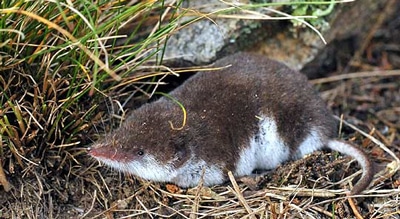
BoDV-1 is believed to be transmitted by certain small mammals, such as the bicolored white-toothed shrew, which shed the virus into the environment. (@lubomir hlasek/www.hlasek.com)
Transmission
The precise mode of transmission in horses is still not completely understood. BoDV-1 is believed to persist in certain small mammals, such as shrews, which shed the virus into the environment. Horses are thought to become infected through exposure to contaminated bodily fluids, saliva, or excretions, likely via the oral or nasal route. There is no strong evidence supporting horse-to-horse transmission under normal conditions, suggesting that spillover events from wildlife play a major role.
Geographic Distribution
Borna disease is historically associated with Central Europe, especially regions of Germany, Switzerland, Austria, and Liechtenstein. Most equine cases have been recorded in these areas. In recent years, increased surveillance has helped identify sporadic infections in other species, including humans, within these same regions. Outside of Central Europe, confirmed equine cases remain rare, although serological evidence suggests that related bornaviruses circulate in other parts of the world in both domestic and wild animals.
Treatment and Prognosis
There is no established antiviral treatment that reliably clears BoDV-1 infections in horses. Veterinary care focuses on supportive management — maintaining hydration, nutrition, reducing inflammation, and controlling seizures when necessary. Unfortunately, once neurological symptoms become severe, mortality rates are high. Survival outcomes vary, but fatality rates in symptomatic horses have historically ranged from 80–100%. Horses that do survive may retain neurological deficits.
Zoonotic Considerations
For many decades, Borna disease was considered strictly an animal health issue. However, in the past decade, rare but severe human infections attributed to BoDV-1 have been documented, particularly in Germany. These human cases have involved encephalitis with high mortality. While the zoonotic risk appears extremely low, the discovery has prompted renewed attention from public health authorities. No confirmed cases of transmission from horses to humans exist; instead, human infections are also believed to be linked to wildlife reservoirs.
Preventing the Spread
As of 2026, BoDV-1 is not a specific standard mandatory test for horses being imported into North America from most regions. While the USDA and CFIA require rigorous screening for specific “Foreign Animal Diseases,” BoDV-1 is typically handled via health certifications rather than direct blood testing.
All horses entering the United States or Canada must typically test negative for Equine Infectious Anemia (EIA). Other mandatory tests for overseas imports often include Dourine, Glanders, and Equine Piroplasmosis. For horses coming from known BoDV-1-affected regions such as Germany, the import health certificate often requires a statement from the exporting country’s government veterinarian. This statement certifies that the horse has not resided on a premises where Borna disease has been reported in the past 12 months. All imported horses must undergo a physical inspection by a government veterinarian to ensure they are free of clinical signs of contagious diseases, including neurological symptoms. Horses must often meet residency requirements (e.g., 60 days) in a country before they can be exported to North America to ensure they have not been exposed to local outbreaks.
Continuing Research
Equine Borna Disease Virus remains an important veterinary concern, not only because of its fatal neurological consequences but also because of its enigmatic ecology and cross-species potential. Continued research into viral reservoirs, transmission pathways, and antiviral strategies is crucial for reducing disease burden and improving animal and potentially human health outcomes.
The Latest