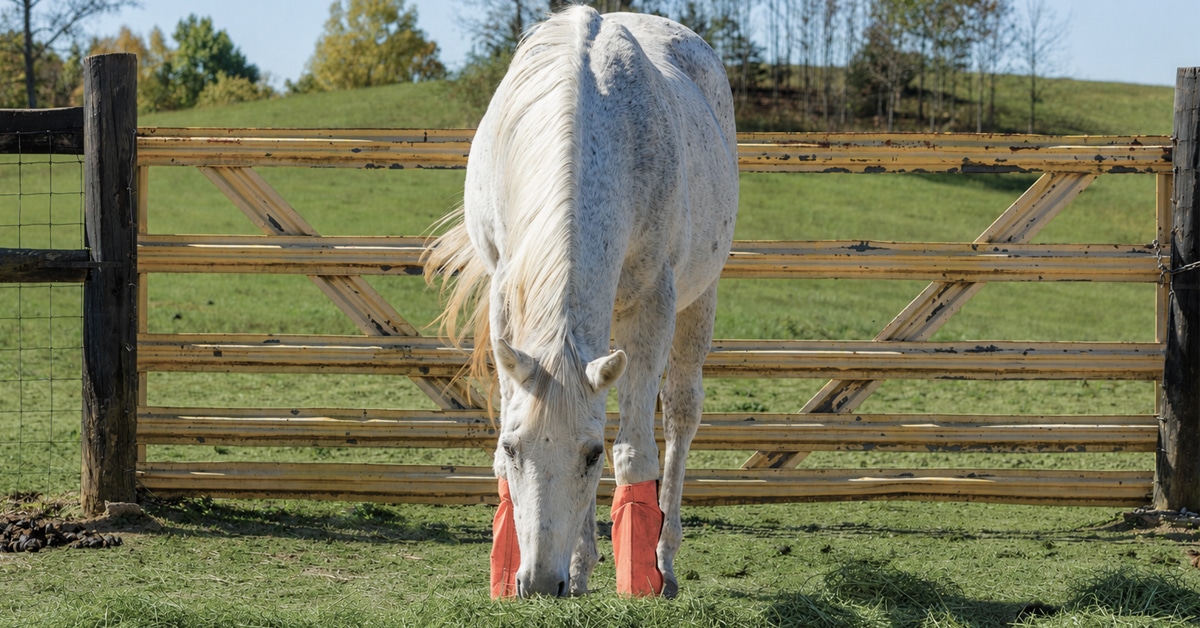
We all want our horses to live a long and healthy life! With advances in veterinary care and nutritional management, horses are living longer, often well into their 20s and even 30s.
However, it is not simply the number of birthdays that defines a horse as ‘senior’, and a specific age does not dictate when dietary changes must be made. The combination of both chronological age and the decline of physiological function are what we rely on to categorize a horse as a senior and decide when management changes should be implemented.
Physiological Changes
As horses age, there are numerous physiological changes that occur at differing rates for each horse. These changes impact the horse’s ability to digest and absorb nutrients, resulting in the need to alter their nutritional management.
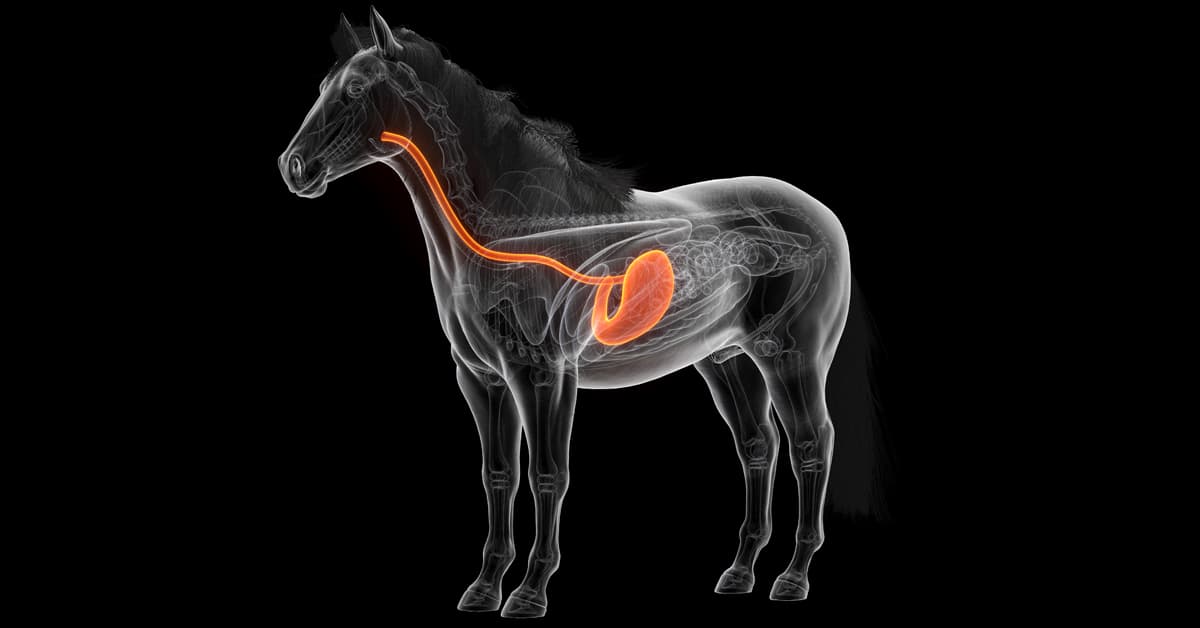
A few of the most common physiological changes include dental disease, loss of teeth or worn molars, compromising the horse’s ability to chew forages. Additionally, the hindgut might have reduced ability to ferment fibre, meaning that the horse is receiving fewer nutrients from their hay and pasture. Other areas of the gastrointestinal tract such as the small intestine can also lose function with age making it harder to digest protein. Additionally, older horses are prone to developing health problems such as Pituitary Pars Intermedia Dysfunction (PPID, more commonly known as Cushing’s disease.
Working closely with your veterinarian for regular dental assessments and general health monitoring is a critical first step to optimal management for your aging horse. For example, if your horse’s dentition is evaluated regularly, you will know when you need to start supplementing fibre that’s easy to chew and consume without waiting until your horse begins losing weight.
Tracking Condition
Beyond working closely with your veterinarian to manage your aging horse, regularly checking their body condition is recommended. The 9-point Henneke Body Condition Scoring System details assigning a number (1-9) to each of the six body regions (neck, wither, shoulder, ribs, back, and tailhead).
Taking an updated body condition score of your horse every time they have a farrier visit is a great way to keep on a regular schedule so that small changes in weight get noticed before they become serious problems.
Building a Nutrition Program for a Senior Horse
Curating an optimal feed program for your senior horse starts by ensuring that they have adequate fibre intake, whether that is through hay and pasture or processed fibre sources such as hay cubes or a complete feed. Ideally, about 2% of the horse’s body weight (on a dry matter basis) should be provided in forage daily.
There are four common feeding situations for senior horses:
- A senior horse that maintains their weight easily on hay can be maintained on a ration balancer.
- A senior horse that has started to struggle to maintain their weight on hay might require a ration balancer combined with a small amount of a senior feed.
- A senior horse that struggles to maintain weight might require the full manufacturer’s recommended amount of a senior feed.
- A senior horse that has compromised dentition and cannot consume hay will need supplemental digestible fibre in the form of a complete feed, or a combination of hay cubes, hay pellets, and/or beet pulp with a fortified feed to ensure their vitamin and mineral requirements are being met.
Note that there are numerous ways to build a balanced feed program for senior horses. Combining digestible fibres such as hay cubes and beet pulp with supplemental fat and a ration balancer can work well, too, but when combining numerous products it is strongly recommended to work with an equine nutritionist.
Once you have selected the type of feed that matches your horse’s nutritional requirements, ensure that you are avoiding the common feeding mistakes listed below.
Common Feeding Mistakes
1) Unnoticed changes in hay quality
Testing your hay is the only way to know the nutritional content. If it is the majority of what your senior horse is consuming, changes in quality from year-to-year or even batch-to-batch can significantly impact your horse’s calorie intake, and in turn, body condition.
For senior horses, testing each new batch of hay is the gold standard practice, as that way you can ensure their overall ration continues to provide the same number of calories daily. For example, if the calorie content of the hay is decreasing, you will add or increase concentrates to prevent weight loss.
It is much easier to keep ahead of unwanted weight changes for senior horses by working closely with your veterinarian and equine nutritionist.
2) Underfeeding Fortified Feeds
Fortified feeds such as senior or complete feeds are designed to be fed at the manufacturer’s recommended rate. It is a frequent issue that horse owners will feed their horse one of these products, but in a lesser amount than is recommended. If the horse is maintaining their weight, combining the product with a ration balancer can be an effective way to balance the ration without causing unnecessary weight gain, but if the horse is struggling to maintain weight, increase the product to the recommended feeding rate.
3) Mobility Considerations
Beyond the feed products and hay that we are providing to our senior horses, it also needs to be practical for them to consume and easy to access. Uneven terrain, a lack of space at the hay feeder, a pasture bully, or even buckets placed too high/low for the horse could reduce feed intake and contribute to weight loss. Evaluating your senior horse’s environment to ensure you are supporting their comfort is a frequently overlooked aspect of their feed management.
4) Trying to address medical issues with feed changes
Lastly, when you notice negative changes in your senior horse, always have your veterinarian examine the horse first. Health changes are common in aging horses and many situations require medical intervention, not solely dietary changes.
Take Home Message
There is something so incredibly special about the presence of a senior horse in the barn. Learning how to adjust their feed program to support them through the physiological changes they experience is critical to longevity. If you have any questions about feeding your senior horse, please reach out to a qualified equine nutritionist.
The Latest