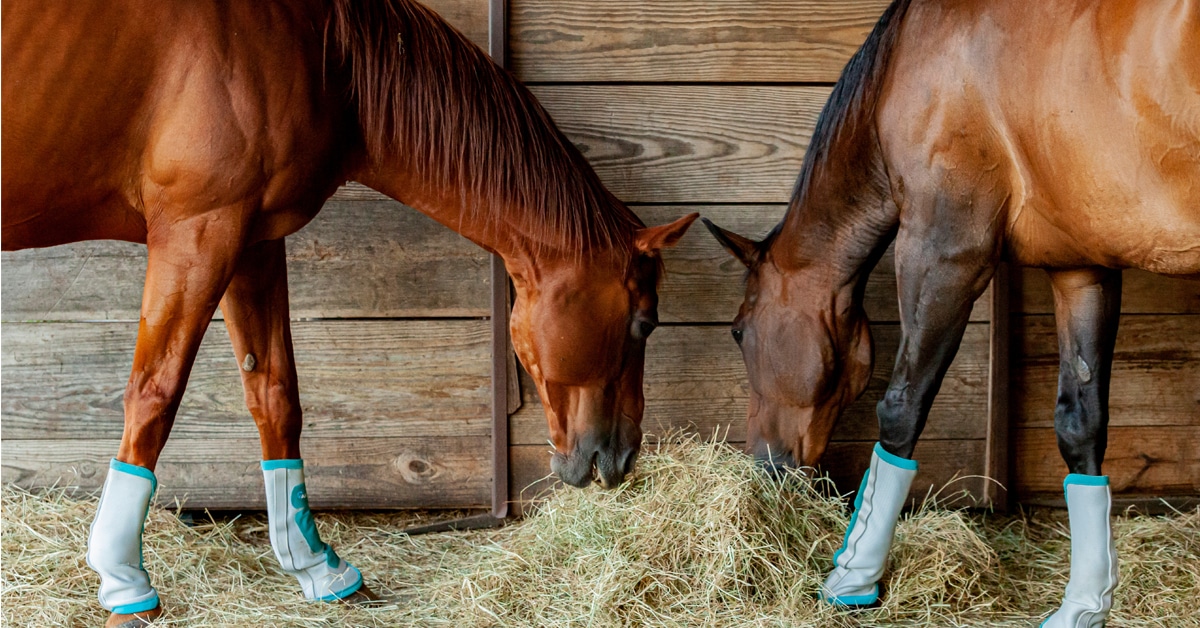
The change often arrives quietly. Pasture thins, turnout shortens and hay becomes the centre of the feeding program. The horse may look no different and eat with the same enthusiasm, yet one nutrient can fall sharply once grass is cut, dried, baled and stored: vitamin E.
Horses cannot manufacture vitamin E. They rely on green forage, fortified feeds and supplements for this fat-soluble antioxidant, which helps protect cell membranes and supports normal muscle, nerve and immune function. Exercise, age, growth and reproduction can increase antioxidant demands, but limited access to fresh grass is often the most obvious risk.
That does not mean every hay-fed horse needs the same tub. The useful question is not simply how much vitamin E a label promises, but what the rest of the ration already supplies – and what else it may be missing.
1. What Changes Between Grass and Hay
Actively growing pasture is the horse’s richest natural source of vitamin E. Depending on grass quality, maturity, turnout and intake, it can meet or exceed ordinary requirements.
Storage changes the picture. Vitamin E is vulnerable to oxygen, light and time after harvest. Published estimates place fresh pasture at about 45 to 400 IU per kilogram of dry matter, compared with roughly 4.5 to 40 IU in stored hay. For a 500-kilogram horse eating 10 kilograms of forage dry matter, that is a potential difference between 450 to 4,000 IU from pasture and only 45 to 400 IU from hay.
Those ranges vary with forage species, harvest conditions and storage, but the practical point remains: a full hay net does not guarantee an adequate vitamin E intake.
2. How Much Does a Horse Need?
For a mature horse at maintenance, the commonly cited minimum is 1 IU per kilogram of body weight each day. A practical target is often closer to 2 IU per kilogram. That puts a 500-kilogram horse at approximately 500 to 1,000 IU daily.
Regular or heavy work can raise the target to about 1,000 to 2,000 IU. Growing horses, broodmares and seniors also deserve closer review, particularly when pasture is scarce. These figures describe total dietary intake, not an automatic supplement dose.
Poor recovery, recurring muscle soreness, weakness, muscle loss or changes in coordination can accompany low vitamin E status, but none is diagnostic. Sudden weakness, collapse, severe muscle pain, difficulty rising or worsening coordination requires prompt veterinary attention. Bloodwork is most useful when interpreted with clinical signs, diet history and selenium intake.
3. Read the Small Print, Not Just the IU
Natural vitamin E appears as d-alpha-tocopherol or d-alpha-tocopheryl acetate. Synthetic forms use the prefix dl. Natural vitamin E contains the RRR-alpha-tocopherol form the body preferentially recognizes and retains; synthetic vitamin E contains eight isomers. Synthetic sources still have vitamin activity, but natural vitamin E is generally the preferred targeted source.
Concentration matters as well. Mad Barn Natural Vitamin E provides 1,000 IU in a 1.67-gram serving, or 600 IU per gram. KPP Elevate Maintenance Powder also provides 1,000 IU, but in a 7-gram serving – about 143 IU per gram – with approximately 5 grams of dextrose. Carriers can support stability and palatability, but owners should know what arrives with the dose.
4. Four Feeding Programs, Four Answers
When vitamin E is the only gap
Natural Vitamin E is the most direct overall choice when the wider ration is balanced. It supplies natural d-alpha-tocopheryl acetate without selenium, added sugar, fillers or extra calories. Each 1.67-gram serving provides 1,000 IU. At the standard rate, a 500-gram bag supplies about 300 servings at approximately $0.24 per day.
When selenium is also low
Natural E/Organic Se fits when both nutrients are indicated or a pellet is easier to feed. Vitamin E protects cell membranes, while selenium is required by antioxidant enzymes. Because selenium has a narrower margin between adequate and excessive intake, fortified feeds, balancers and other supplements must be counted before more is added.
When vitamin E is part of a larger imbalance
AminoTrace+ is designed for horses needing vitamin E within a complete low-NSC vitamin-and-mineral program. A daily serving provides 1,250 IU of natural vitamin E along with organic trace minerals, essential amino acids, vitamins and antioxidants. It is the better fit when forage-based diets or underfed commercial feeds leave several nutritional gaps, not vitamin E alone.
When the horse also needs fat and calories
W-3 Oil supplies natural vitamin E within a DHA-enriched fat supplement. At the standard 100-milliliter maintenance rate for a 500-kilogram horse, it provides 1,500 IU of natural vitamin E, 1,500 milligrams of DHA and about 0.9 megacalories of digestible energy. It suits programs that already call for omega-3s and calorie-dense energy; it is more than is needed for a vitamin E-only shortfall.
5. The Ration Decides
For most horses needing vitamin E and nothing else, Natural Vitamin E remains the most precise recommendation. Natural E/Organic Se belongs in rations where selenium is also indicated. AminoTrace+ fits a broader vitamin-and-mineral gap, while W-3 Oil answers a need for omega-3 fat and additional calories.
The correct choice becomes clearer once pasture access, hay, fortified feed, workload, current supplements and selenium are accounted for. Owners who are unsure can begin with Mad Barn’s free diet evaluation, which reviews the entire feeding program rather than one number on one label.
The Latest