A horse trapped in a trailer after an accident or stuck in a ditch creates an immediate and powerful urge to help. But in a large animal emergency, acting too quickly can make a bad situation worse.
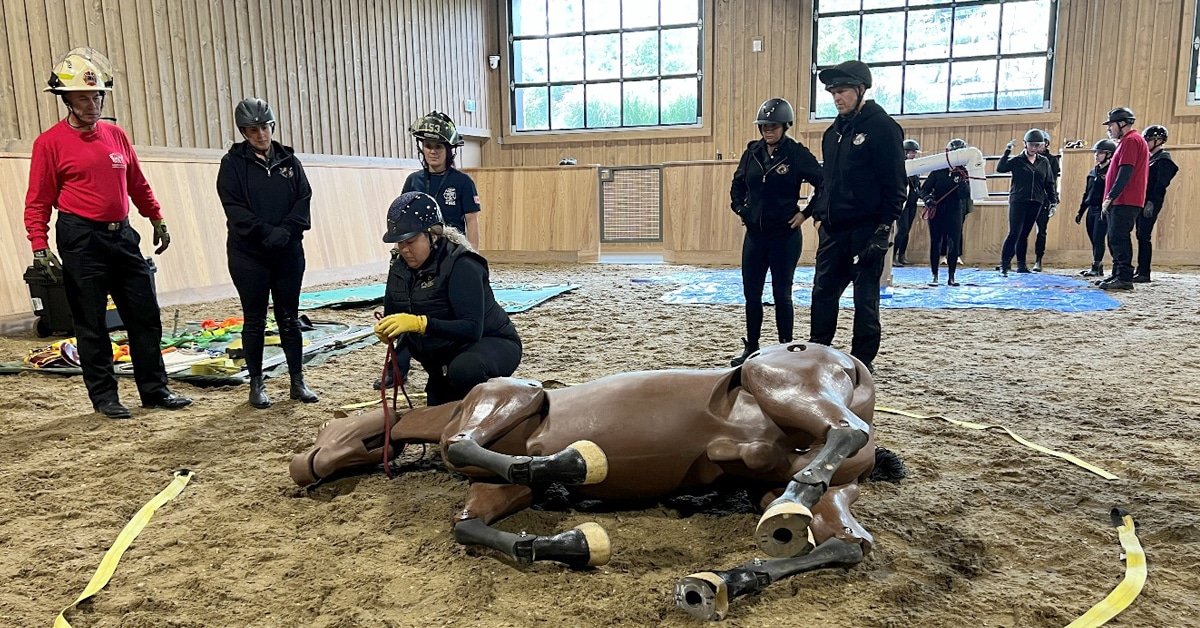
That was one of the clearest lessons from a recent Large Animal Emergency Rescue seminar hosted by Equine Guelph at King Animal Hospital. Through hands-on exercises using life-sized horse mannequins, participants learned that a successful rescue starts with an assessment of the scene and a clear plan.
1. Make the Scene Safe First
Before approaching the horse, stop and look for hazards. Traffic, unstable ground, water, fencing, machinery, overhead wires and frightened bystanders can all turn one emergency into several. Keep unnecessary people back and establish a safe working area.
A horse that appears quiet may move suddenly when frightened or in pain. No one should put themselves in a position where they could become trapped between the animal and a solid object.
2. Call for Help Early
Moving a trapped horse is not something owners should attempt without appropriate training. Their most important role is to recognize the dangers, call for help, keep the scene safe and provide responders with information about the horse.
Contact your veterinarian and, where a horse is trapped or specialized extraction is needed, emergency services. Explain the location, what happened, the horse’s position, whether it is injured and any dangers responders will encounter.
Not every fire department has specialized large animal rescue training or equipment, so identifying local resources in advance is valuable. A veterinarian can help assess the horse and determine whether sedation or other medical treatment is appropriate.
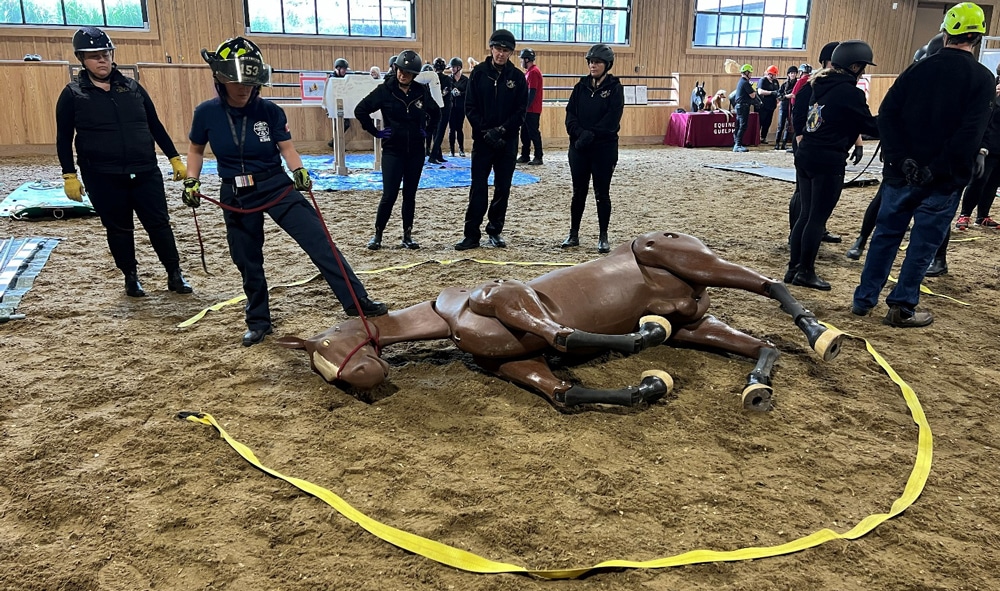
3. Control the Head, Without Putting Yourself in Danger
A horse’s head and neck are central to its movement. Appropriate head control can help reduce sudden movement during a rescue.
If a halter isn’t available, a makeshift halter can be made from a length of rope. Create a loop to place around the horse’s muzzle, with another section passing behind the ears over the poll. This provides a way to help control and guide the horse’s head without a conventional halter.
Never wrap a lead rope around your hand or body. Handlers need a way to release the rope quickly and must remain alert to sudden lunges or attempts to stand.
4. Respect the Kick Zones
Horse owners know that hind legs can kick, but a horse on the ground can strike in unexpected directions with any of its legs. Its entire body may also shift or roll without warning.
Keep clear of the legs and avoid stepping over a recumbent horse. Even an experienced horseperson should not assume that familiar handling methods apply in a confined or unstable rescue situation.
A horse that has been lying quietly may suddenly launch itself to its feet when freed. Rescuers must anticipate this reaction and ensure everyone has a clear escape route before attempting to move the animal.
5. Placing Straps to Pull a Horse
To move a horse that is stuck on its side, place wide, flat straps around the horse’s body to distribute pulling forces over a larger area, reducing the risk of injury. The precise configuration depends on whether the horse needs to be pulled forward, backward or sideways.
For a sideways drag, which is commonly used to move a recumbent horse out of danger, two straps are positioned:
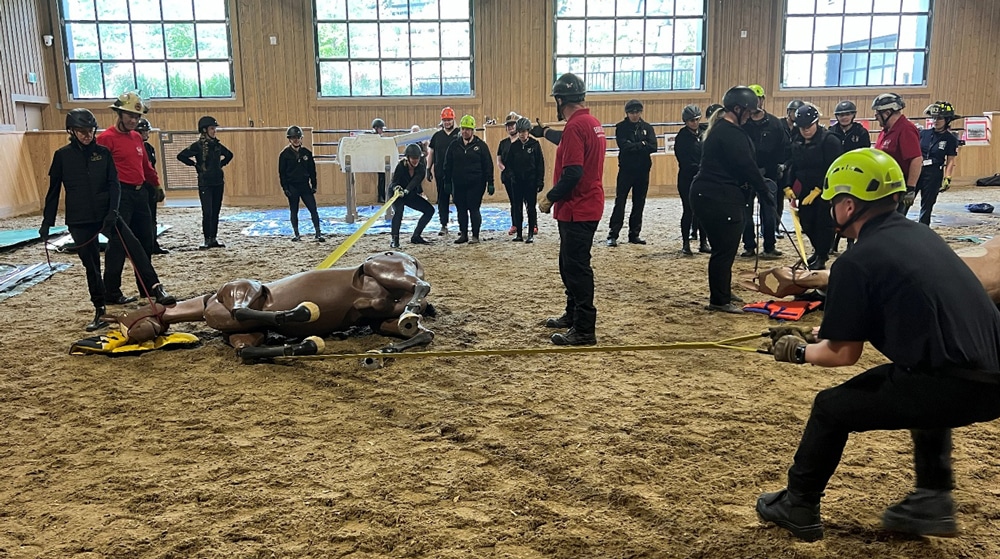
1. Behind the front legs: The first strap passes underneath the horse’s chest, immediately behind the forelegs, in the girth area.
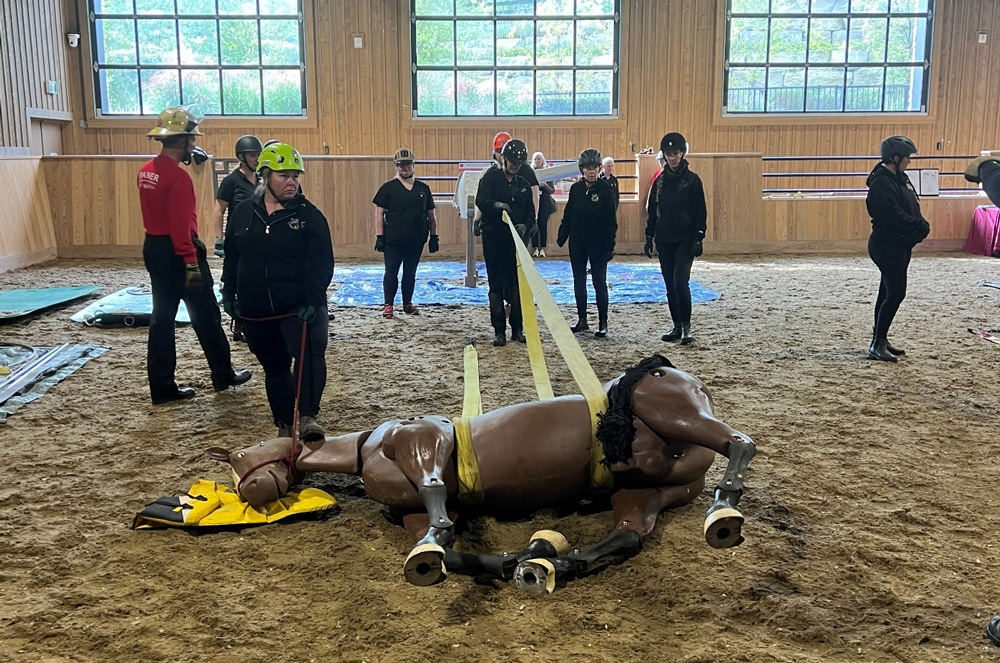
2. In front of the hind legs: The second strap passes underneath the abdomen, just ahead of the hind legs.
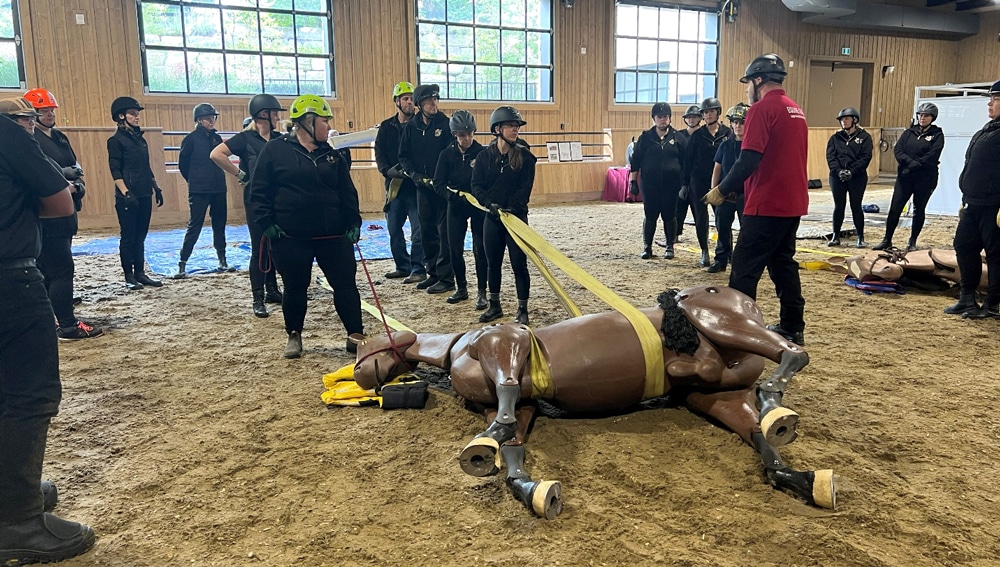
3. Across the body: Both straps are centred beneath the horse and brought up and over its body, allowing rescuers to pull it sideways in a controlled manner.
Rescuers often use a technique called flossing, gently working the webbing back and forth to slide it beneath the horse without having to lift or roll the animal.
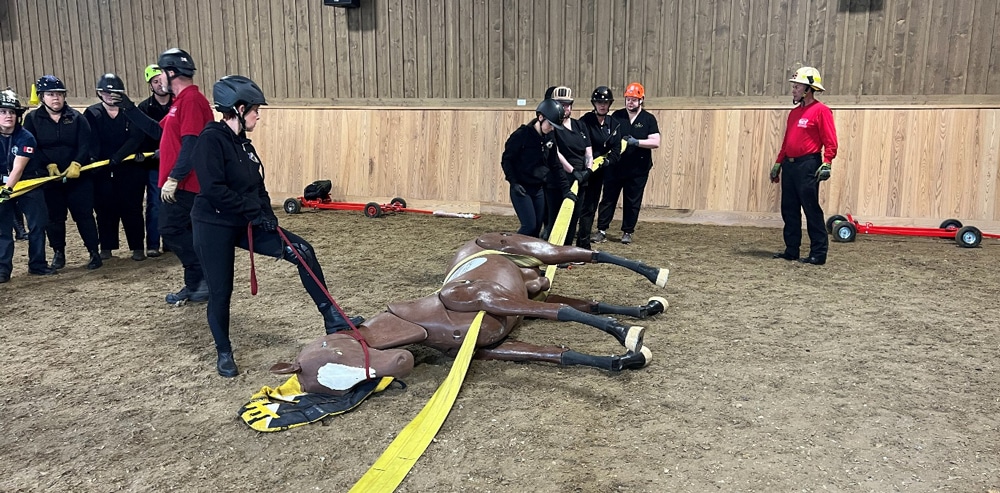
For a forward pull, a different arrangement, often called a forward assist, distributes the pulling force around the chest and shoulders. The webbing must be positioned carefully to avoid pressure on the neck, trachea and sensitive tissues.
A trained handler maintains control of the horse’s head throughout the operation. If the horse must be dragged any distance, a rescue glide or tarp can help protect its skin and a PFD or other padding can help protect the head (especially the downward eye).
These arrangements should only be applied under the direction of trained rescuers, with veterinary involvement where possible. Incorrect webbing placement can cause serious injury.
Using a tractor, vehicle, or improvised straps to drag or lift a horse can create serious injuries. Pressure applied in the wrong place can restrict breathing or damage the body, and an uncontrolled pull can leave rescuers in the path of the moving animal.
Mechanical drags should never be used unless the animal is on a glide and only attached to the glide (not the animal) and only by those with experience.
6. Work Slowly and Communicate Clearly
A complicated rescue needs one coordinated plan. Rescuers must understand who is directing the operation, who is handling the horse, what movement is planned and when everyone should move out of the way. The Incident Command System (ICS) is the standardized management approach used by first responders.
A rescue is not finished the moment the horse is freed. The horse may try to stand abruptly, need veterinary assessment or require controlled movement to a safer location. Maintaining a clear escape route remains essential throughout.
7. Prepare Before an Emergency
Horse owners can make the first minutes of a crisis safer by having the farm’s address and access instructions readily available, keeping emergency telephone numbers together and knowing which local responders have large animal rescue capabilities.
Consider how emergency vehicles will reach paddocks and barns, and make sure gates and lanes can be opened quickly. Review an emergency plan with everyone who regularly handles the horses. The overriding lesson is simple: protecting the people on scene is the first step in protecting the horse.
Your pre-Emergency Checklist:
- Save your veterinarian’s phone number and the local emergency number.
- Find out whether your local fire department has large animal rescue training.
- Post your farm’s address and emergency access instructions prominently.
- Keep gates, lanes and emergency access routes clear.
- Know where to find halters, lead ropes and first-aid supplies.
- Make sure everyone handling your horses knows whom to call in an emergency.
Visit TheHorsePortal.ca for more information on Equine Guelph’s Large Animal Emergency Rescue training program. Prepare ahead of time by investing in hands-on training. Equine Guelph also provides on-demand online awareness level training and online resources.
The Latest