The tremendous forces generated by performance horses place considerable demands on their hooves. Whether landing after a jump, executing the collected movements of upper-level dressage or galloping across challenging cross-country terrain, these athletes rely on strong, balanced feet to absorb concussion, provide stability and support the complex mechanics of movement. Proper hoof management, including individualized trimming and shoeing, is therefore essential to maintaining soundness and supporting athletic performance.
“What is the purpose of hooves in general?” asks Dr. Alex Knoepfli, a partner at Prescott Animal Hospital in Prescott, ON. “Overall, hooves provide cushioning, structure support and shock absorption. Sixty per cent of a horse’s weight is on their front feet when jumping and moving.”
Although the basic functions of the hoof remain the same across disciplines, the demands placed upon it vary considerably. A horse’s conformation, movement, workload, footing and individual hoof characteristics all influence how its feet should be managed.
“Managing the integrity of the hoof to ensure it is strong, supported and balanced is important in all the disciplines,” adds Dr. Knoepfli. “If you manage the hooves properly, you get less chance of soft tissue, ligament and tendon injuries.”
Dr. Brianne Henderson of Rivendell Equine Veterinary Services in Orangeville, ON, emphasizes that the quality of the trim is fundamental to effective hoof management. Even relatively small changes can alter the shape and balance of the hoof capsule, making the farrier’s assessment and technique particularly important.
“The way the horse is used is not necessarily significant, as the hoof capsule can grow. However, imbalances with farriery can cause significant problems. First and foremost, the trim is the foundation of all things. If the trim is not accurate, the shoe is not as helpful.”
There are three principal reasons for applying shoes: traction, protection and support. Not every horse necessarily requires them, and the decision should be based on its individual needs rather than discipline alone.
“There are three reasons for shoeing horses: traction, protection and support,” says Dr. Henderson. “Outside of those reasons, horses are probably fine to be barefoot — but if they need traction because they are on turf, or if they need protection because they are endurance horses and are wearing away hoof capsule faster than it can grow, or if they are in therapeutic situation trying to heal from injury, they might need a therapeutic shoe for support.”
The relationship between shoeing and the hoof’s natural function has also attracted scientific attention. Research from the Swedish University of Agricultural Sciences in Uppsala has suggested that traditional iron shoes can alter the hoof’s ability to expand and potentially inhibit circulation. However, proper shoeing techniques and appropriate shoe selection can help address individual requirements while providing necessary protection and support. The objective is not simply to put a shoe on a foot, but to preserve its functional integrity.
Hunter/Jumper: Managing Concussion and Impact
Show jumping places considerable demands on the front feet, particularly during take-off and landing. The repeated impact of jumping, combined with the acceleration, deceleration and tight turns required in competition, creates substantial stresses throughout the lower limbs.
“The hoof is really important in the disciplines, but the horses are all so different. It comes down to making sure the hoof is properly balanced,” says Dr. Knoepfli.
Hunters and jumpers experience different loading patterns depending on their work. Horses jumping large fences must withstand substantial landing forces, while those competing in jumpers and derbies also experience rapid changes in direction and speed. Footing can add another dimension to these stresses. Dr. Henderson notes that horses working repeatedly on fibre footing may experience repetitive stress injuries involving the cartilage and fetlocks.
“The coffin joint also comes under pressure and special rubberized or polyurethane pads in shoes maybe needed to reduce the impact inherent in landing.”
The importance of hoof conformation is supported by a 2024 Portuguese study examining 73 working show jumpers, dressage horses and school horses at riding centres. Researchers investigated possible relationships between hoof shape and lameness, finding that certain conformational characteristics could indicate imbalances associated with increased loading and injury risk.
The study identified two particular combinations as potentially significant. A small coronet band circumference combined with a large hoof wall angle was associated with a more upright foot, which may be predisposed to increased concussive forces. Conversely, a large coronet band circumference with a small hoof wall angle was associated with a broken-back hoof-pastern axis and increased loading on the suspensory apparatus.
These findings reinforce the importance of evaluating each horse’s individual hoof conformation rather than applying a standardized approach to all performance horses.
Dressage: Balance Under Increasing Load
Although dressage does not involve the same high-speed impacts as jumping or eventing, the discipline places considerable demands on the musculoskeletal system. As horses progress through the levels, increasingly demanding movements require strength, balance, coordination and the ability to carry and redistribute weight effectively.
The hind limbs play an especially important role in advanced work, contributing to collection, engagement and the elevated movements required in upper-level dressage. Maintaining appropriate hoof balance is essential to allowing the horse to perform these movements comfortably and efficiently.
“In dressage you have these huge high loading movements where maintaining the hoof balance is important to maximize the movements,” notes Dr. Knoepfli. “You have these big Olympic movements — the piaffe and passage and the different lead changes. These horses have to be properly balanced to do the biggest movements because that is how they get their scores. You have to manage hooves to manage these huge concussive forces.”
Many dressage horses, particularly warmbloods, have substantial hoof capsules that require careful assessment and regular farriery. Their individual hoof shape, limb conformation and movement patterns must all be considered when determining the most appropriate trim and shoeing arrangement.
An imbalance that might initially appear relatively minor can affect how the horse loads its limbs and distributes forces through the joints, tendons and ligaments. Over time, this can contribute to discomfort and lameness.
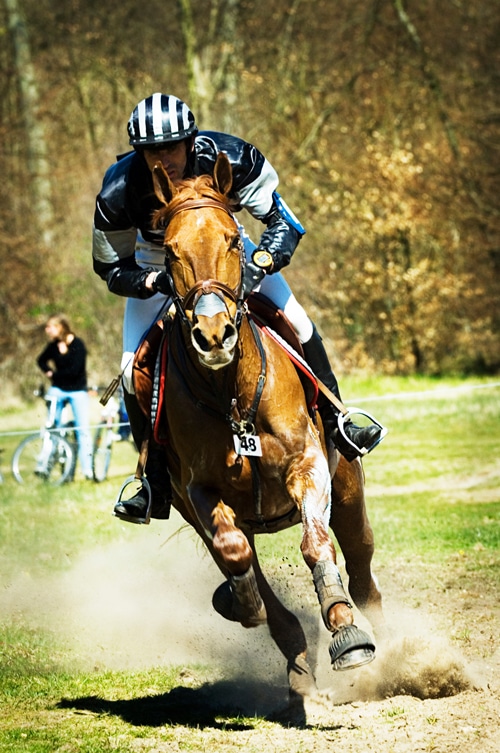
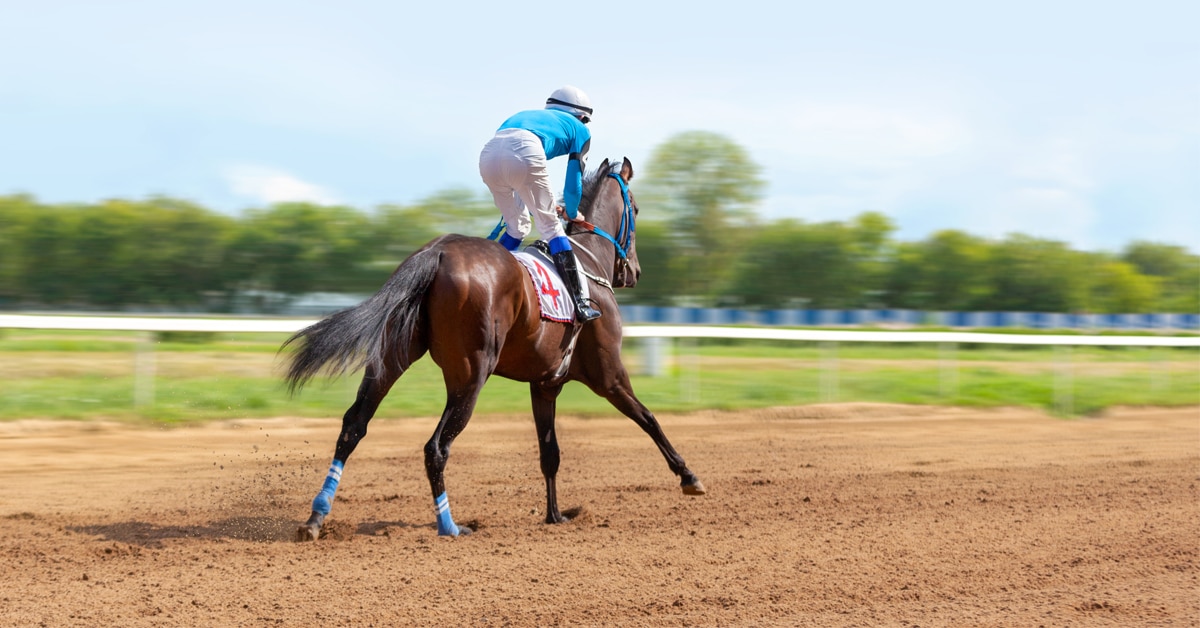
Speed, hard ground and uneven terrain are all challenges the event horse’s hooves face. (fifranck – stock.adobe.com)
Eventing: Protection Across Challenging Terrain
Eventing presents a different combination of hoof-related challenges. Horses must negotiate dressage, show jumping and cross-country, with the latter introducing considerable demands through speed, varied terrain and sometimes hard ground.
Repeated galloping can result in bruising, excessive hoof wear and lost shoes. A shoe coming loose or being pulled off can also damage the hoof wall, creating further challenges for maintaining stability and protection.
“Eventing horses are usually TB or mixed-breed TB, with lots of galloping over hard ground, and bruising of feet. TBs tend to have under-run heels, longer toes and thinner soles,” says Dr. Knoepfli.
Thoroughbred-type feet can require particular attention because thinner soles and weaker hoof walls may leave them more vulnerable to bruising and damage. When shoes are lost, the resulting instability and breakage of the hoof wall can make it necessary to rebuild the damaged area over time.
For eventers, shoe selection must account for the demands of the competition environment, including traction, protection and the need to maintain a secure, balanced foot across different surfaces. As with other disciplines, there is no universal solution: the horse’s individual conformation and hoof quality must guide the approach.
Hoof Conformation, Lameness and Individual Management
Riders and trainers may not recognize or understand reasons for a horse’s lameness and pain, calling poor performance ‘laziness’ or ‘bad behaviour.’ In a 2017 study by Sue Dyson for England’s Centre for Equine Studies, 47% of sport horses of 506 surveyed showed gait-related abnormalities related to pain while in regular work. As hoof-related issues account for the vast majority (roughly 70-80%) of lameness, this should be the first area investigated.
While discipline influences the stresses placed on a horse’s feet, its natural hoof conformation is equally important. Genetics, hoof capsule shape, limb alignment and the way an individual horse moves all contribute to how forces are distributed during exercise.
The Portuguese study highlights the potential relationship between hoof conformation and lameness, suggesting that certain hoof characteristics may predispose horses to particular loading patterns. Understanding these characteristics can help veterinarians and farriers identify potential problems and develop appropriate management strategies.
Congenital hoof shape and size can influence how the entire limb functions. Although farriery cannot change a horse’s underlying genetic makeup, careful trimming and shoeing can help optimize balance and address certain conformational challenges.
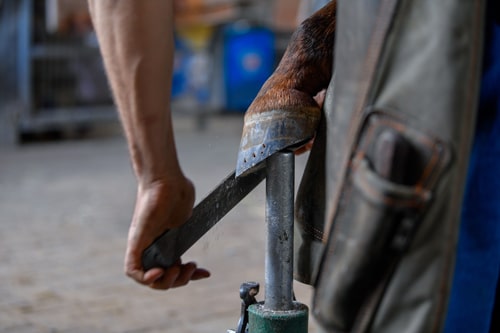
Even fairly minor changes can alter the shape and balance of the hoof capsule, making the farrier’s assessment and technique particularly important. (PROMA – stock.adobe.com)
Adjustments to the dorsal hoof wall angle (DHWA) and heel angle, for example, can help bring the foot closer to an appropriate functional alignment. A 2019 British study identified 50–55 degrees as the generally accepted ideal hoof angle, compared with the 45–50 degrees traditionally considered optimal. However, the appropriate angle must always be assessed in relation to the individual horse’s conformation and limb alignment rather than treated as a universal target.
For Dr. Henderson, the relationship between hoof balance and the rest of the limb is central to preventing problems.
“Most injuries are leg issues,” she notes. “If you do not have a properly balanced hoof and a proper shoe, this can translate to improper alignment, which can translate to how the horse uses itself. Over time, if this is not properly managed, then there is a problem.”
Dr. Knoepfli similarly stresses that performance horses require a proactive approach to hoof care, particularly as their workloads increase and the forces placed on their limbs become more substantial.
“Most horses at high levels have shoes: you have to balance them properly and manage the concussive forces because they are huge at this level,” notes Dr. Knoepfli. “The horse is asked to push from behind and you can get soft tissue and ligament injuries.”
Ultimately, effective hoof management is about much more than choosing the right shoe. It requires an understanding of the individual horse’s movement, natural hoof integrity, conformation and athletic demands. Regular assessment and communication between the veterinarian and farrier allow potential imbalances to be identified and addressed before they develop into more significant problems.
The Latest