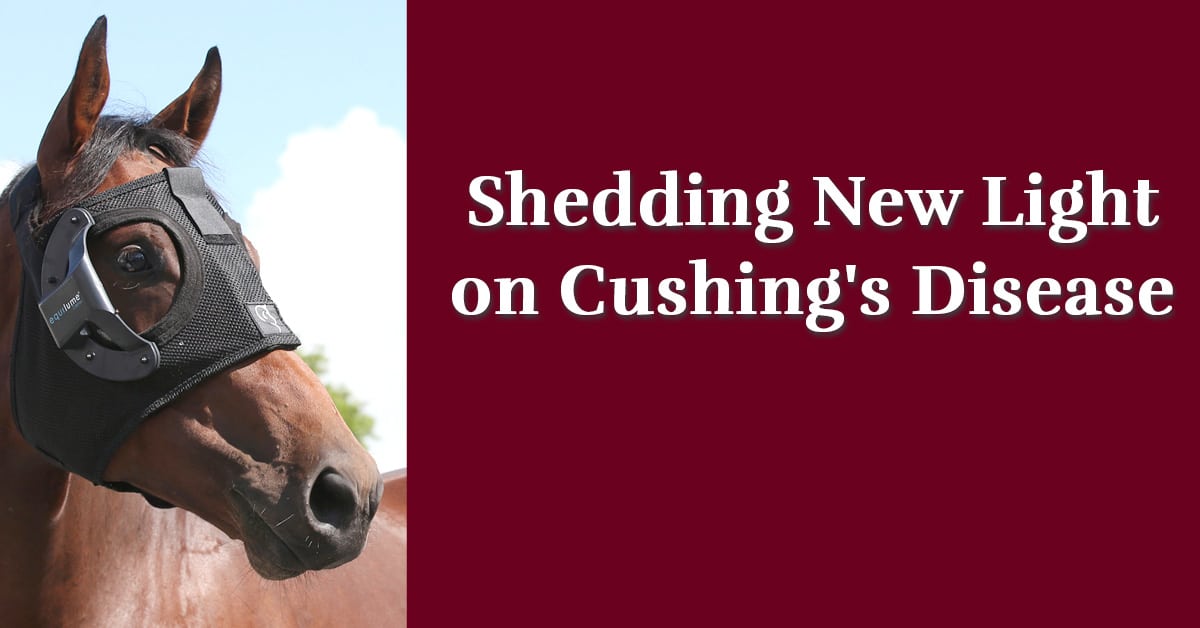
For owners of horses with pituitary pars intermedia dysfunction (PPID), commonly known as equine Cushing’s disease, managing an excessively long, thick hair coat can be a frustrating challenge. Even with medication, some horses struggle to shed their winter coats, leaving them uncomfortable as temperatures rise.
Now, researchers have discovered that a technology originally developed for breeding mares may offer a new way to manage this troublesome symptom.
A study published in October 2025 found that horses with PPID wearing Equilume blue light masks began shedding their winter coats approximately one month earlier than horses exposed to natural daylight.
The findings suggest that manipulating a horse’s perception of daylight could provide a useful addition to conventional PPID treatment.
From Breeding Mares to Cushing’s Horses
For decades, breeding farms have used artificial lighting to encourage mares to begin cycling earlier in the year. Traditionally, mares were kept under lights for approximately 16 hours a day to simulate the longer days of spring.
The process works by influencing melatonin, a hormone produced by the pineal gland in response to darkness. During winter, longer nights mean longer periods of melatonin secretion, which helps regulate seasonal reproductive activity. By extending the perceived hours of daylight, artificial lighting reduces the duration of melatonin secretion and encourages mares to resume cycling earlier.
This is particularly valuable in the Thoroughbred industry, where all horses officially turn a year older on January 1. A foal born in February has several additional months to mature compared with one born in May, despite both being considered the same age for racing purposes.
The Equilume mask was developed as a practical alternative to traditional stable lighting. It delivers low-intensity blue light to one eye, influencing the horse’s biological clock to respond as though the days are longer. An important advantage is that mares can remain on normal turnout schedules rather than spending extended periods confined to illuminated stalls.
But researchers began to wonder whether the same technology might influence another seasonal process: hair growth and shedding.
The Connection Between Daylight and Hair Growth
A horse’s winter coat is largely regulated by changes in daylight hours rather than temperature alone. As the days shorten in autumn, hormonal changes encourage the development of a thicker winter coat. When daylight increases in spring, the process reverses, triggering shedding and the growth of a shorter summer coat.
Melatonin plays an important role in this seasonal cycle, along with other hormones, including prolactin. In horses with PPID, however, normal coat growth and shedding can be disrupted.
PPID is a progressive neurodegenerative condition involving the loss of dopamine-producing nerve cells that regulate part of the pituitary gland. The resulting hormonal abnormalities can cause a variety of clinical signs, including muscle loss, abnormal fat distribution and an increased risk of laminitis, particularly in horses with accompanying insulin dysregulation.
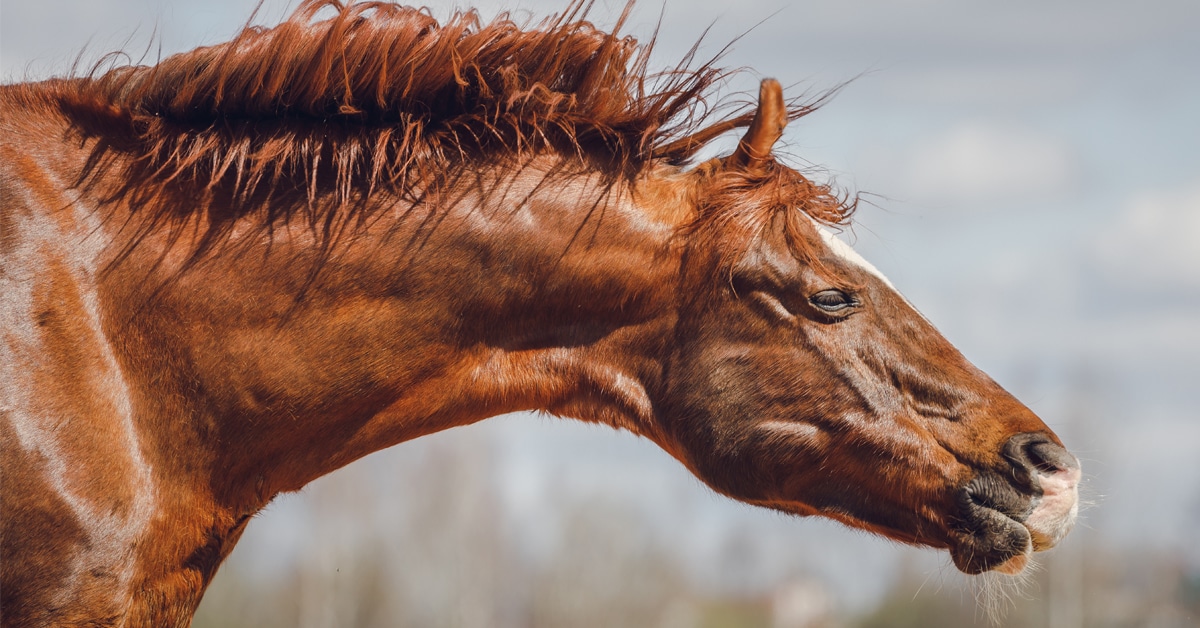
One of its most recognizable symptoms is hypertrichosis, the development of an abnormally long, often curly hair coat that does not shed normally. For affected horses, this can mean excessive sweating, discomfort during warmer weather and repeated clipping to keep them comfortable.
Researchers wanted to know whether extending the perceived daylight hours using blue light could encourage these horses to shed their coats earlier.
What the Research Found
Researchers followed 52 horses with PPID and exhibiting abnormal hair growth. Of those horses, 29 wore Equilume blue light masks beginning in mid-December, while 23 remained under natural daylight conditions. The masks extended the horses’ perceived daylight hours to 15 hours daily.
Researchers monitored hair length, shedding patterns, body condition and owner-reported changes in clinical signs over 13 months. A separate group of 17 unmedicated horses with PPID was also monitored under natural daylight conditions.
The most notable finding was that horses wearing the blue light masks began shedding approximately one month earlier than those in the main control group. Owners also reported improvements in coat condition and other PPID-related signs.
In the final questionnaire, 71% of owners responding in the blue light group reported a reduction in coat-related PPID signs, compared with just 6% in the control group.
Interestingly, researchers found no significant difference in hair length between the masked horses and the main control group. In other words, the masks did not necessarily prevent horses from growing long winter coats, but they appeared to help them shed those coats sooner.
Could Blue Light Replace Pergolide?
Absolutely not.
Pergolide, commonly sold under the brand name Prascend, remains the primary medication used to manage PPID. It acts on the hormonal abnormalities associated with the disease and can help improve clinical signs.
Blue light therapy works differently and should be considered an addition to existing treatment rather than a replacement for medication. Rather than addressing the underlying changes in the pituitary gland, it appears to influence the horse’s natural seasonal response to increasing daylight.
Most horses in the study were already receiving pergolide, making the results particularly interesting for owners whose horses continue to experience delayed shedding despite treatment.
Could blue light therapy help your horse?
For horses with PPID, shedding a thick winter coat earlier could potentially improve comfort as spring temperatures rise. It may also reduce the need for frequent clipping, although the study did not directly establish those benefits.
The Equilume mask is designed to be worn during normal daily activities, including turnout, and is removed for grooming, exercise and charging.
While the findings are promising, the study was relatively small and relied partly on owner-reported observations. Larger studies are needed to confirm the benefits and determine which horses are most likely to respond.
For now, blue light therapy represents an intriguing additional tool for managing one of the most visible and troublesome symptoms of PPID.
It is also a reminder that advances in equine care don’t always come from developing something entirely new. Sometimes, a technology designed to solve one problem turns out to have unexpected benefits elsewhere. For owners whose horses struggle with excessive hair growth or delayed shedding, speak to your veterinarian about whether blue light therapy might be worth considering.
The Latest