The FEI Tribunal has dismissed a challenge by two major Spanish show jumping venues to restrictions on what competition organizers can charge riders, but has not ruled on whether the fee caps comply with European Union competition law.
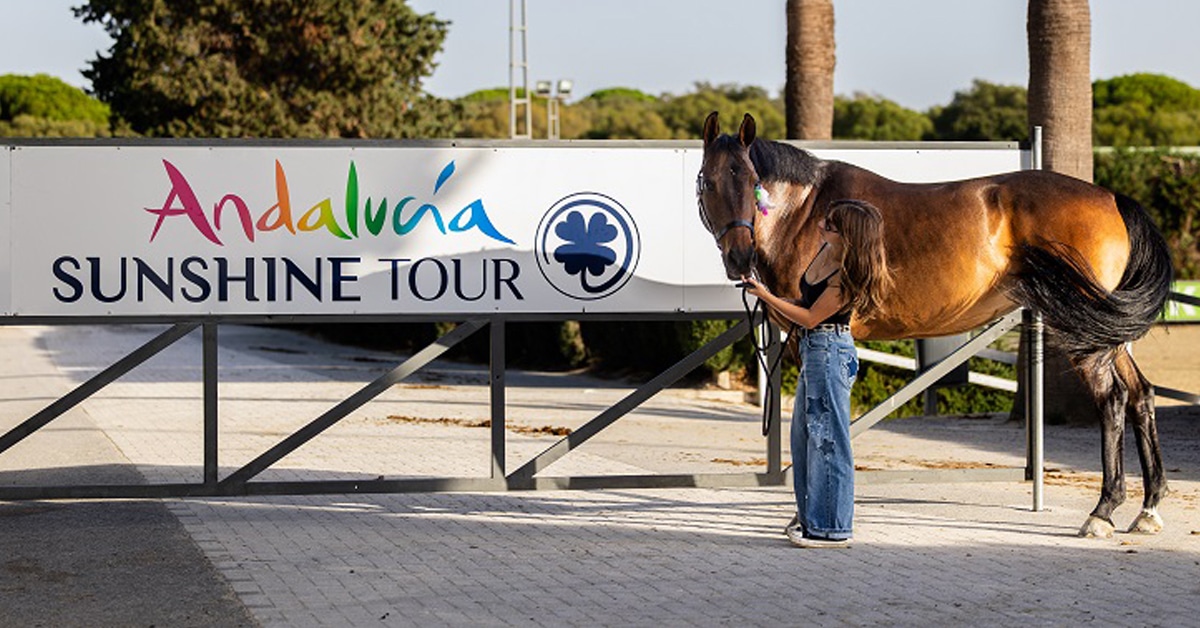
The FEI has successfully defended its restrictions on fees charged by European jumping competition organizers, at least for now. The FEI Tribunal ruled that a challenge brought by Spanish competition organizer Circuito Hípico del Sol (CHDS) which runs the popular Sunshine Tour was filed too late, but did not comment on the underlying question about the legality of the fees.
The October 21 decision leaves the FEI’s fee restrictions in place but does not address the central issue raised by the organizer: whether the international federation’s authority to establish maximum prices for certain services violates European Union competition law.
CHDS, which operates competitions in Vejer de la Frontera, Spain, challenged a list of maximum fees approved by the FEI General Assembly in November 2025 and updated in February 2026 and in force on April 1, 2026. The restrictions apply to organizers of FEI jumping competitions in Europe and establish maximum amounts, including VAT, that can be charged for optional services such as manure disposal, truck parking, electrical hookups and additional bedding.
CHDS argued that the restrictions could violate Article 101 of the Treaty on the Functioning of the European Union, which prohibits certain agreements and decisions that restrict competition. They maintained that it faced an untenable choice: comply with the FEI’s pricing restrictions and risk potential sanctions under EU competition law, or refuse to comply and jeopardize its ability to host FEI-sanctioned competitions.
The dispute dates back to November 2025, when CHDS president and event director Teresa Blázquez Abascal first raised concerns with the FEI’s Director of Jumping. In July 2026, the organizer formally requested that the restrictions be suspended and removed. The FEI responded that the requirements remained valid, binding and fully applicable.
Appeal Dismissed Over Deadline
Rather than deciding whether the pricing restrictions were lawful, the Tribunal focused on whether CHDS had filed its appeal within the FEI’s mandatory 21-day deadline.
CHDS argued that the FEI’s August 10 approval of its competition schedule, which incorporated the list of maximum fees, constituted a new decision that could be appealed. The Tribunal disagreed.
Sole panel member Agustín Fattal Jaef determined that the FEI’s approval of an individual competition schedule did not create a new decision concerning the fee restrictions. The schedule merely incorporated requirements that had already been established. Because CHDS received notification of the updated list on February 4, 2026, it had until February 25 to challenge the decision. Its appeal was not filed until August 31.
The Tribunal concluded that allowing organizers to restart the appeal period whenever a competition schedule was approved would create ongoing legal uncertainty. It also rejected CHDS’s argument that the importance of EU competition law justified setting aside the FEI’s procedural deadline.
However, the Tribunal was careful to distinguish between the procedural issue and the underlying legal challenge.
“This decision does not, in any event, rule on the compatibility of the List with Article 101 TFEU, which is a question of merits and therefore outside of the scope of this ruling,” the decision stated.
Another Major Organizer Joins Challenge
Centro Ecuestre Oliva Nova, another prominent Spanish jumping venue, attempted to join the proceedings in October, adopting CHDS’s arguments against the fee restrictions. Its application to intervene was rendered moot when the Tribunal dismissed the original appeal. Oliva Nova’s appeal deposit will be refunded, while CHDS will forfeit its deposit. Each party must cover its own procedural costs.
Broader Implications for Event Organizers
The dispute highlights the tension between an international sport federation’s efforts to regulate costs for competitors and the commercial independence of event organizers. While the FEI maintains that its approved fee limits are binding on European jumping organizers, CHDS contends that the restrictions expose those businesses to potential competition law challenges.
The Tribunal’s decision leaves that question unresolved. It establishes that organizers must challenge FEI decisions within the prescribed deadlines, but it does not determine whether the federation’s fee restrictions are compatible with European competition law.
CHDS has the right to appeal the Tribunal’s decision to the Court of Arbitration for Sport within 21 days of notification. (Horse Sport reached out to the Sunshine Tour organizers to inquire whether they were planning on launching an appeal, but have not yet received a reply.)
For now, European jumping organizers remain bound by the FEI’s approved maximum fees, while the wider legal question surrounding the federation’s authority to regulate commercial charges remains unanswered.
More News