Horse owners are often concerned about recurring colic, particularly when a horse has experienced nephrosplenic entrapment, a specific form of displacement colic. This condition not only causes pain and requires emergency veterinary care, but it can also disrupt training and competition schedules, especially for high-performance horses. A preventative surgical procedure known as laparoscopic closure of the nephrosplenic space has been used for decades to reduce recurrence risk. However, until recently, little was known about how long the benefits of this surgery last. A five-year study conducted at the Ontario Veterinary College (OVC), led by Dr. Nicola Cribb, provides new insight into the long-term effectiveness of this preventative treatment.
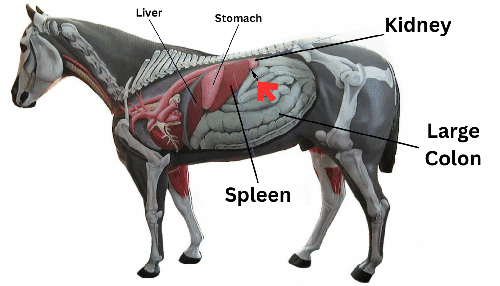
In left dorsal displacement, the colon can become trapped between the spleen and kidney. (Diagram – Ruth Benns)
Nephrosplenic entrapment occurs when a portion of the large colon shifts into the natural gap between the spleen and the left kidney, called the nephrosplenic space. Some horses naturally have a deeper or wider space, making them more vulnerable to displacement. Gas buildup in the colon can push the intestine into this gap, where it can become trapped. The condition can lead to abdominal pain, gas accumulation, impaired intestinal movement, and spleen enlargement. If left untreated, nephrosplenic entrapment can become life-threatening.
Also referred to as left dorsal displacement, this type of colic occurs when the colon moves toward the left side of the abdomen and becomes lodged in the nephrosplenic space. Although in some cases the colon may reposition itself naturally, enlargement of the spleen often prevents it from moving back into place. Many horses require medical or surgical intervention to correct the problem, and horses that experience one episode often face an increased risk of recurrence.
Because of this recurrence risk, veterinarians began recommending laparoscopic closure of the nephrosplenic space. This minimally invasive surgery closes the gap, preventing the colon from becoming trapped again. The procedure was developed approximately 25 years ago and is commonly recommended for horses that have previously suffered nephrosplenic entrapment. Despite its widespread use, veterinarians lacked reliable data about how long the surgical closure remained effective or how best to evaluate its success over time.
Dr. Cribb explained that veterinarians historically assumed the closure would remain intact after surgery, allowing horses to safely return to normal exercise and activity. However, there was limited ability to confirm whether the closure remained strong and durable. Owners and veterinarians also wanted to know whether non-invasive methods, such as ultrasound, could accurately determine whether the nephrosplenic space remained closed years after surgery.
Watch the video explaining the procedure here:
The Study
To address these uncertainties, researchers at OVC designed a long-term study to evaluate horses that had undergone laparoscopic closure. The team aimed to determine whether the adhesions formed during surgery would remain intact for several years. They also compared follow-up assessment techniques, including rectal palpation and ultrasound, with repeat laparoscopy, which allows direct visualization of the surgical site and is considered the most reliable method for evaluating adhesion strength.
Elective laparoscopic closure is typically considered in several situations. Horses that have already experienced nephrosplenic entrapment are prime candidates because they face a higher likelihood of recurrence. Horses with anatomical characteristics, such as a deeper nephrosplenic space, may also be at increased risk. High-performance horses are frequently considered for preventative surgery because repeated colic episodes can severely disrupt training and competition schedules.
The procedure is generally performed once the horse has recovered from the initial colic episode and is medically stable. Veterinarians also assess overall health, body condition, and the absence of other abdominal disease before recommending surgery. For many owners, preventative closure becomes an appealing option when the potential benefits outweigh the risks and costs associated with repeated emergency treatment.
The OVC study had three primary objectives:
- to evaluate the long-term durability of nephrosplenic space closure over five years
- to determine whether rectal palpation or ultrasound could accurately assess closure success, and
- to develop a standardized adhesion scoring system to improve consistency in future research.
Since no equine-specific scoring system previously existed, researchers created one based on grading systems used in human surgical studies. The system evaluated adhesion maturity, structural strength, and the percentage of the nephrosplenic space covered by adhesions.
The study involved 12 horses that had previously undergone laparoscopic closure. Each horse underwent imaging and rectal palpation prior to surgery, approximately 30 days after surgery, and again five years later. At the five-year mark, horses also underwent repeat laparoscopy, allowing researchers to directly inspect the surgical site and determine the presence and quality of adhesions. In addition, tissue samples from a small number of horses were examined to assess changes in adhesion development over time. Statistical analysis was performed to determine whether early surgical factors or short-term results could predict long-term success.
Long-term Protection
The findings demonstrated that strong adhesions can persist for at least five years after surgery. Among the horses evaluated with repeat laparoscopy, eight out of ten showed mature, fibrous adhesions covering most of the nephrosplenic space, effectively maintaining closure. These results suggest that laparoscopic closure provides durable, long-term protection against recurrence in many horses.
The study also evaluated follow-up examination methods. Researchers found that rectal palpation performed four to six weeks after surgery provided useful information about whether the nephrosplenic space felt closed. This hands-on examination remained a valuable and practical tool for veterinarians monitoring surgical outcomes.
Ultrasound, while attractive due to its non-invasive nature and widespread availability, proved less reliable. Researchers found that intestinal structures often interfered with ultrasound imaging of the nephrosplenic space. Although ultrasound measurements changed over time, they did not consistently correlate with the actual adhesion strength observed during laparoscopy. As a result, rectal examination remained the preferred follow-up method during the early postoperative period.
What it Means for Horse Owners
For horse owners, these findings provide valuable guidance when making decisions after an episode of nephrosplenic entrapment. The study supports the use of preventative laparoscopic closure as a proactive strategy that can reduce the likelihood of recurrence and help maintain training and competition schedules. Owners are encouraged to work closely with veterinarians to determine whether their horse is a suitable candidate, to establish an appropriate surgical timeline after recovery, and to develop a structured rehabilitation plan.
Proper follow-up care is essential. Veterinarians generally recommend a rectal examination four to six weeks after surgery to assess closure success. Owners and barn managers can also support digestive health by minimizing sudden feed changes, managing stress associated with transportation and competition, and ensuring consistent hydration and forage intake. Maintaining records of feed changes, training intensity, travel, and any digestive symptoms can help veterinarians evaluate recovery progress and identify potential concerns early.
Beyond individual horse care, the study has broader implications for horse welfare and veterinary decision-making. Recurring colic can significantly impact a horse’s quality of life and disrupt athletic performance. By demonstrating long-term durability of nephrosplenic space closure, the study provides evidence that helps veterinarians justify recommending the surgery. It also provides owners and insurers with valuable information for evaluating treatment options and assessing long-term risk.
Future Research
OVC researchers plan to expand on these findings by examining larger groups of horses over longer periods. Future studies aim to determine whether stronger adhesions directly correlate with reduced recurrence of nephrosplenic entrapment and longer periods free of colic symptoms. Continued research may further improve surgical techniques, follow-up strategies, and long-term management practices. By offering long-term evidence of effectiveness and identifying reliable follow-up methods, the research helps veterinarians and horse owners make more informed decisions about prevention and long-term care.
For more equine health-related research news, download the Equine Guelph 2026 Research Annual HERE.
~ with files from Equine Guelph
The Latest