Vicki Castegren laughs when she tries to explain how Hyperion Stud grew into what it is today. “It’s depth of knowledge, experience, luck, risk and a sprinkle of lunacy,” she says, only half joking.
The story starts like many in the horse world, with passion and momentum that slowly becomes something much bigger. Castegren was riding and competing at national amateur/owner jumpers to Grand Prix level when breeding began to pull at her curiosity. Then one year she found herself with four pregnant mares and no real plan for what came next.
“I did not have the facilities to do this,” she recalls. “My son was about six months old when we moved to the farm we’re at now and the first foal crop was born there.”
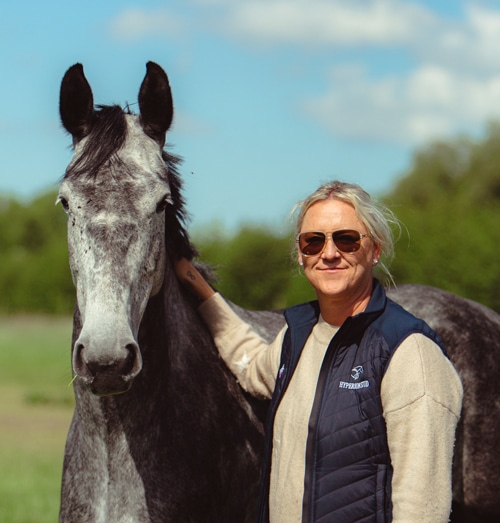
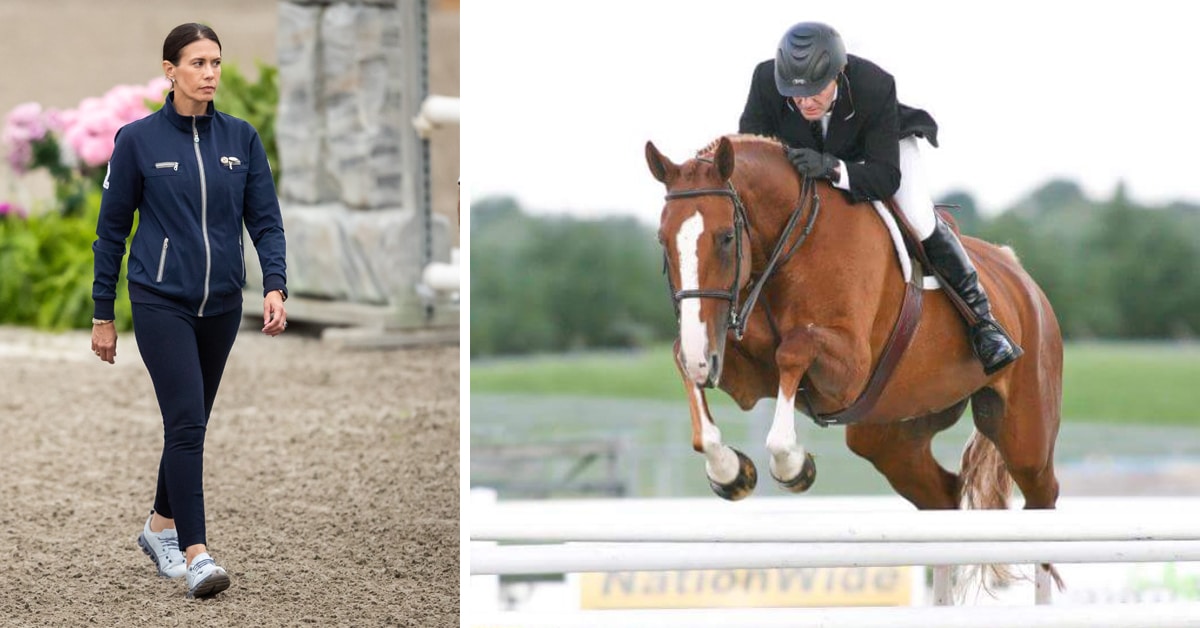
Vicki Castegren.
That move changed everything. The Virginia property came with a foaling barn, a stallion barn, and a collection lab. Suddenly, breeding was no longer an abstract interest. It was a daily reality.
“I jumped in the pool,” she says. “I had to figure out how to do all that.”
She learned to freeze and cool semen, worked closely with veterinarians to build a proper lab, and began shaping what would eventually become Hyperion Stud, a program that today stretches from North America into Europe and now Scandinavia.
Nearly two decades later, the operation is defined by one core idea. Horses are bred, raised, and developed within the same system so their histories remain intact.
“When you buy horses from us, we’ve had them their whole life,” she says. “We know everything about them. Because I’ve either made it myself or I bought it as a foal.”
For buyers and breeders alike, that continuity matters.
“That your horse hasn’t gone through six different owners and all these hidden problems you don’t know about. We know their entire history from conception to birth and then to training/education.”
It is a quiet philosophy, but one that sits at the centre of Hyperion’s growing reputation and its expanding stallion roster.
Urthago and a Deliberate Decision
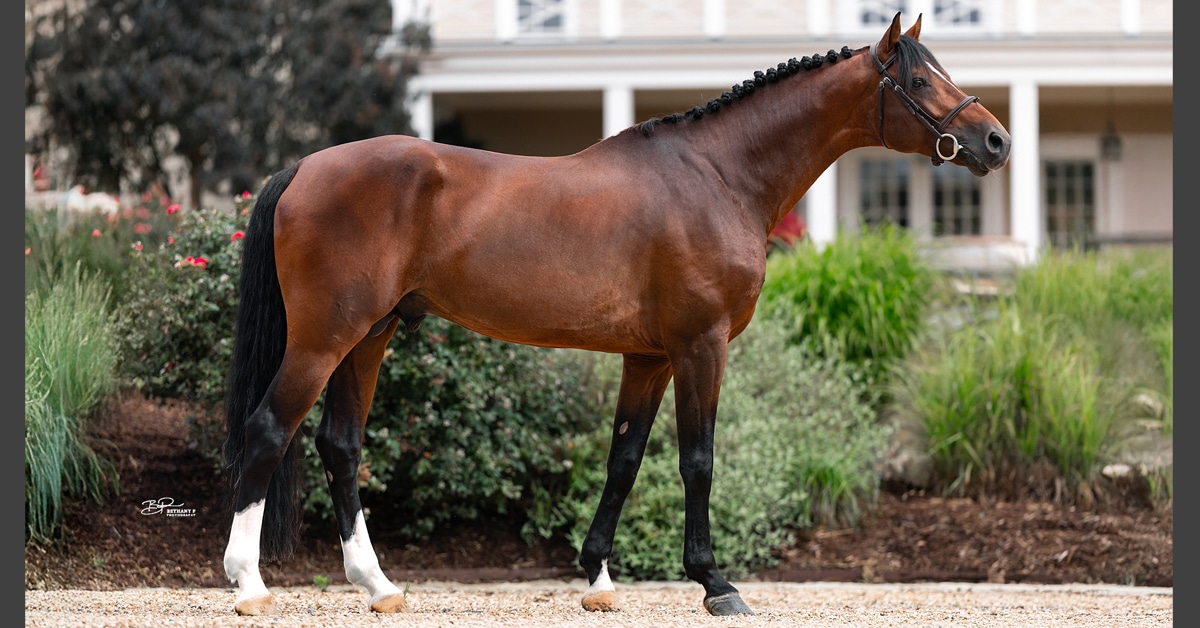
The program’s newest focus is Urthago, a stallion Castegren bred herself and had already been breeding to in Europe before deciding to bring him to North America.
“He got injured and could not continue in sport and we know he’s a really genetically powerful horse so the answer of what to do with him was easy,” she explains. “We’ve been breeding with him in Europe for four years already, so we’ve seen a lot of the production.”
For her, the decision was practical as much as strategic. North American breeders needed more modern options that actually suited the mares already here.
“Breeders in North America need stallions of strong genetics, but also stallions that are suitable to the genetics that the mares have here.”
Urthago’s pedigree makes that versatility possible. Approved by the Holsteiner Verband in 2019 in Neumünster, Germany, he combines influential bloodlines including Uriko and MyLord Carthago and descends from the respected Holsteiner stamm 474a, a highly prestigious and famous Holsteiner horse damline from Germany known for producing numerous top-tier show jumping and eventing horses, as well as approved stallions.
Beyond pedigree, it is his type that draws attention. He is modern, athletic, tall in the leg, and built for today’s technical sport.
“We also had our veterinarian in Germany ask to use him for one of his clinics to show what perfect conformation looks like in a horse and we were very honored by that,” Castegren says.
Early results have reinforced her confidence. Urthago’s first foal crops have already produced approved stallion and elite mares, something she considers remarkable for a horse that began breeding at the age of four.
“He’s proven himself so far in our eyes as a father horse,” she says. “He brings blood, he’s modern, and you can see his influence in his offspring.”
Those early foals have shown strong consistency, with several selected for the German Foal Championships, confirming both his athleticism and correctness.
What excites her most is how versatile he is for breeders.
“He has great conformation, lots of scope, good character. He ticks all the boxes,” she says. “It allows mare owners to worry less about whether he’s right for their mare. Because he’s a great choice for so many mares in North America”
Proven Options Through Frozen Genetics
While Urthago represents the future, Hyperion’s frozen semen catalogue connects breeders to proven international performers. Two newer additions are Quilimbo and Iceman de Muze, both stallions with established sport careers and strong maternal lines.
Quilimbo is a Holsteiner stallion by Quidam de Revel who competed successfully up to the 1.60m level. His career included top placings and international wins, and his pedigree offers refinement and carefulness that many jumper breeders seek.
Iceman de Muze brings a different strength. An Elite BWP stallion, he comes from the famed de Muze family, one of the most influential maternal lines in modern show jumping. His dam line includes Teekitiezzie de Muze and Narcotique de Muze II, mares known for producing generations of international jumpers.
In addition, Hyperion has been trusted for many years by several other stallion owners. The farm’s website currently lists 16 stallions available through frozen semen, thanks to owners who continue to generously make their stallions accessible to breeders through this option.
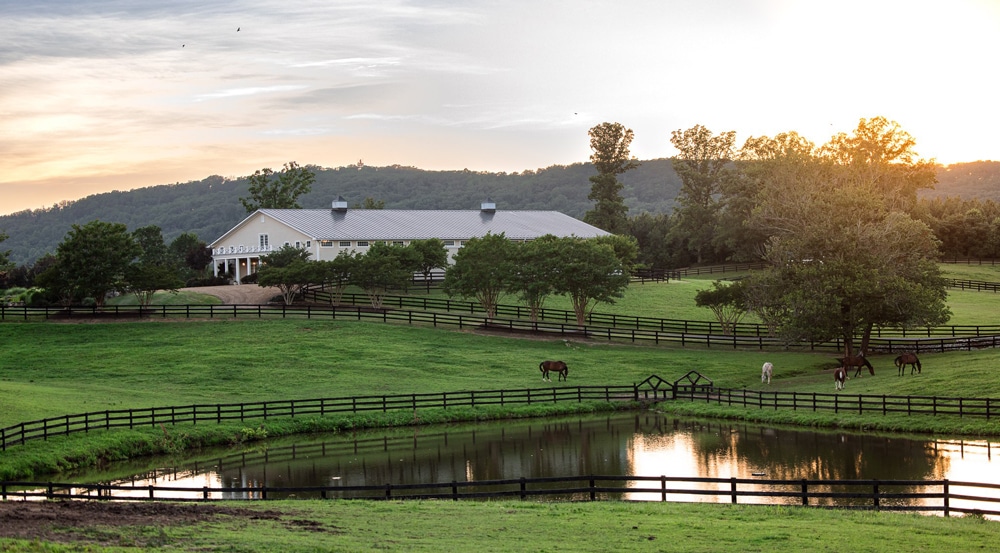
Hyperion Stud in the heart of Virginia horse country is now a global operation with horses in the United States, Germany, the Netherlands and Sweden.
A Pipeline For What Comes Next
Hyperion’s program is not static. Young stallions approved in Europe are already being developed for future introduction to the North American market.
Castegren describes herself as a “stallion girl,” someone who occasionally buys colts from strong families and keeps the best ones as they mature. While also producing her own from her breeding mares.
“I sometimes buy them as foals because they’re coming from really good breeding lines, that will highly benefit my program,” she says. “I take a risk in buying them that young and often times I get the results I was looking for.”
The goal is to keep fresh cooled semen options available for breeders, especially as older stallions age out or become irrelevant to the breeders.
“People want new options,” she says. “The mare base is always improving, and my goal is to make sure you always have versatile stallion options in my barn.”
That practical thinking extends to breeding logistics as well. While she uses frozen semen herself, she understands why many breeders still prefer fresh cooled.
“Sometimes frozen just doesn’t work,” she says. “Fresh semen is often the first answer to any question.”
Breeders at the Centre
Castegren speaks about breeders with the same energy she brings to stallions and sport. For her, they sit at the very centre of the equestrian world.
“Without the breeders, there’s no horses,” she says. “And no horses, there’s no sport.”
It is not just philosophy. She believes the industry is facing a genuine horse shortage as breeding numbers have been declining for the last several years while demand remains high.
“I’m super dedicated to the breeders, and to bringing them out of the shadows so that they are included in the stories of the horses they produce. To be inspired and cared for by the industry so that they continue to do this work so that others may benefit from them in sport,” she says.
That commitment was recently recognized when Hyperion received the United States Equestrian Federation’s Ellen Scripps Davis Memorial Breeders’ Award, an honor that acknowledges consistent production of outstanding performance horses. Castegren admits she was surprised by the recognition.
“I’m still kind of shocked,” she says, laughing. “I guess I must be doing something right.”
Today, Hyperion spans multiple countries and disciplines, with growing programs in eventing and dressage alongside its core jumper breeding operation. Yet the philosophy remains straightforward. Breed thoughtfully. Protect strong maternal lines. Keep knowledge intact from birth through sport.
For Canadian breeders considering their next cross, that may be the quiet strength of the program. It is not simply access to stallions, but access to a system where horses are known from the beginning and consistency is the key.
In a breeding world where information can easily be lost as horses pass through multiple hands, that kind of continuity offers something increasingly valuable. Confidence.
The Latest