Most equestrians are on a perpetual hunt for the best grooming tools and hacks that make the job simpler and more effective. Compiling the perfect grooming kit can feel like as much of an on-going struggle as the daily grooming of your horse. But trying out new grooming items can also be game-changing, and a lot of fun — especially when you can find them at a dollar store!
Hopefully, this list of outside-the-(tack)-box grooming items will inspire you to try something new with your grooming routine.
Note: When using items that aren’t specifically designed for horse grooming, it’s always important to exercise caution and to monitor your horse for any adverse reactions.
1) Kitchen whisk
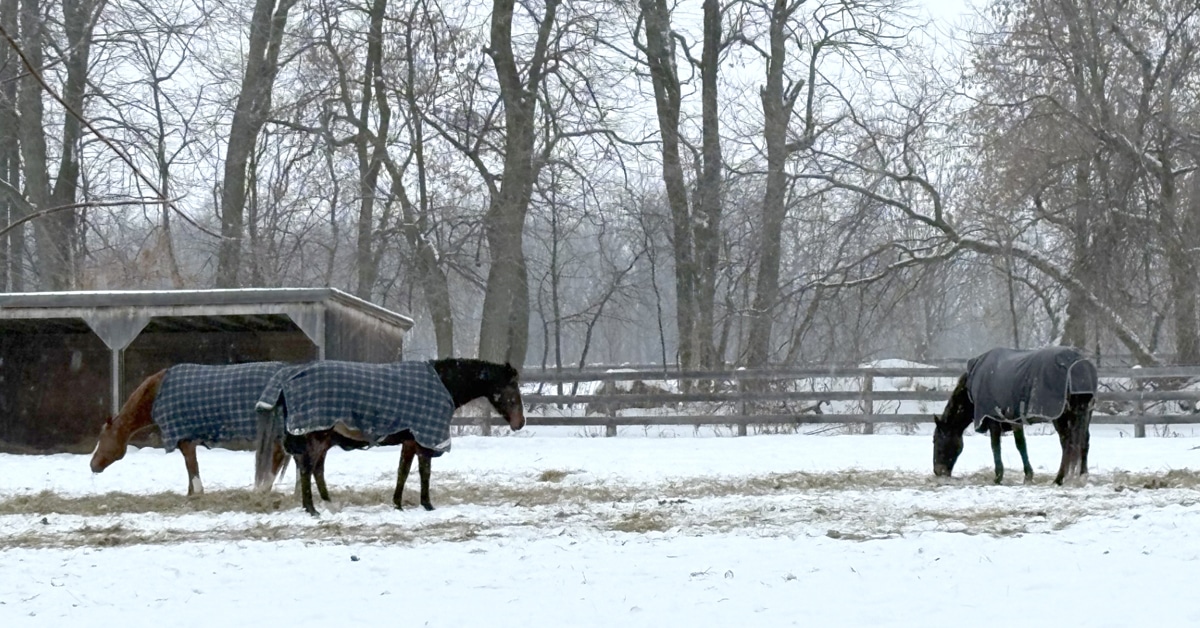
Canadian horse people are familiar with the bothersome bunches of snow that accumulate around horses’ lower legs and fetlocks during winter turnout. The snow freezes to the hair and can be difficult to remove without pulling the hair and causing the horse discomfort, even after hours of standing in a warm barn while it melts into the bedding.
Professional groom Evan Donadt @EvanTheGroom received over 8 million views on a YouTube short for trying out a helpful hack. In the video, Donadt takes a kitchen whisk and runs it lightly up and down a horse’s snowball-covered lower legs, letting the tines of the whisk run through the hair. The friction of the metal melts the snow and loosens the snowballs, sending them flying.
The whisk technique was adapted for equine use after originally being used on dogs, so feel free to whisk your snowy canine companions as well — although a smaller whisk might be more effective.
2) Unscented dryer sheets
Winter conditions are so dry that it’s common for static electricity to build up when horse blankets and coolers are pulled off a horse’s coat. Even when they’re removed slowly, polar fleece and other conductive fabrics can create a surprisingly large shock that can frighten horses.
To prevent static buildup, simply rub a dryer sheet on all surfaces that come into contact with the blanket, including the mane and tail, after grooming and before re-blanketing.
3) Hairdryer
When used safely, a hair dryer is a great way to ensure your horse is dry and comfortable before tucking him or her back into a blanket after a workout.
Take your time to slowly introduce your horse to the hairdryer, and be sure to monitor skin and hair for dryness. Hold the dryer at least one foot away from your horse’s coat, use a diffuser, and always operate on the cool air setting to avoid overheating the skin. And always remember to unplug the hairdryer and stow it safely in the tack room when you’re finished using it.
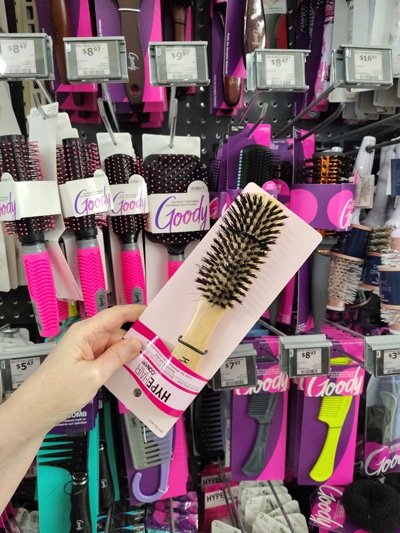
A boar bristle brush is great for evenly spreading hair oil and other products through your horse’s mane. (Charlie Fiset photo)
4) Vaseline
Snowball buildup under the hooves of shod and unshod horses can be very dangerous, especially for older horses or horses with joint issues. Thickly-packed snow can sometimes accumulate until horses are walking on snowballs one or two inches thick. Horses can slip or over-step on frozen ground out in the field, or on rubber matts or concrete in the barn aisles.
Before turning the horse out, apply a coating of Vaseline (or similar petroleum jelly product) to the underside of the hooves to prevent the buildup of packed snow.
5) Microfibre towels
Microfibre towels are a cost-effective and environmental way to tackle a number of grooming tasks. They can be found at dollar stores and hardware stores, and are often sold in rolls or multi-packs.
Large, absorbent microfibre towels used on cars are fantastic for rubbing a sweaty horse down after a workout. The absorbent microfibers do wonders to decrease drying time and prevent your horse’s muscles from getting cold.
Large-sized towels can also be used when hot-towelling horses during the winter months in lieu of bathing. Smaller towels work for a variety of grooming chores, including face cleaning and sheath cleaning.
Microfibre towels are also reusable and can be machine-washed using cold water. When drying, either hang them up and let them air dry, or use the lowest heat setting in the dryer to avoid ruining the absorbency of the microfibres.
6) Human brushes
If you’re feeling a bit dissatisfied with the standard plastic mane comb, there are many different kinds of human hairbrushes that might be better suited to your specific needs. For example, a boar bristle brush is fantastic for evenly distributing hair conditioners and oils throughout the mane and tail.
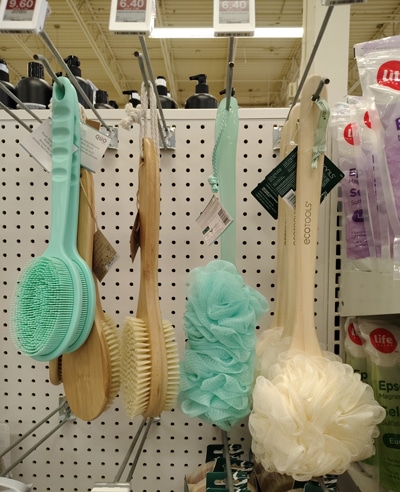
A scrubber on a stick can be a great way to wash those hard-to-reach places like the belly, the top of the hindquarters, and the lower legs. (Charlie Fiset photo)
7) Scrubber on a stick
If you have a hard time reaching under your horse’s belly when giving him a bath, or if you want to avoid bending down for extended periods to loosen mud from the lower legs, a sponge or scrub brush on a stick might be a good solution. They also help shorter riders reach the top of their horses without using a stepping-stool in the slippery shower stall.
A variety of scrubbers for different needs, such as sponging or loosening dirt, can be found at the dollar store, Walmart, and the hardware store. The hard-bristled variety work great to get caked mud off hooves.
If you’re testing out a brush or scrubber not specifically designed for use on horses, be sure to carefully monitor the effect it has on your horse’s skin, and never use a brush with hard bristles on wet skin because the bristles can cause small scratches.
8) Carwash items
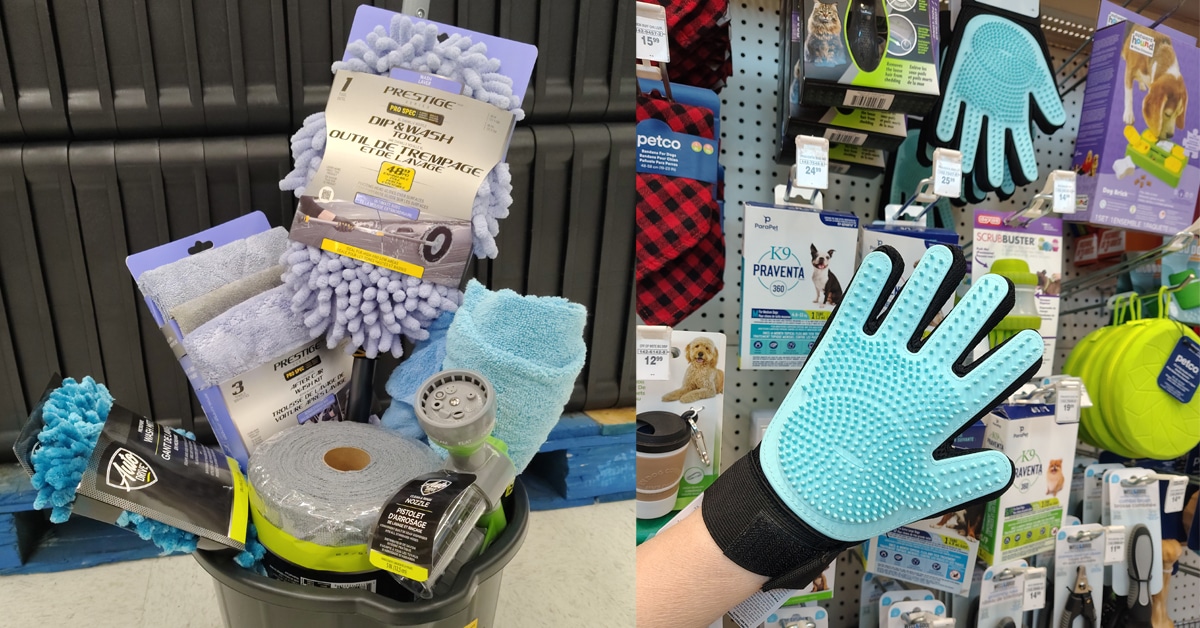
Dollar store carwash mitts have a number of different grooming uses. The faux-sheepskin variety are fantastic for a final pass over the coat to remove dust and dandruff that accumulates after grooming.
The chenille microfiber mitts help when rubbing grooming sprays into the coat, mane, and tail. They also help evenly distribute fly spray around tricky locations like the face and sheath.
A carwash hose attachment with soap dispenser is also a great way to take the hassle out of scrubbing your horse down at bathtime. Be sure to only fill the dispenser with as much soap as you’d typically use in a bucket to avoid drying out your horse’s skin and hair. A one-part shampoo, three-parts apple cider vinegar solution is a great alternative.
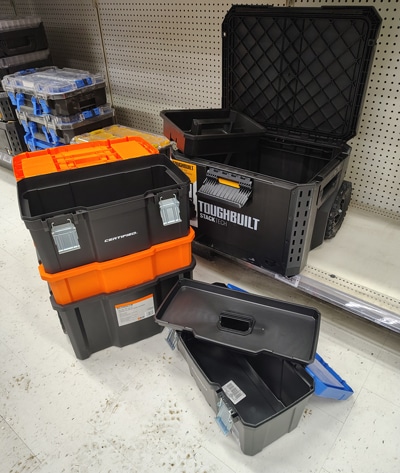
Tool boxes and garden totes make a great alternative to traditional brush boxes – especially if you’re looking for a cheaper option for traveling to shows. (Charlie Fiset photo)
9) Toolboxes and garden totes
Equine grooming totes and boxes can be very expensive. Alternatives like toolboxes and compartmentalized garden totes are often cheaper and come in more varieties able to suit your particular array of grooming products. When you see how economical they are, you might even get two — one for grooming supplies, and one for a bath caddy.
10) Dog grooming mitt
Inexpensive dog grooming mitts are available for purchase in the pet care section at Walmart and Canadian Tire. Their shorter bristles and soft pad make them excellent for sensitive areas like the face and legs, or for older horses with thinner skin who might not enjoy a thick-toothed curry.
11) Nit comb
A nit comb for removing human head lice can also be used to remove bot eggs. There are a wide variety of nit combs available, including larger ones with handles. They tend to be gentler on the skin and legs of older horses, and work without tearing out or slicing the hair.
12) Tube socks
A tube sock is a great alternative to a tail bag. Make a small vertical slit at the top of the sock, insert the tail, and then knot the ends of the slit together. It helps if the tail is loosely braided first.
If you’re looking to grow your horse’s tail over the winter months, adding your favourite leave-in conditioner and then leaving the sock bag on at night can help.
Tube socks are also excellent for holding leg bandages and wound coverings in place. Cut out the toe, and then slide your horse’s hoof through, pulling the sock up the leg to secure it.
The Latest