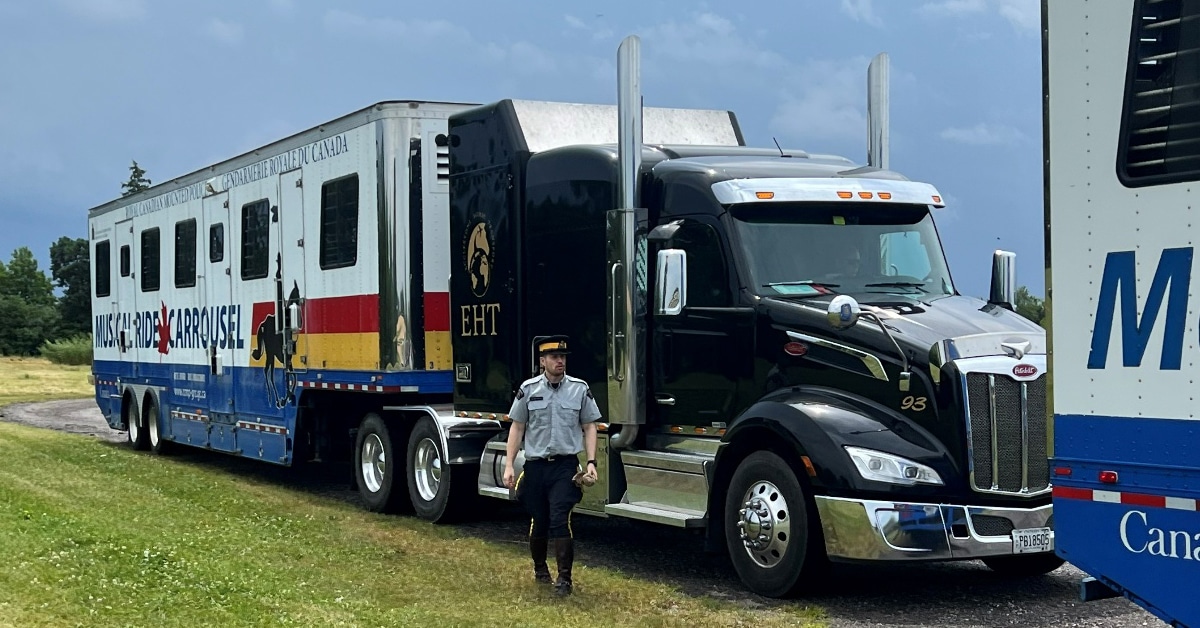
It takes years of preparation to have horses and riders ready for the RCMP Musical Ride.
The RCMP breeds its own horses for the Musical Ride on a 140-hectare farm in Pakenham, Ontario. The program has been breeding black Hanoverians since 1939.
Superintendent Sébastien Brillon is the Officer in Charge of the RCMP Musical Ride and Heritage Branch, and he oversees an operation that includes the Ride, its Ottawa stables. and the breeding farm. Altogether, the operation includes approximately 80 employees and about 110 horses of various ages and stages of training, performance, or retirement. The young horses remain at the breeding farm until approximately three years of age, then enter a professional training program that lasts about three more years before starting to be considered for the Musical Ride.
Sergeant Derek Quilley is the Ride’s lead trainer and head coach. He joined the RCMP in 2008 and completed the Musical Ride’s basic equitation course in 2011 before taking part in his first tour the following year. In 2023 he became the Ride’s lead trainer and teaches the riders how to be effective and safe in the very specific Ride environment.
It might be surprising to learn that most Musical Ride members begin with little or no equestrian experience — approximately 80 per cent of applicants have never even touched a horse before applying! RCMP members who inquire about the Ride must first complete an intensive five-week introductory course. Only about half of those candidates are selected to move on to the second six-month intermediate program where they learn the fundamentals of English riding.
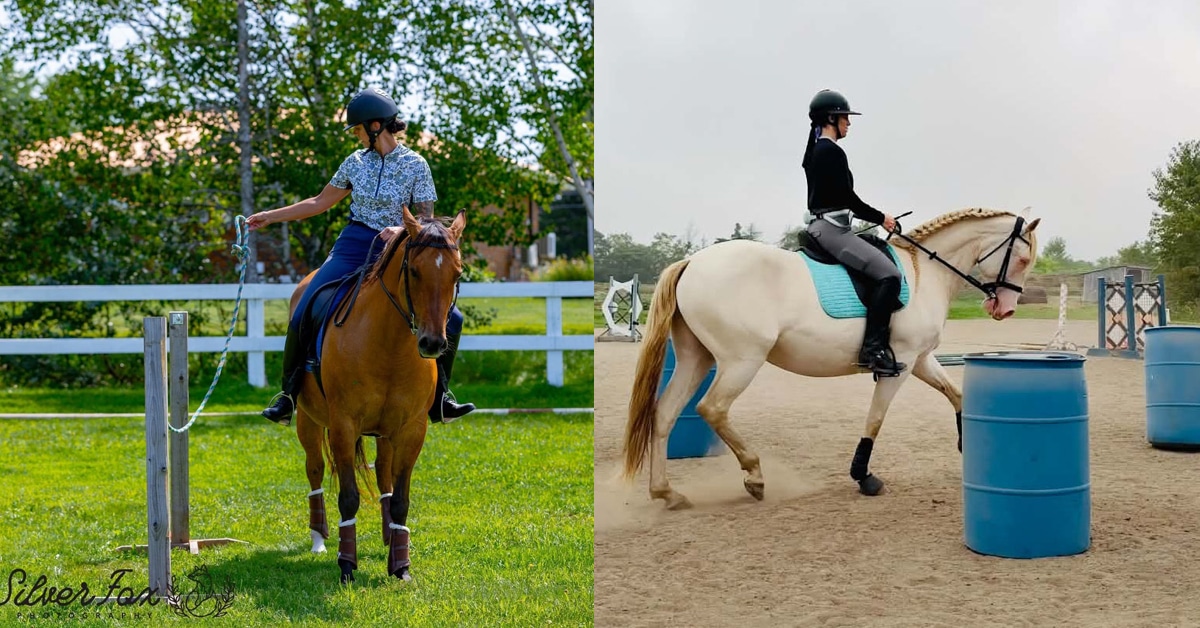
Riders spend about three hours a day in the saddle, progressing from walk, trot and canter to riding in formation, using a double bridle one-handed, and carrying a lance. Sergeant Quilley explained that the focus is on building a secure seat, balance and control so that officers can perform the Ride safely and effectively.
“Equitation is a lifelong endeavour,” said Sergeant Quilley. “But we’ve definitely narrowed our program to give everyone the tools they need to at least walk, trot, canter effectively and safely in the Musical Ride environment.”
After completing the six-month intermediate course, successful officers move to the Musical Ride side of the program. They are then assigned a horse, begin the annual “form-up” training period, and spend five months learning the full Ride. Those who progress successfully generally perform with the Musical Ride for about two years before returning to regular policing duties.
“Over its one hundred and twenty-year existence, the Ride has become Canadiana,” said Seargent Quilley. “It’s ingrained in the fabric of Canada, and that’s something no other police force really gets. Not only are you representing the police, but we feel like we’re representing the country.”
Arrival on Site
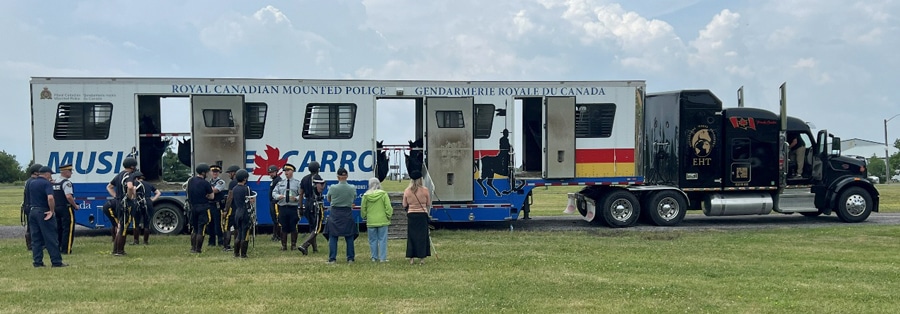
The horses of the Musical Ride travel in three trailers transported by Ecclestone Horse Transport that include the equipment, tack and supplies required for the performance. The riders travel in a separate bus.
“It is an incredible honour for Ecclestone Horse Transport to be entrusted with transporting the horses of the RCMP Musical Ride. These horses are icons of Canadian heritage, and our team is proud to play a role in supporting such a respected national institution,” said Kyle Ecclestone, President of EHT.
Unload & Tack Up
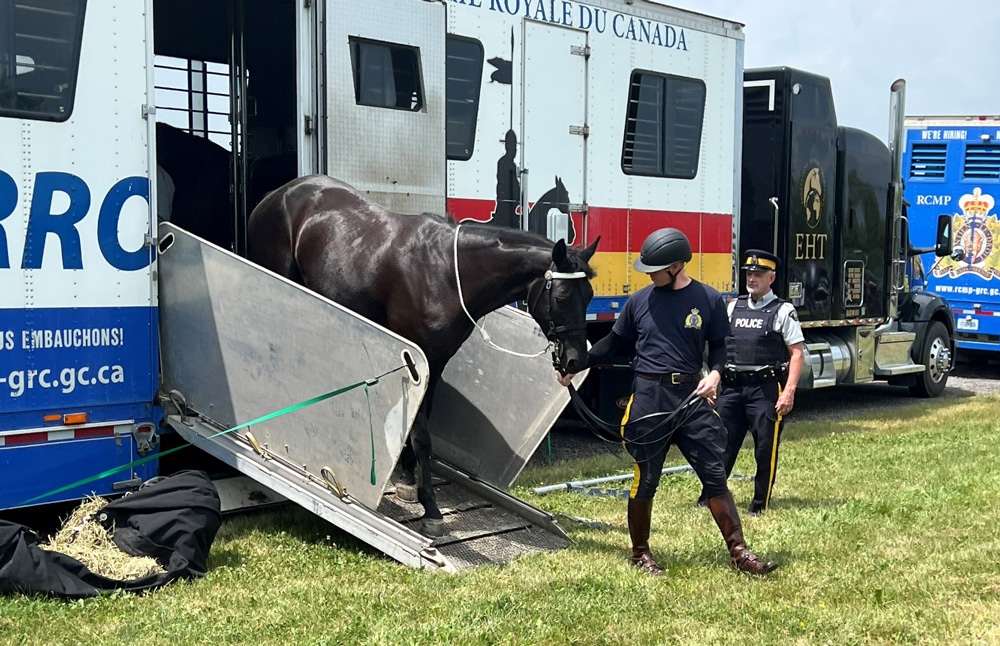
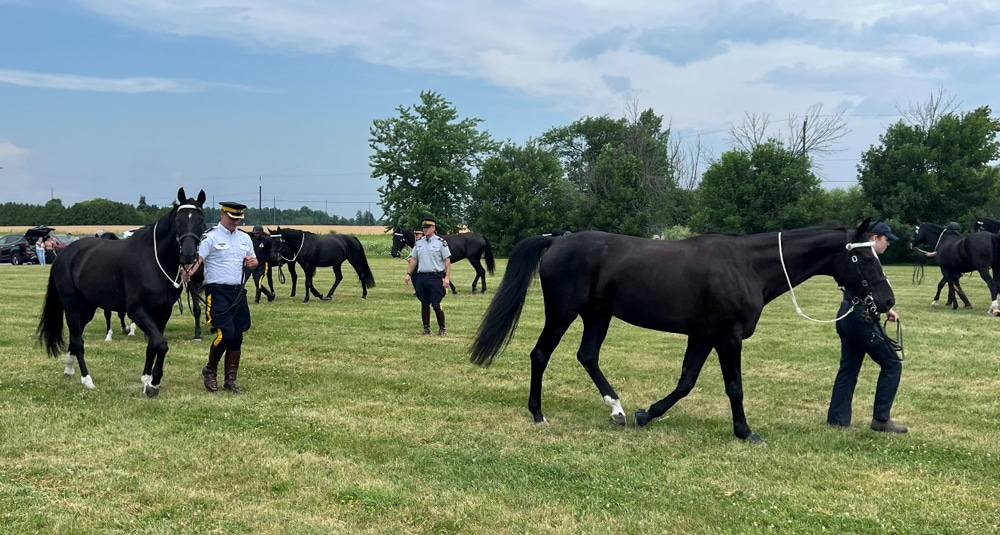
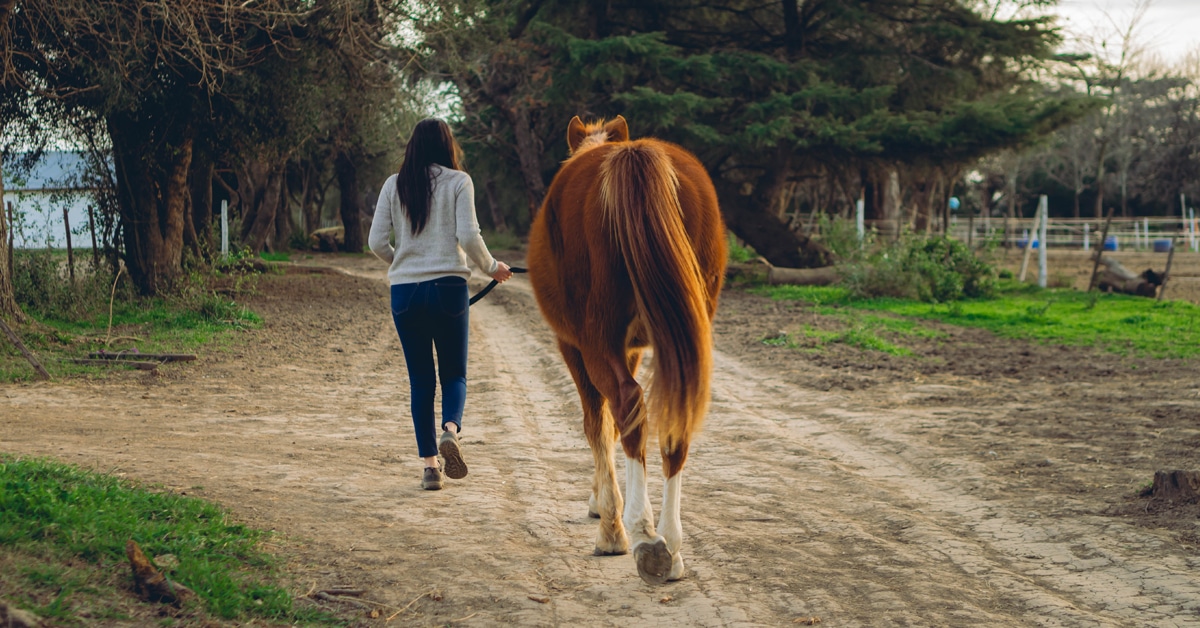
After being unloaded, the horses are walked to stretch their legs, with one person leading two horses once all the horses are unloaded.
Warm-Up
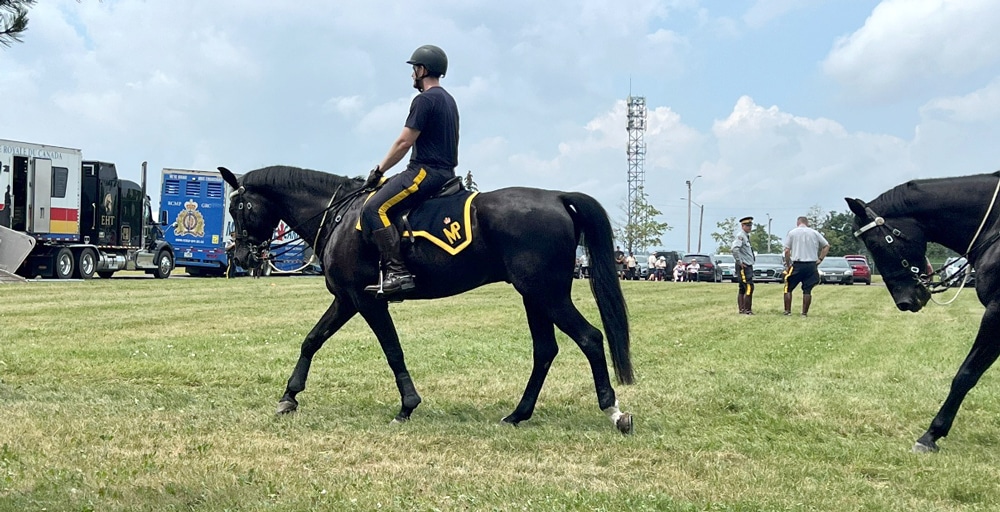
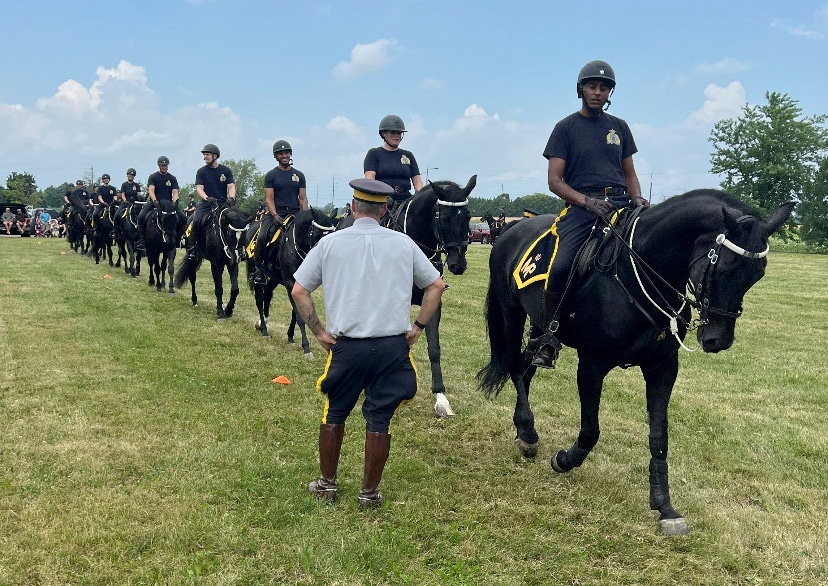
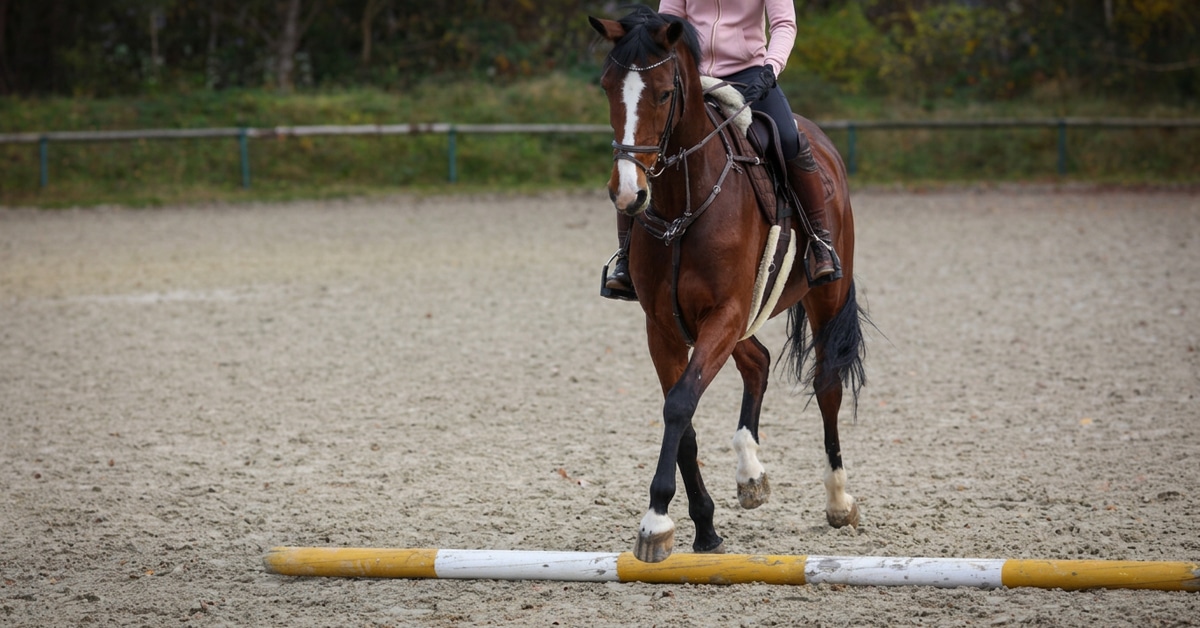
The warm-up is approximately 45 minutes and is led by Sergeant Quilley, who instructs the group on gaits and maneuvers to practice while riders assess how their horses feel that day.
Final Prep
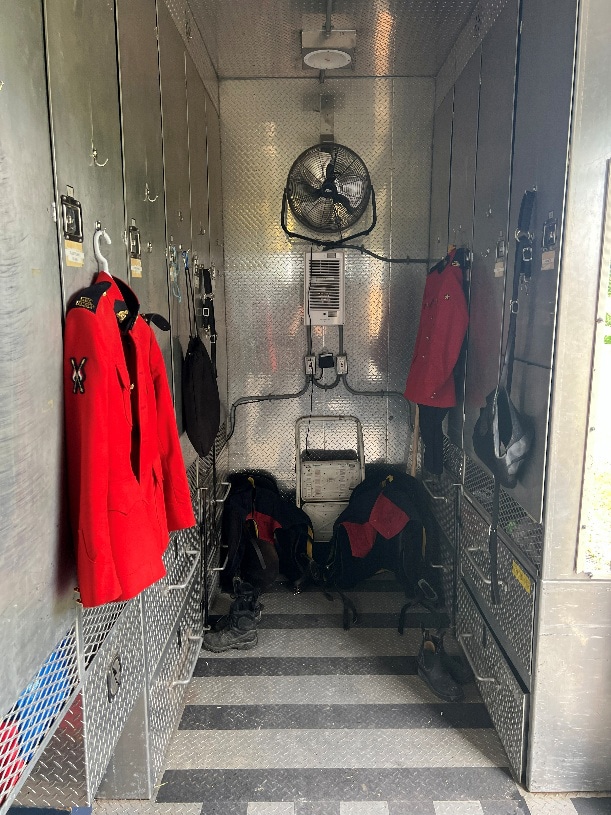
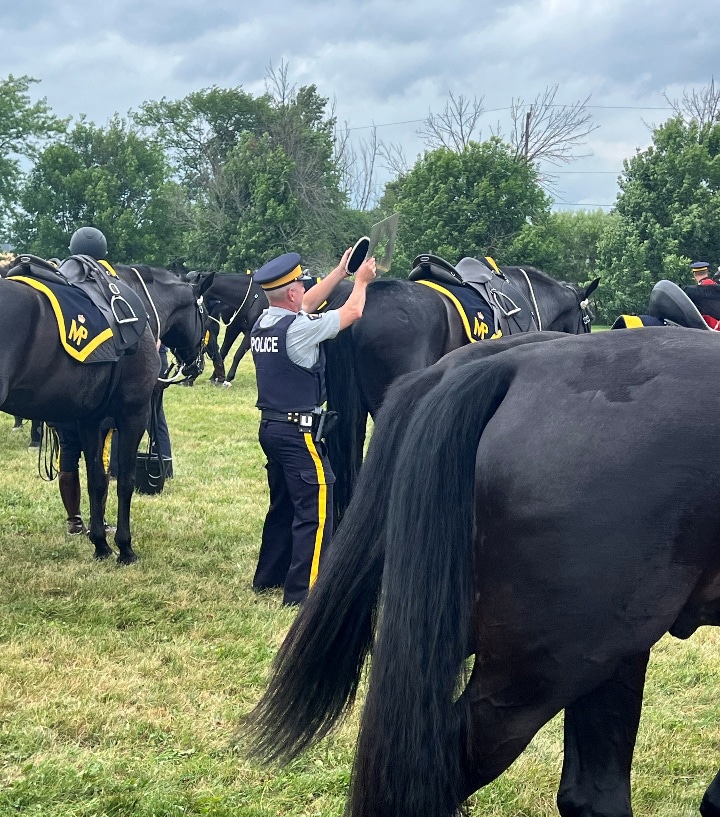
After the warm-up, riders have about a half an hour to change into the famous red serge ceremonial dress uniform. While they get dressed, the maple leaf stencils are applied to the horses’ hindquarters.
Head to the Performance
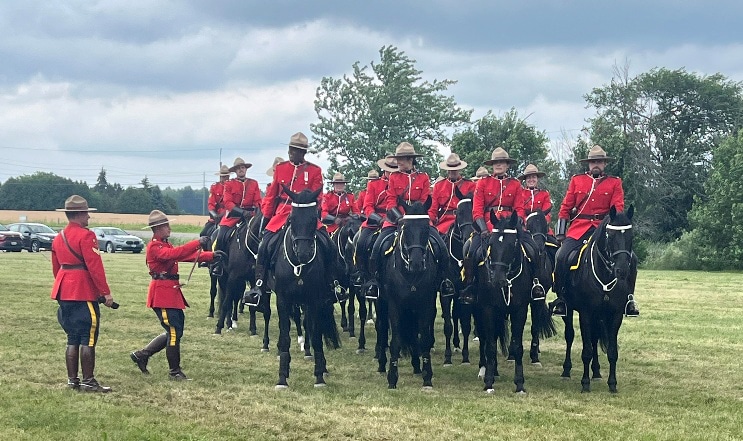
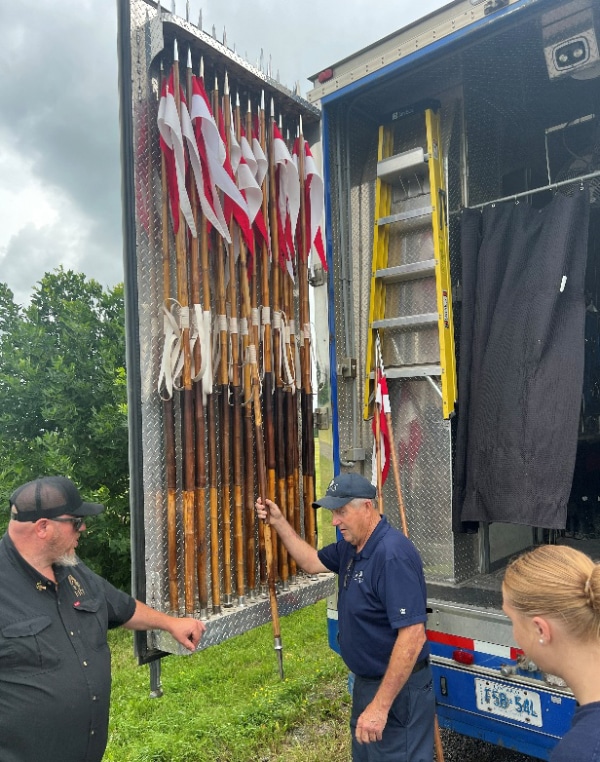
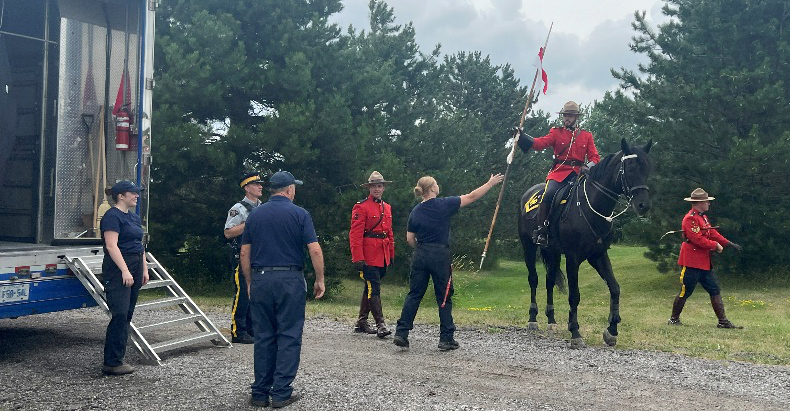
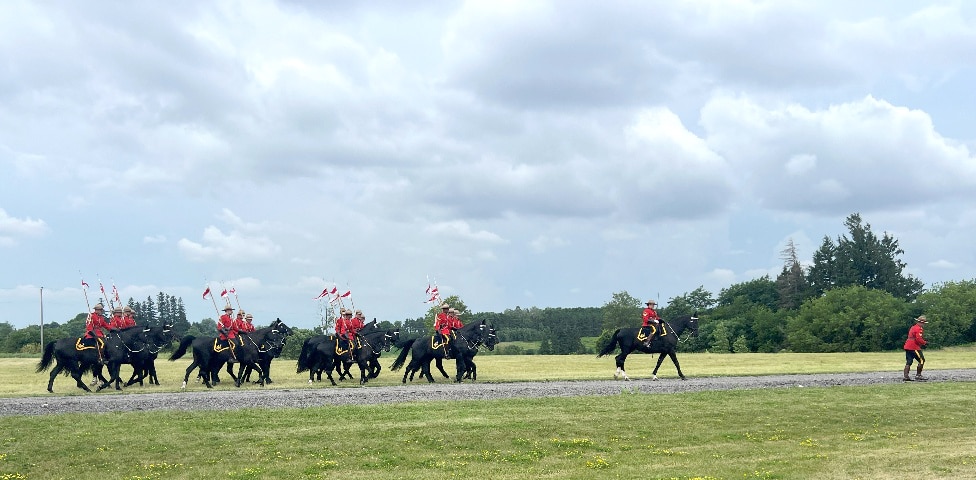
Riders are called to remount and start lining up in preparation for the departure to the show. They are each given a lance as they head to the ring.
The Performance – A Canadian Icon
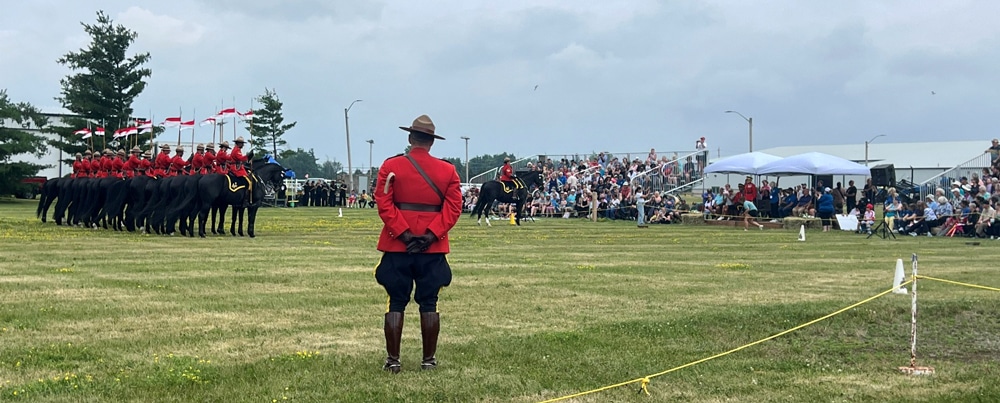
The Musical Ride represents more than a mounted performance. “We have become more than just the RCMP. We’ve become a Canadian icon. We are Canada,” said Superintendent Brillon.
Sergeant Quilley believes the Ride plays an important role in connecting the RCMP with communities while preserving a tradition that has become part of the country’s identity.
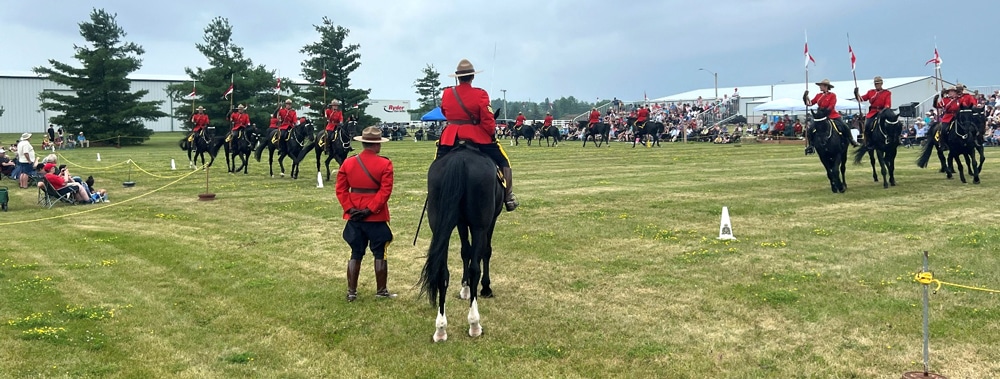
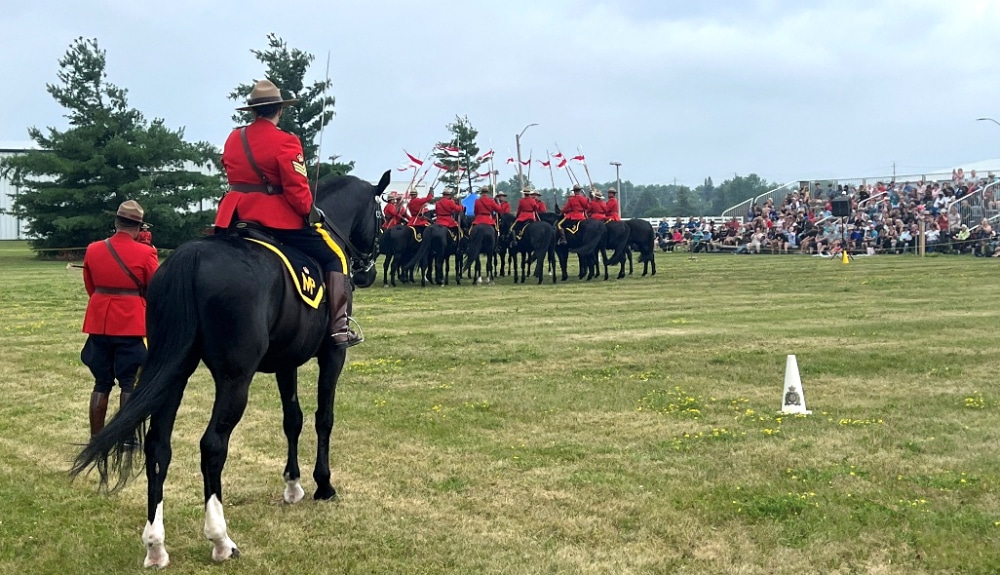
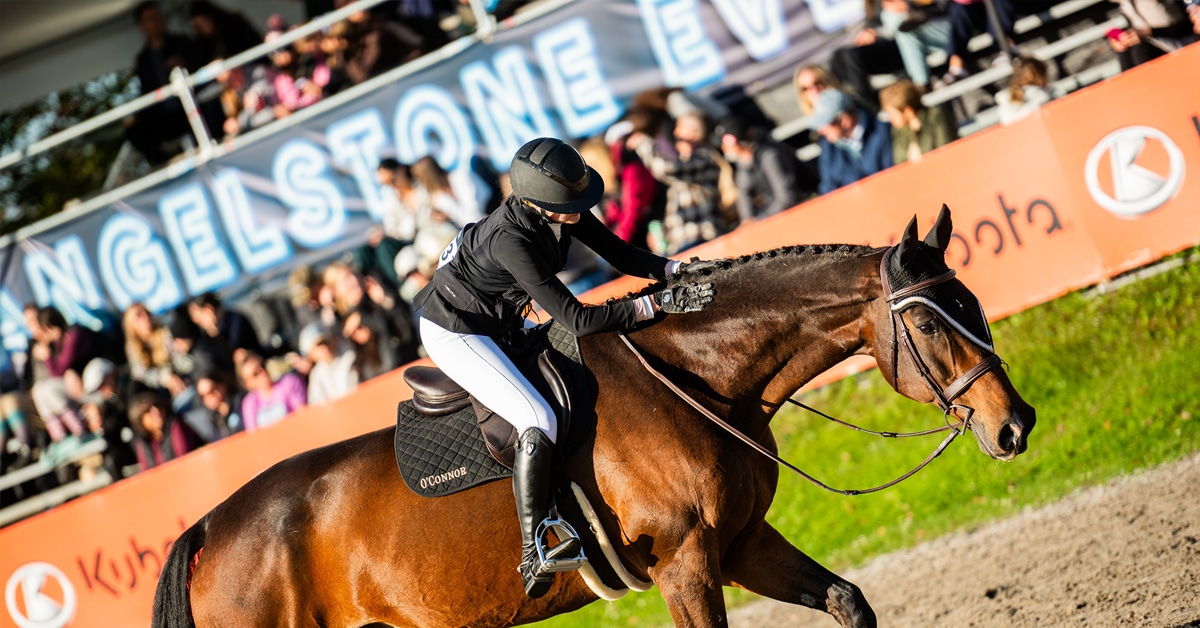
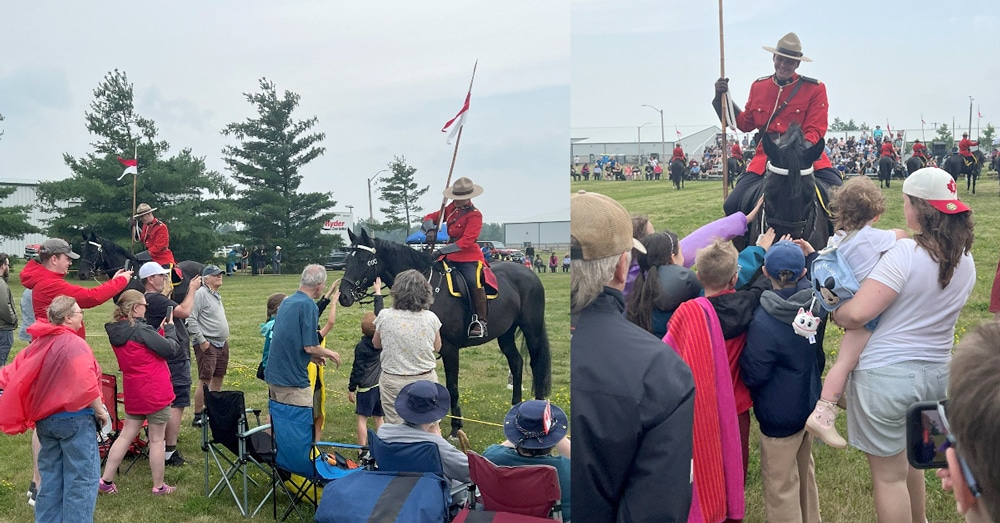
That connection is particularly evident when the Ride visits smaller communities, where crowds can far exceed the local population. After the performance, they spend time talking to the public who get to pat the horses.
“The love and support communities give you,” Sergent Quilley said, “they want to support police, they want to just be a part of the traditions, and they want to see the horses.
“I feel like it’s something we could never let go,” he concluded. “I hope it never ends.”
Leaving the Show Ring
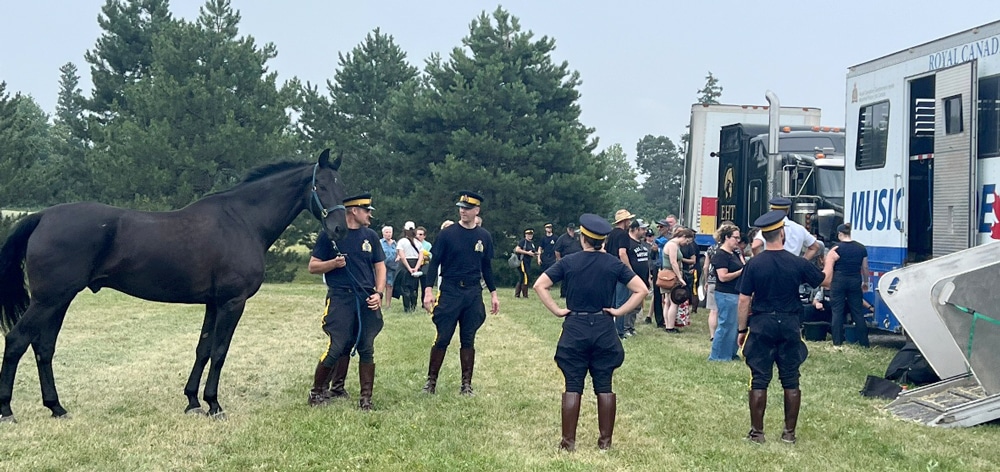
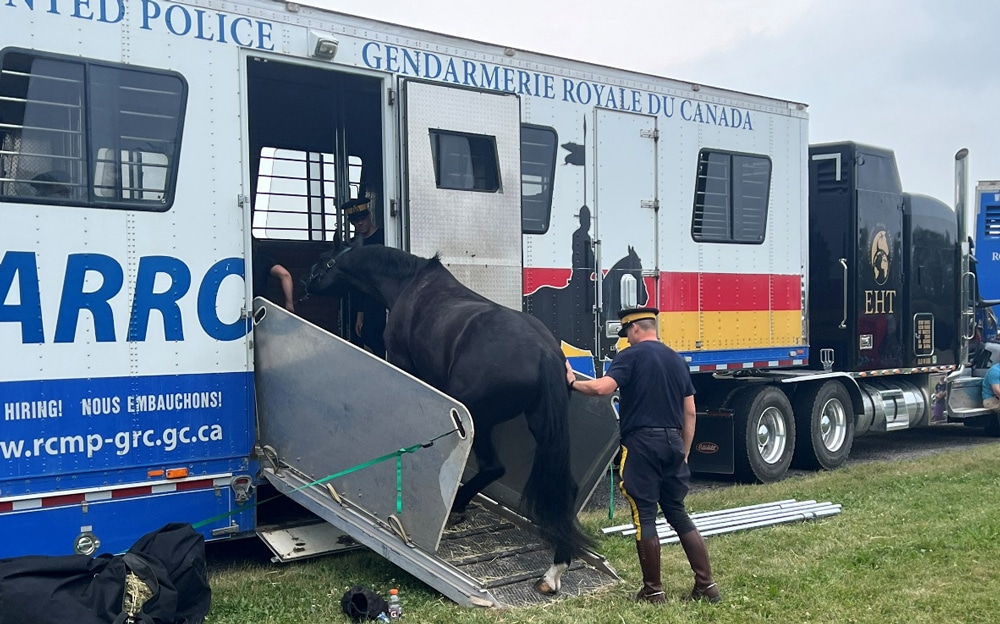
After the performance, riders hand back their lances and get changed while horses are quickly untacked, offered water, and cooled out. Once everything has been put away, horses are called up to load and head home.
The Latest