Sadly, too many of us have experienced, either at first hand or from close quarters, poorly treated horses, mules and donkeys on our travels.
While in many cases the ill treatment is not deliberate, the fact is that poverty or a lack of education about the needs of their equine charges are often what drives this behaviour.
The situation presents the would-be rider with an ethical dilemma. Staying in a stunning location with nature begging to be explored calls for the company of a four-legged friend. You’ve flown all this way, it would be a shame not to experience the local landscape and culture in a traditional manner. Are we being too precious expecting animals in far flung locations to be treated in the same way as the ones we ride at home?
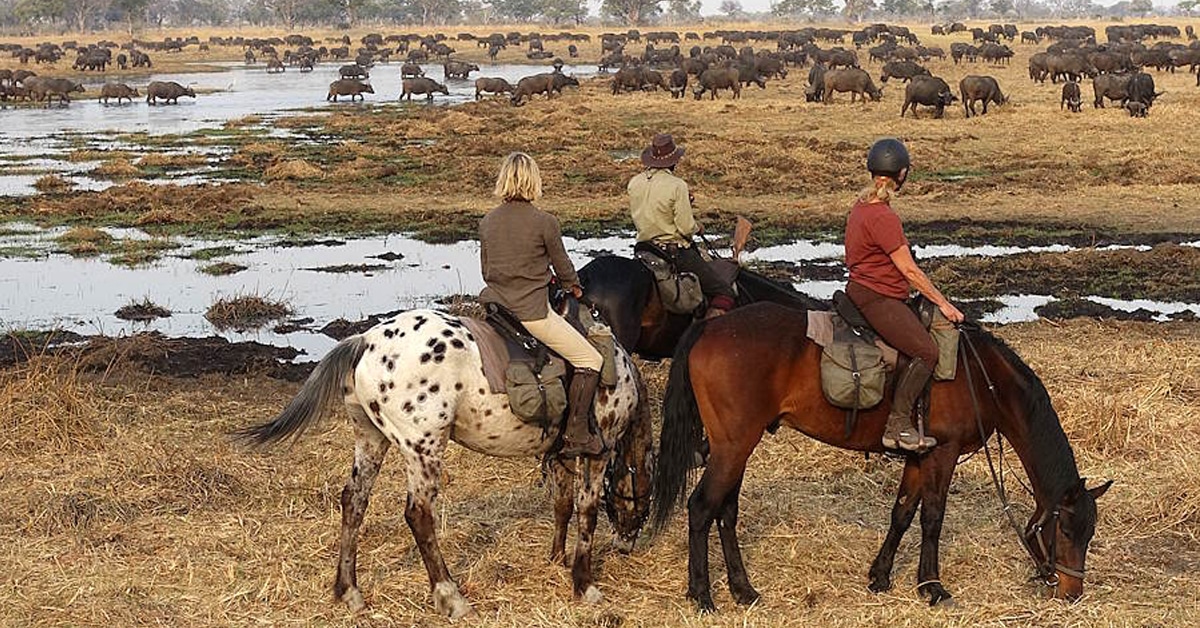
Well, no! Those high standards must be adhered to wherever we are in the world. It IS possible to experience the thrill of the wind in your hair, hooves pounding along the sand, the rustle of leaves as you canter through a forest to explore long lost temples, while having 100 per cent confidence that your steed is well cared for and that your host in making a decent living.
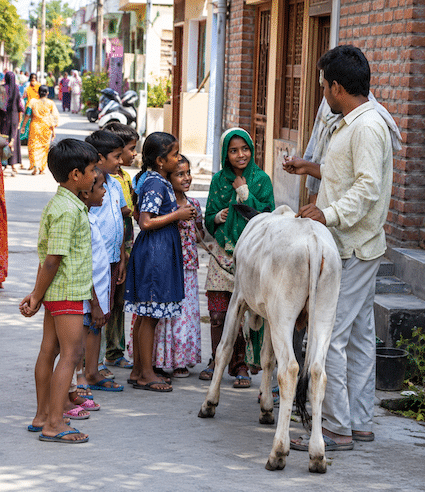
Wendy Hofstee visited one of a number of Brooke centres which care for horses and donkeys in the Middle East, Asia and Africa.
Vet Wendy Hofstee has spent the past two and a half decades championing the wellbeing of horses worldwide and has written a useful guide on exactly what to look out for on holiday to ensure you’re not perpetuating the welfare problem.
Indeed, it was her experience of witnessing horses who were victims of neglect while on otherwise amazing travel adventures in her youth which inspired her to set up her company Unicorn Trails. The specialist operator curates riding holidays featuring horses in excellent condition, thus ensuring that no-one else has to go through what she experienced.
“The vast majority of tourists who hire horses on holiday do not prebook them through a specialist operator, but impulsively while they are there,” said Wendy.
“They are often not regular riders and may have no idea of what constitutes a horse in an acceptable condition.
“In poor countries there is very little spare money for horse care and a horse may be the only source of income for an already very poor family. Thus, they are often used in conditions unacceptable by western standards, not out of cruelty, but out of desperation or ignorance.
“Where possible it’s best to book any horse riding through a responsible specialist operator [such as Unicorn Trails]. As well as vetting the condition of horses on our trips, we at Unicorn Trails actively work to improve local communities, which is key to improving the condition of local horses.”
Wendy’s guide includes tips on the need to avoid aggressive street hawkers, the importance of paying fairly for a horse in good condition and features to look out for when choosing a horse, such as ensuring it has access to shade and water, stands quietly while at rest and is alert when given commands, has a good condition score and is not too thin and has no wounds or sore patches.
Other things to check include ensuring the saddle fits well to avoid hurting the horse, and that stirrup leathers are in good condition so they don’t snap when weight is put on them. The horse should be appropriate for your weight and only one person should be allowed on each animal.
Global charity, World Horse Welfare, which works with owners, communities and governments to improve horses’ lives, also offers advice on what to look out for when on holiday.
It believes that acting with their feet is a powerful way for tourists to help improve horse welfare, which can often be a particular problem in ‘bucket list’ destinations.
And Brooke, which has hospitals in the Middle East, Asia and Africa, founded nearly a century ago, aims to protect horses and donkeys by employing local vets to communicate with equine owners.
Some years ago Wendy visited one of its hospitals, in Delhi and says: “Brooke staff believe that the vast majority of the suffering they see is relatively easy to prevent. Their focus is on providing simple and cheap strategies which can make a huge difference to welfare such as regular access to water, food, shade and rests, and basic health care including parasite control, foot and dental care.
“Education is also pivotal – not only of the animal owners, but also local authority figures and healers. Ill-fitting tack is a common cause of discomfort and Brooke works with local harness makers to improve bits, harnesses and girths. In many areas you can spot the Brooke-treated horses. They have trimmed feet, fitted head collars and chafe-proof girths.”
Sadly, that particular centre is no longer operational, but hospitals in other countries are still carrying out important work
Read Wendy’s account of her visit to the Brooke Hospital in Delhi here. And read her guide to ethical equestrian tourism here.
More News